Want your succulents to look beautiful? Here are the ways to make their leaves vivid
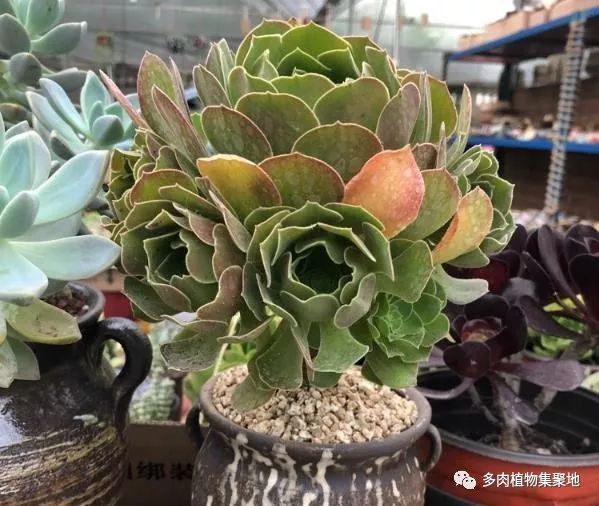
If you want your succulents to look beautiful, you have to get the leaves to color up, otherwise you will just have plain green succulents, which is rather unattractive. There are three key elements for coloring up: light, temperature difference and water control, and the most important of these are light and temperature difference. The greater the temperature difference and the more light, the faster the succulents color up, so to get succulents to color up we need to increase the day-night temperature difference and give them more light. Autumn and winter are the seasons when succulents color up fastest. With suitable temperatures, the succulents can be grown outdoors all day and receive plenty of light, while nighttime temperatures are still very low. Leave them growing outdoors for two or three days and you will notice an obvious change in their color.
According to the ecological habits of succulents, they can generally be divided into winter-growing, summer-growing and spring-autumn-growing types. The so-called winter-growing type goes dormant in summer and grows in winter. The summer-growing type goes dormant in winter and grows in summer. The spring-autumn-growing type goes dormant in summer and winter and grows in spring and autumn. In September, most succulents enter their second growth phase, so once the potting soil has dried out thoroughly, they should be watered thoroughly. At this time, summer-growing types can have their shading and ventilation reduced, but top dressing can be added. As for winter-growing types, ventilation and watering should still be maintained. Whether the variety is a summer-growing type or a winter-growing type, attention should be paid to ventilation, as only then can the plants grow healthily. When the leaves of those summer-growing caudiciform types placed outdoors turn yellow, they should be moved into a greenhouse.
What should you do when a succulent grows crooked? As we know, plants have phototropism, and succulents are no exception. The reason our succulents grow crooked is mostly that they have been placed in the same position for a long time without the direction being changed, causing them to grow crooked. Plants generally grow toward the direction of stronger light (toward the sun), and over time they become crooked. So how do we sun our crooked succulents back into shape? It is very simple: just turn the succulent around and place it the other way, changing the direction in which it gets sun. Some succulents grow relatively fast and easily form old stems; as the succulent grows taller, the upper part becomes heavier and heavier, so the stem is naturally bent over. This is not something that can be changed just by changing the light, but once the stem is bent, the shape actually looks more attractive.
When the autumn rainy season arrives, for some moisture-fearing varieties and varieties native to tropical regions, as soon as growth stalls, the plants should be kept from being rained on directly. September is very suitable for sowing, grafting, cuttings and so on. Varieties that bloom in winter can be repotted at this time. Repotting now differs from repotting in spring in that the root system does not need to be heavily pruned. In October, with abundant sunshine and large temperature differences between morning and evening, peony-type plants and some Aizoaceae plants enter their flowering period, and the leaves of Crassulaceae plants begin to turn red.
About watering: summer-growing types go dormant in winter, while spring-autumn-growing and winter-growing types grow in spring, autumn and winter. In winter, especially in January and February, summer-growing types are hardly watered at all, or even given no water at all, while other varieties can be watered lightly. Of course, if indoor heating in the north is sufficient, there is no need to follow this watering amount. As for the spring-autumn-winter-summer type categories, if you search on Xianzhen there are sure to be relevant classification posts, so I will not repeat them. January is the coldest month of the year. However, the sunshine in late January is slightly stronger than in December. At this time winter-growing varieties grow very vigorously, so do not be reluctant to water them. Pay special attention when thawing the plants: it is best to place them in a shaded, dark place so they thaw slowly, which is better than putting them in the sunlight.
About outdoor growing: the suitable growing temperature for sedums is 10°C to 30°C. Below 5°C, most of the more delicate varieties need to be brought indoors. In early winter, the temperature difference between morning and evening is large, often over 10°C during the day and around 0°C at night. In such conditions, pay close attention to the weather forecast to prevent sedum leaves from getting frostbitten. Some tough varieties that are in good condition with well-developed root systems are under little pressure outdoors, but you should still pay attention to rainy and snowy weather as much as possible. When the epidermis holds a large amount of water, it is relatively more prone to frostbite and splitting.
This is a gathering place for succulent lovers, sharing succulent care tips. You are welcome to follow and join the discussion.