The easiest tree for lazy gardeners to grow: you won't worry about keeping it alive, only that it grows too tall
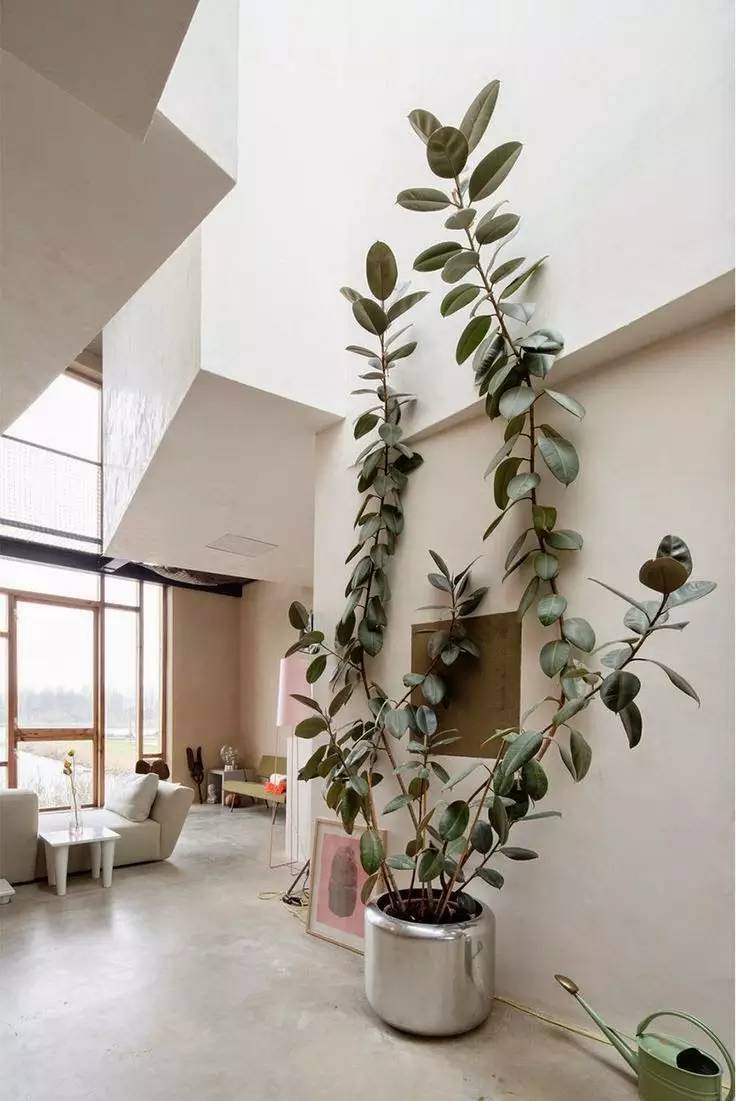
The rubber plant's leaves are as big as a palm, sometimes even bigger, thick like rubber. The leaves look so green they are almost black, glossy and shiny, while its newly sprouted buds are red. In terms of beauty it falls short of the Philodendron 'Little Angel', and in terms of shape it falls short of the fiddle-leaf fig, but when it comes to growth speed and how easy and worry-free it is to grow, the rubber plant is unbeatable!
Understand the rubber plant's four-season changes and care in seconds!
The rubber plant has thick, plump, glossy leaves. It likes water and tolerates shade, but dislikes waterlogging. In spring, keep the potting soil moist; as temperatures rise, move it to partial light or diffused light. Spring is also the best time to repot; when temperatures are around 15°C you can start preparing a new pot.
In summer the rubber plant is naturally robust and tolerates high temperatures and strong sun. But when the light is too strong, the leaves lose their gloss and fade. At the same time the rubber plant needs a lot of water now, so keep the potting soil moist and increase the frequency of watering as needed.
The rubber plant has many large leaves and uses a lot of water. In dry autumn, replenish water promptly and mist its leaves and surroundings frequently to meet its air humidity needs. In autumn, to boost its cold resistance, you can let it adapt to outdoor low temperatures for a while, but do not let it suffer frost damage.
In winter, temperatures drop and the rubber plant is not cold-hardy. Around 5°C, growth stalls and it enters dormancy; ensure plenty of light and keep the potting soil on the dry side.
The rubber plant is too tall, with sparse leaves and a single bare stem!
The rubber plant has strong apical dominance. If it is not pruned, the terminal bud keeps sprouting, the trunk grows taller and taller, and the axillary buds stay dormant for a long time, turning it into a thin, tall, single bare stem, which looks very unattractive.
When the rubber plant grows to 30-50 cm tall, controlling its height is extremely important. If it gets too tall, the whole tree takes on the awkward look of being top-heavy, which greatly hurts its ornamental value. Base it on the diameter of the flower pot; the closer the better, and better lower than higher.
If the height is suitable, simply pinch off the topmost bud on the branch. Once apical dominance is removed, side branches sprout faster and more easily. If it is too tall, you need to use heading cuts and bud notching to make up for it and improve the poor shape.
After the terminal bud is removed, multiple side branches can emerge at the same time; 3-5 side branches are ideal. Use them as scaffold branches, and when they reach a certain height, cut them back again. After they sprout, keep 3 branches on each scaffold branch, and a basic tree shape is formed.
Also, after pruning, be sure to apply incense ash or sealing wax to the wounds to ensure the sap does not bleed out too much and affect the plant's growing condition.
The rubber plant grows fast, so its "nutrition" must keep up?
For a foliage plant like the rubber plant, most people use nitrogen fertilizer as the main fertilizer. Nitrogen fertilizer provides the rubber plant with chlorophyll and protein, strengthens photosynthesis, and promotes vegetative growth of leaves and stems. It is best to choose a compound fertilizer, as the nutrients are more balanced, it is better for soil aeration, its fertilizer effect lasts longer, and it can also improve the soil.
When using compound fertilizer on a rubber plant, you can dilute it with water and pour it on, or shallowly bury it around the plant while avoiding the roots and stem. After use, the rubber plant's leaves will be glossy and shiny, and the plant will be more robust.
Another option is potassium dihydrogen phosphate. Phosphorus and potassium fertilizers can buffer changes in soil acidity and alkalinity, stabilize the soil's pH, and promote the growth and reproduction of beneficial microbial colonies, making the rubber plant's root system well developed, its leaves thick and deep green, its stems sturdy, and its disease resistance and stress resistance stronger.
For the rubber plant, foliar spraying with potassium dihydrogen phosphate works better than root drenching. Young leaves absorb more than old leaves, and the underside of the leaf absorbs more than the upper side; young shoots can also absorb it. When sprayed on the leaves, the absorption and utilization rate is as high as 80% to 90%!
They are all rubber plants, but the varieties keep multiplying endlessly!
Variegated rubber plant: the leaves are green with irregular yellow-white patches, but its growth is relatively slower than other varieties.
White-blotched rubber plant: the leaves are narrower and have many white patches, with white veining, alternating white and green.
'Black Prince' rubber plant: it belongs to the round-leaf type, with dark green leaves and a black-green sheen, and is one of the common varieties.
Welcome to follow Plant Fanatic; shall we obsess over flowers and plants together with Squirrel Jun?