What are the basic methods of bonsai grafting? Practical tips shared
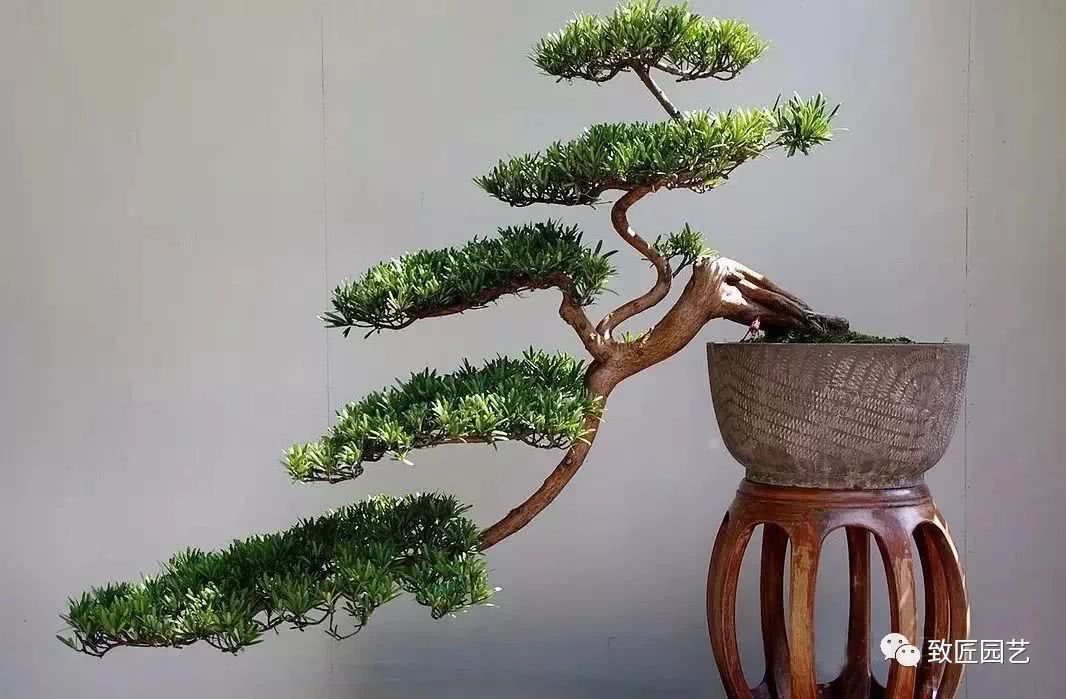
Grafting on tree bonsai is a styling method. Through grafting, you can not only obtain excellent bonsai tree material, but also speed up the bonsai shaping process, achieving twice the result with half the effort. Grafting methods can also be used to supplement roots, supplement branches, and replace crowns, making the styling of the tree bonsai more complete.
Master the timing of grafting well. Generally, a temperature of 20-25 degrees is most suitable. At this time, the cambium cells are most active, which is conducive to graft survival. For the scion, choose an excellent mother tree that grows vigorously, is free of pests and diseases, has small leaves, and has strong compatibility. It is best to use well-developed nutrient branches. The closer the kinship between the scion and the rootstock, the easier it is to survive.
1. Bud grafting
Bud grafting is a method of grafting using the buds of the scion. In the process of styling tree bonsai, bud grafting can improve the crown and can also serve as a remedy for branch grafting. Its advantage is that several scion buds can be grafted onto the small branches of the rootstock. After they survive, they can be pruned and selected according to the density requirements of the styling. For improving some tree species with thicker bark, the bud grafting method can be used. For example, wild peach stumps can be bud-grafted with flowering peach, wild plum stumps with plum blossoms, and old roots of wild rose with miniature rose, etc. Bud grafting includes many methods such as T-shaped budding, I-shaped budding, chip budding, and ring budding. The timing of bud grafting is best chosen in July-August, when sap flow is vigorous and the bark and xylem are easy to separate. Bud grafting should avoid rainy days and is best done in the morning and evening. Within 4-5 days before bud grafting, the rootstock should be loosened, fertilized, and watered to promote sap flow and facilitate bark peeling. For rootstocks used for crown replacement, the branches and leaves at the bud grafting position need to be cut off before grafting to facilitate the operation. The epidermis at the bud grafting site of the rootstock is required to be smooth and flat. In addition to the ideal variety, the scion buds should also have plump axillary buds. Because the climate is relatively dry during bud grafting and water at the cut is very easy to evaporate, the bud should be taken and grafted as smoothly as possible in one go, taking one bud and grafting one bud.
2. Branch grafting
Selecting one-year-old branches or new shoots of the current year as the scion and grafting them onto the rootstock is called branch grafting. Commonly used branch grafting methods include cleft grafting, cut grafting, side grafting, and approach grafting. The timing of branch grafting is best within half a month in early spring when trees have just begun to sprout. Choose morning and evening on sunny days; cloudy and rainy days are not suitable. The method used can be decided according to specific circumstances. In general, when the rootstock diameter is larger than the scion or the rootstock is relatively thick and strong, cleft grafting or cut grafting can be used, such as for flowering plants including crabapple, flowering peach, pomegranate, wintersweet, spring plum, banyan, and osmanthus. For pines and cypresses, the side grafting method can be used, because these tree species must retain branches and leaves to survive. For some precious tree species that are difficult to graft successfully, the approach grafting method is needed.
3. Root grafting
When digging tree stumps in the mountains or when repotting and pruning, relatively ideal root forms can often be obtained, and the root grafting method can be used to replace the crown. When repotting and transplanting in March, take well-shaped roots, wash them clean in water, cut off fibrous roots and excess lateral roots, and use cleft grafting or cut grafting according to the thickness of the roots to replace the crown. Collect 1-2 year old branches of the same tree species as the scion, retain 2-3 buds, and after the graft survives, loosen the binding material and gradually expose the roots, thus obtaining a new stump bonsai.
4. Branch supplementation
When a bonsai lacks branches on its trunk, branches from the tree itself or tree species of the same genus outside the tree can be used, and the approach grafting method can be adopted to supplement branches. At the branch-deficient area, cut a transverse groove in the shape of lips, reaching deep into the xylem. The length and depth of the cut should be suitable for fully matching the cut surface of the approach-grafted branch. Then cut the T-shaped grafting surface of the selected T-shaped approach branch into a shape matching the cut on the rootstock, then place the T-shaped branch against the groove for branch supplementation, align the cambium, and bind it firmly with a strip.
5. Root supplementation
When a beautifully shaped tree stump is dug up in the mountains, it often appears imperfect because of missing roots. If new roots cannot be induced at the root-deficient area, the approach grafting method can be used to supplement roots. During the tree growth season, choose seedlings of the same species whose roots' thickness, size, and direction basically meet the needs of the rootstock's missing roots. Dig them up, retain only the main root, cut off all other lateral roots, and also cut off some branches and leaves. Keep as many bud points as possible on the approach grafting surface. After the interface heals, when cutting off the upper end of the approach seedling, keep that bud point as a branch to promote wound healing. After the interface heals, when cutting off the upper end of the approach seedling, keep that bud point as a branch to promote wound healing.
Wonderful content