This flower is truly beautiful: one leaf grows one pot, blooming continuously for over half a year, filling the balcony.
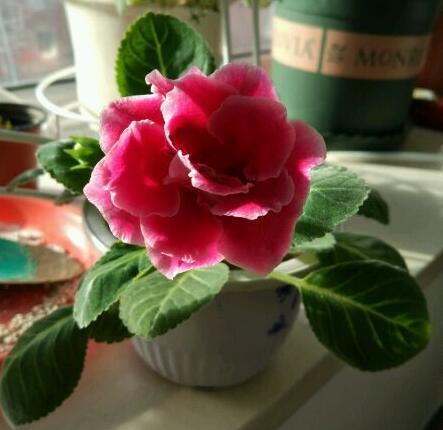
Gloxinia (Sinningia speciosa) blooms in vivid colors, including red, pink, purplish-red and blue, with single and double petals; the flower shape is distinctive, and it really looks lovely in bloom. Although it grows only about ten-odd centimeters tall, its flowering period is especially long, and it blooms most vigorously in spring and autumn in particular. It can keep blooming from April all the way to November, flowering for six or seven months at a time.
How to grow potted gloxinia and its cutting techniques
You don't have to buy gloxinia; you can propagate it directly by cuttings from stems or leaves. Generally, around 20°C is suitable, and spring and autumn are the best times for cuttings.
For stem cuttings, choose a stem about 10 cm long, not too tender and not too old; this kind of stem has a higher survival rate. Keep only three or four leaves.
Leaf cuttings also root fairly easily. Leaves after the flowering period are best for cuttings. Choose healthy leaves that are neither too old nor too tender, and be sure to cut off part of the leaf before planting the cutting.
The cutting medium can be river sand, or perlite, or vermiculite. The planting depth is about one third of the stem, two or three centimeters. After planting, do not expose it to the sun, water lightly, and mist frequently to raise air humidity. Usually roots begin to grow in about ten-odd days, and once small shoots appear, it can be transplanted into a pot.
Some flower growers skip cuttings and simply put a leaf in a cup of water; it will grow roots, and then it can be transplanted into a flower pot and will also survive.
For everyday care of gloxinia, place it in a bright spot with at least indirect light. The growing soil can be garden soil mixed with leaf mold, perlite and vermiculite. Fertilize once every three months, except in winter, and each time the fertilizer must be diluted before use. For routine watering, do not water too much; keeping the soil slightly moist is enough.
Pinch it back regularly, that is, remove the top leaves, to encourage it to grow more side branches and bloom especially profusely. It is even more beautiful than a rose.
After the flowering period, prune off the spent flowers. When winter comes, keep the rhizome, cut off most of the leaves on the stem, leaving the stem about 5 cm long, then store it in sand, water lightly to keep it slightly moist, and in spring it will sprout and bloom again.