How to grow fuchsia? Solve common problems to make it easy to grow and beautiful
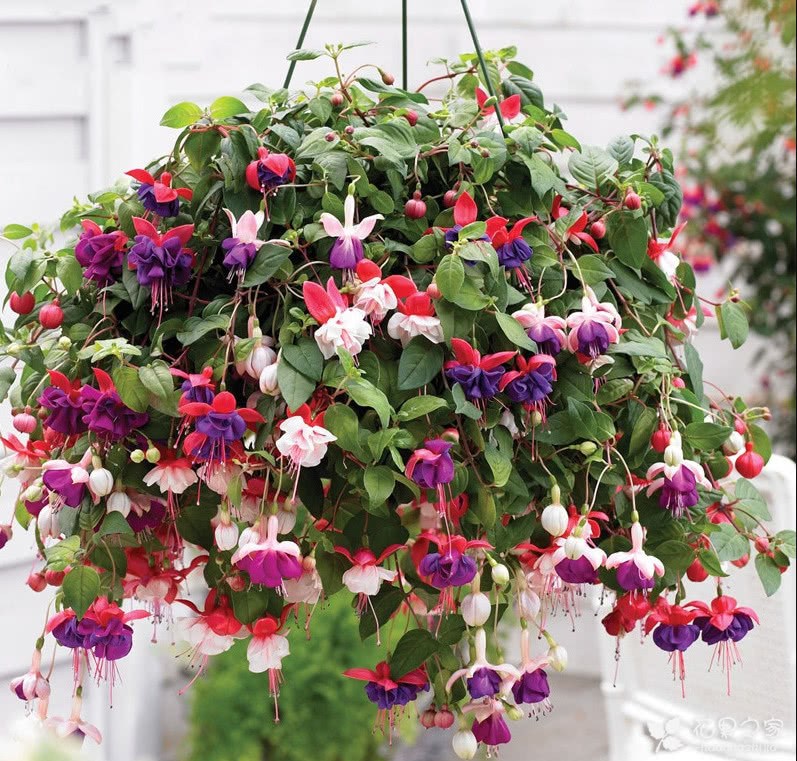
In China, fuchsia symbolizes good fortune, peace and purity. It comes in many colors and is a very, very, very beautiful potted flower. This article mainly answers some of the problems often encountered when caring for fuchsia. Here I have divided them into three categories: cultivation, pests, and others.
Part One: Cultivation Questions
Q: How do you water fuchsia? How often should it be watered?
A: Watering fuchsia depends on the seedling stage, the mature stage and the dormancy period. Fuchsia has low water requirements during the seedling stage; generally water once every two days and just keep the potting soil moist. It has higher water requirements in the mature stage, especially during the flowering period; generally water once a day. During the dormancy period, water less or simply mist the leaves.
Q: How do you fertilize fuchsia?
A: The fertilizing principle for fuchsia is "apply little but often." Generally apply a dilute fertilizer once every 15 days. No fertilizer is needed during the dormancy period.
Q: How should the soil for fuchsia be chosen?
A: Fuchsia likes fertile, loose, well-draining sandy soil. In fact, many flowers like this kind of soil. Generally, the nutrient soil sold on the market is suitable for growing fuchsia.
Q: What is the suitable temperature for fuchsia?
A: The growing temperature for fuchsia is 15~25 degrees
Q: How do you propagate fuchsia?
A: Fuchsia is mainly propagated by cuttings.
Part Two: Pest and Disease Questions
Q: What should you do if fuchsia gets sick?
A: Fuchsia mainly suffers from two diseases, namely gray mold and physiological root rot. If your fuchsia is sick, describe the symptoms in the comment section and I will help you find the right remedy.
Q: What should you do if fuchsia has root rot?
A: There are many causes of root rot, such as overwatering, physiological root rot, and excessive fertilizing, but no matter which cause it is, you must promptly carry out rescue measures for the fuchsia. Rescue method: wash the root system, cut off the rotten roots, apply some charcoal ash to the wounds, replace the potting soil, and use new nutrient soil. In later care, pay attention to the amount of watering and fertilizing. Eighty percent of root rot is caused by watering and fertilizing.
Q: What should you do if fuchsia leaves turn yellow?
A: Fuchsia leaves turning yellow is generally caused by improper daily care and management. There are many reasons for yellowing leaves, and you need to find the corresponding solution according to the cause. I have written an article about solutions for yellowing fuchsia leaves. If you need to know the details, follow me and you can check it in past articles. In our daily care, we should pay more attention to fuchsia care techniques.
Q: What should you do if there are bugs on fuchsia?
A: The most common pests on fuchsia are aphids, red spider mites and whiteflies. If there are only a few, you can just crush them directly. If there are many, use chemicals to kill them. For red spider mites and aphids, you can spray with dimethoate solution, fenitrothion and decis solution. For whiteflies, you can use omethoate or sumicidin solution.
Part Three: Other Questions
Q: Where should fuchsia be placed?
A: Place fuchsia in environments with diffused light, such as a balcony, dining table, desk, coffee table, and so on.
Q: What is the flower language of fuchsia?
A: Belief in love, a passionate heart!
Q: Where is fuchsia native to?
A: Mexico
Q: When is the flowering period of fuchsia?
A: The flowering period is from April to June.
Conclusion: The above is a summary of answers to common questions about potted fuchsia. If there are any fuchsia questions I have not included, you can add them in the comment section so that we can all learn together, make progress together, and grow together. I am extremely grateful to the flower friends who complete them in the comments.