Use these 7 kinds of granules for growing flowers and never suffer root rot again - truly worry-free
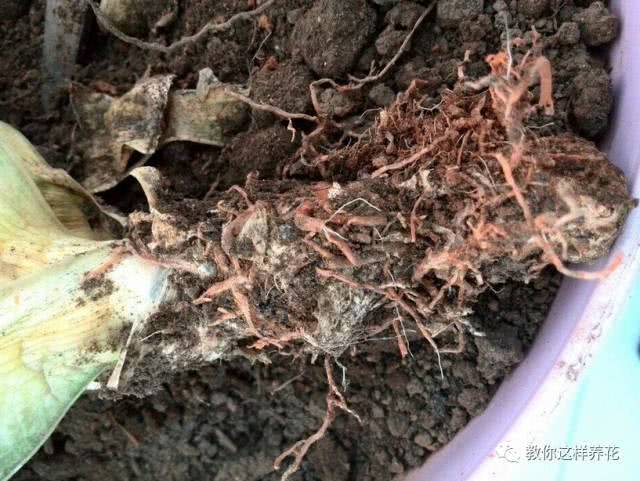
The most common problem in growing flowers is how much to water, and what most flower growers encounter most is not withering and death, but problems like root rot caused by waterlogging! Let's take a look~
“
Simple and easy-to-get granules
”
Waterlogging and root rot
Waterlogging and root rot have some connection to watering too much, and also a great deal to do with the poor drainage of the potting soil itself. Just think: if you use a lot of coir bricks, or potting soil with a lot of granules, it would be hard to get waterlogging even if you tried!
Of course, not all flowers are suited to using a high proportion of coir bricks and granules, because most plants still need moisture and are afraid of drought. So when we grow flowers, as long as we mix some granules into the potting soil, or place granules well at the bottom of the pot, we don't need to fear waterlogging and root rot!
Common and easy-to-get granules
-Coarse sand-
The most common and easy-to-get granule in daily life should be coarse sand. It can be found in many places such as river channels, construction sites, and wasteland. For construction site sand, you should ask first; if it is sea sand, it is best not to use it, or to rinse and soak it several times before use.
Coarse sand is generally placed at the bottom of the pot for drainage, spread 3-5 cm thick to facilitate drainage. Coarse sand can also be mixed into the soil and used as growing medium, but the amount used should not be too much.
Succulent plants and cacti are afraid of waterlogging and root rot, and like a granular environment, so granules can be the main component: 6 parts granules, 4 parts peat soil.
For general foliage plants: 5 parts peat soil, 3 parts garden soil, 2 parts coarse sand, mixed with a small amount of organic fertilizer.
For coarse sand used as a drainage layer, the size should be larger; coarse sand mixed into the potting soil can be medium-sized; for top dressing, small to medium size can be mainly used.
(Sina Blog: Laoluoluo's Spring)
-Homemade granules-
People who have grown flowers for years know that bamboo root soil is very fertile, but moso bamboo has tangled roots and its root system grows horizontally, so it is easy to break the bamboo roots and stall the bamboo's growth. So generally bamboo farmers will not let you dig the soil.
Flower grower Jiang Fengliao happened to be able to find bamboo root soil and used bamboo root soil to make homemade granules. This kind of bamboo root soil is submerged year-round under rotting bamboo leaves. One shovel thrust down and it fairly oozes richness; just from the feel of the soil - neither greasy nor dry - you know this soil is top-grade for growing flowers.
In moso bamboo forests, because of the soil quality and the effect of bamboo roots, the soil is relatively dry. Once the soil dries, there are fewer insects, and fewer bacteria too. This can count as one major advantage of bamboo root soil. With no sieving, no drying treatment, and no insect killing, just rubbing it with your hands and picking out fallen leaves, this soil is already ready for processing.
Depending on the different plants being grown, different fertilizers can also be mixed in in small amounts
Stir, add water, shake the potting soil, and it naturally turns into granules
Then bake it dry in the sun; it must be thoroughly dry, then store it for later use. Mixed into potting soil, or used directly to grow plants, it is even better than akadama soil!
(Sina Blog: Jiang Fengliao)
Flower growers can also draw inferences and make other nutrient soil granules.
-Coal cinders-
Actually, there are quite a lot of places using coal balls now, such as snack stalls and breakfast shops; they all throw them into the trash. So you can ask them for a little. It is good for lining the bottom of pots, top dressing, or mixing into the soil.
(Succulent Plants Tieba: Mama Loves Xiaofan)
-Charcoal-
Charcoal is loose and breathable and can avoid root rot caused by waterlogging. Charcoal also has a porous structure that can lock in and absorb some nutrients and release them slowly, and it can slowly rot and become fertilizer itself.
Whether placed at the bottom of the pot or mixed into the soil, the effect is very good, and those with wood resources can also make it themselves.
Find an iron paint bucket; if the bottom is deeper, it can hold more firewood.
After burning, cover it with prepared soil to extinguish it until there is no smoke. Under oxygen-free conditions, the charcoal fire all turns into charcoal, and after stirring, you have a bucket of charcoal soil.
Used for growing flowers and vegetables, the effect is excellent.
-Activated carbon-
Whether buying a house or a car, it is now popular to buy some activated carbon packets to remove odors and formaldehyde, and after a long time many people may throw them away.
Many households also install filters for their water, and the filter needs its cartridge replaced every year. One of these is the activated carbon filter cartridge, which is full of activated carbon granules. After removing it, carefully cut it open with diagonal pliers and you can get a lot of activated carbon granules.
The composition of activated carbon is similar to plant ash. Activated carbon has two forms, powder and granular. Both forms of activated carbon have very good nutritional conditioning effects, promote root growth, are breathable, and can also absorb excess nutrients and release them slowly. In flower growing it is a good mixing material. Different flowers need different soil ratios. In flower growing, the granules can be used as a drainage layer, and the powder can be mixed into the potting soil, which can promote more vigorous plant growth.
-Clay pebbles-
Clay pebbles are a man-made fired product. Their surface is a hard shell, ceramic or glazed in nature, with a water-blocking and air-retaining effect. Placed at the bottom of a pot, they make a very good drainage layer. Buying clay pebbles online is now very convenient, and clay pebbles themselves are relatively light in texture and moderate in price, making them a good choice for city friends. Clay pebbles themselves have a fiery nature, so before use soak them in water for a few hours.
-Gravel-
Gravel is also a granular stone that is usually very easy to find, especially where roads are being built; it is easy to find on abandoned construction sites, especially gravel that still has a bit of soil on it, which can be used directly. If it is gravel granules, you can consider using them as a drainage layer or for top dressing.
This kind of road-building bluestone is the most common and is very good as a drainage layer. Places where roads are being built have it everywhere.
-Plant shells-
Leftover sunflower seed shells, peanut shells, pistachio shells, pine nut shells, longan shells, and other nut shells are all very good materials. Those with salt need to be soaked in water to remove the salt, then dried in the sun before use. Crush these shells and put them at the bottom of the pot; they not only help with breathability but can also provide fertilizer.
In southern regions, there are camellia seed shells, which are very good materials for growing flowers. Not only do they have strong breathability, but camellia seed shells contain relatively much tea saponin, which can inhibit bacteria and control pests, and the source is also very abundant.
For flower growers in northern areas where there are many pine cones, you can crush the pine cones and use them to line the bottom of pots. Some flower growers use them to grow orchids with excellent results too! Those who can should give it a try.
Most flowers cannot tolerate waterlogging when watered
Otherwise they are prone to root rot
So usually it is very important to put a drainage layer at the bottom of the pot!
Show it to flower growers who need it too!