This northern fruit is only as big as a thumb, known as "taillihong," and few people have ever tasted it.
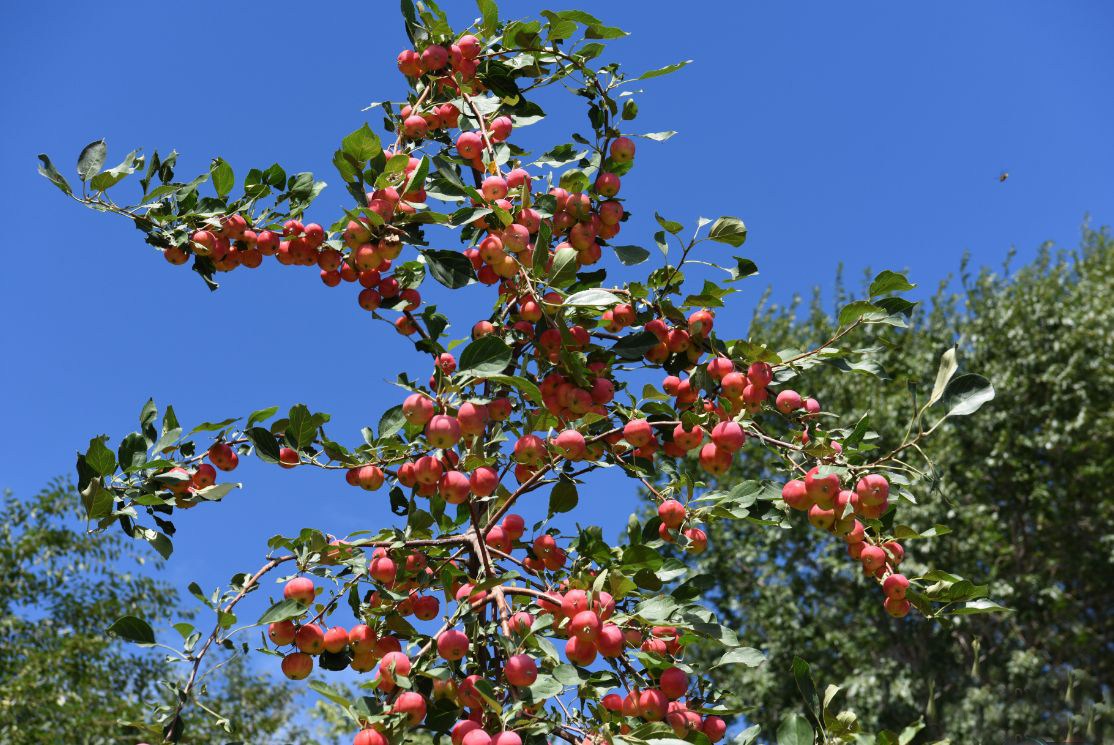
When it comes to fruit, what probably comes to mind are some of the fruits we often see, such as bananas, pears, apples, peaches, and so on, or some that we don't usually see, such as dragon fruit, mangosteen and other tropical fruits. Today we are going to introduce a fruit that is both common and uncommon, and that is the crabapple, known as "taillihong."
The scientific name of the crabapple is Malus asiatica, and it has many aliases, such as linqin, wuselai and so on, with different names in different places. The crabapple is a plant of the genus Malus in the rose family, so it looks very much like an apple, but it is much smaller than an apple, roughly only a quarter the size of an apple, about the size of a thumb. The crabapple has strong roots, extremely vigorous growth, and strong resistance to stress.
It is a plant with tenacious vitality, with very low requirements for its growing environment, and it is cold-resistant and drought-resistant, and can even grow in saline-alkali soil. In China it is mainly distributed in the northern regions, found both on flat land and in valleys. It is a seasonal fruit, and a single tree bears a great many fruits, which is why it is said to be "both common and uncommon."
The crabapple has high nutritional value, with relatively high levels of vitamins and organic acids. It can promote saliva production and quench thirst, and its sweet-and-sour taste can help regulate stomach digestion. Moreover, the crabapple also has high medicinal value, can stop diarrhea, and eating it often can also improve eyesight, which is very beneficial for promoting human health.
In addition, the root of the crabapple is also a Chinese medicinal herb with a deworming effect. The crabapple is relatively common in the northern regions, and it is estimated that few people in the south have ever tasted it. In fact, its taste is similar to that of an apple, one bite each, and it is very popular with children and women.
The ripe crabapple is very attractive in color and rich in fragrance. It can be prepared in many ways: it can be eaten raw directly, or processed into dried fruit, fruit leather and other snacks, or used to make porridge. It is a health-preserving delicacy commonly eaten by northerners.
Now the crabapple is about to ripen, and the price is not expensive either. A few yuan can buy a big bag. Whether eaten raw or processed into other delicacies, it is a good choice.
It is precisely because of its unique value that it has become the first choice for many fruit farmers to plant. The crabapple has no overly high requirements for its growing environment, and has relatively few pests and diseases, so it is also relatively convenient to grow. The crabapple has a high yield, and although the unit price is not very high, it still brings considerable income to farmers.
This crabapple tastes delicious and has high nutritional value. The next time you see it, don't miss out!