How to scientifically apply potassium fertilizer during the critical booting stage of rice?
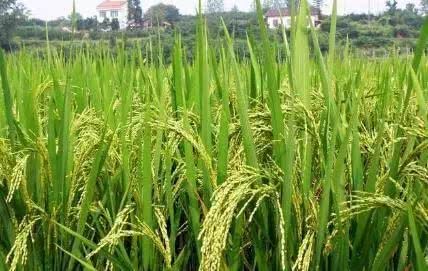
Rice is currently at the booting stage, and in just over a month the mid-to-late rice will also successively enter the harvest period. This period can be said to be a critical time for rice growth. How to fertilize and manage it should be a concern for many friends. Here Science Xingnong will talk with everyone about the issue of applying potassium fertilizer to rice.
If you want to know when to apply potassium fertilizer to rice, you must know the pattern of rice's potassium fertilizer uptake.
Before talking about rice, let's first look at the role of potassium fertilizer. The plant ash we often use actually contains a large amount of potassium, which is very beneficial to plant growth. The role of potassium fertilizer in plant growth is second only to nitrogen fertilizer, which shows the importance of potassium fertilizer. Potassium fertilizer generally can dissolve in water, such as the potassium dihydrogen phosphate fertilizer we often use.
Potassium fertilizer can improve the photosynthetic efficiency of plants and increase the fiber bundle content in the crop, thereby making the plant stems thicker and improving lodging resistance. It can also improve the plant's drought resistance and disease resistance, etc. It promotes the plant's tillering ability and promotes starch synthesis in the fruit, among other effects.
Next let's look at the potassium fertilizer uptake of rice throughout its life.
Rice needs to absorb a large amount of nutrients during its growth process, among which nitrogen, phosphorus and potassium fertilizers should be said to be the fertilizers of the three main elements in the rice growth process. The absorption ratio of the three elements in rice is roughly 2:1:3. Hybrid rice absorbs more potassium, sometimes even about 30% higher than ordinary rice's potassium uptake. Rice generally enters the peak period of potassium uptake from the late tillering stage to the jointing stage.
Next let's look at what time is most suitable for using potassium fertilizer.
First, to make one point clear, generally depending on the condition of the plot, generally one mu of rice field needs about 5 to 12 kg of potassium fertilizer.
Because rice planting areas are different and the nutrient content of the plots is different, especially in the relatively heavy clay plots in the south, where the acidity is relatively high, the potassium content in the soil is on the low side. Before planting rice, sufficient base fertilizer needs to be applied, and potassium fertilizer cannot be missing from the base fertilizer. At this time an appropriate amount of potassium fertilizer is needed. During the rice tillering stage and young panicle differentiation stage, the most potassium fertilizer is needed, generally requiring about 5 kg of potassium fertilizer as a topdressing.
Finally let's look at the manifestations of potassium deficiency in rice
When rice suffers from potassium deficiency, red-brown spots appear on the leaves, the plant grows slowly, tillering decreases, root growth is poor, the plant is short, and the stems are slender. After this situation occurs, measures need to be taken in time, otherwise it will affect the later growth of rice and the rice yield.
For rice fields where this situation occurs, potassium fertilizer must be applied as a topdressing in time. Potassium chloride fertilizer can be chosen, generally about 6 kg per mu as a topdressing, and field irrigation should be carried out in time to promote the rice's absorption of the fertilizer and the recovery of the roots.
In addition, in the later stage of rice growth, potassium dihydrogen phosphate foliar fertilizer can be appropriately sprayed to prevent premature senescence of rice. The ratio is generally 100 grams of potassium dihydrogen phosphate added to 30 jin of clean water.
This is Science Xingnong. You are welcome to add a follow, to take you along to grow knowledge together.
The original copyright of the article belongs to the Science Xingnong account, and infringement will be prosecuted.