Give your rose a little press, and new shoots will come popping out
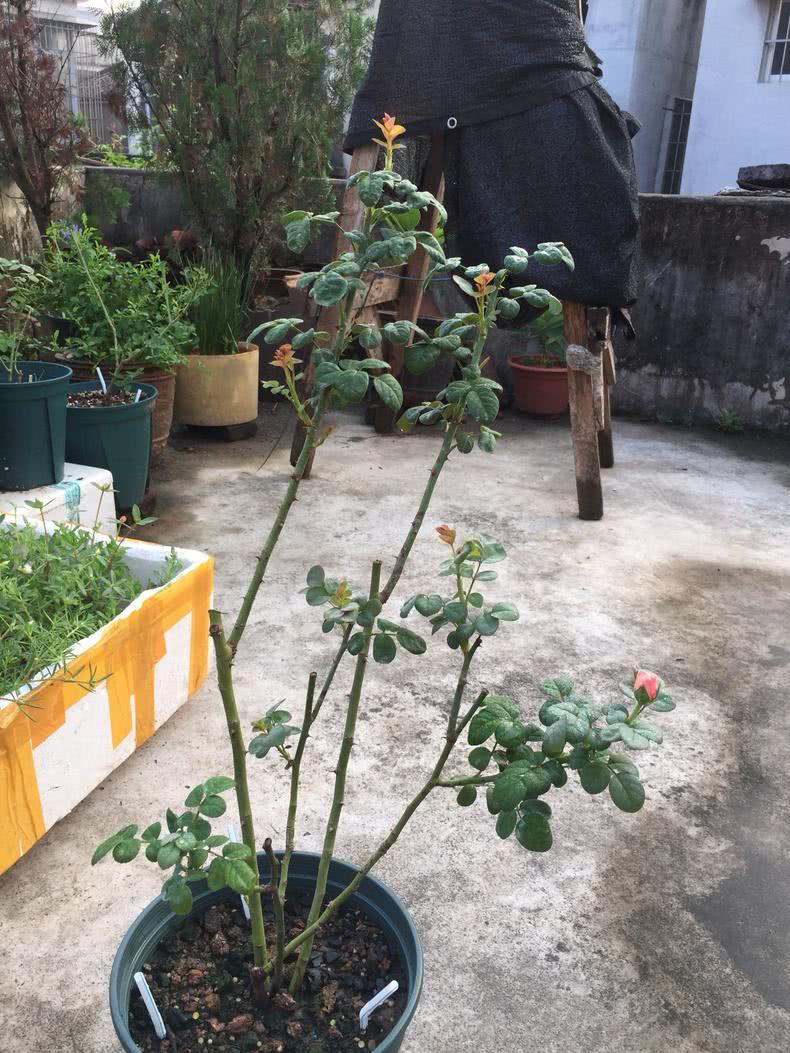
If your rose never sprouts, try the "press it down" method - there may still be hope. Autumn is here, and a gardening friend's rose has not sprouted once since it was pruned. More than a month has passed, and it still looks the same. Every day on the way to work they always take a look, but every time they look they start to worry: how can this rose be made to sprout more?
The horizontal pulling method is a favorite among many gardening friends: just press the rose down and pull it horizontally to encourage sprouting. But is this method really the best? Let's take a look together!
The side effects of the horizontal pulling method
Why would such a good method also have bad effects?
The main issue is that when the horizontal pull is too forceful, the soil above looks almost ready to break apart. This overly forceful approach easily damages the rose branches. A scientific horizontal pull should be at a horizontal position, not like this, so everyone should be careful with this pulling method.
And even if this pulling method does not break the branch, after a long time the main branch will not be able to recover. Otherwise it can only be cut off, which is really a pity. Remember, just a slight bend is enough, then spray on an easily diluted nutrient solution to make the rose sprout quickly. Once it sprouts, it will recover as soon as possible, then pinch off the top of the main branch, and the shoots will grow rapidly.
No need for it - other methods can be chosen
A rose not sprouting can be caused by many reasons. For example, a stunted seedling - so what is a stunted seedling?
A stunted seedling is caused by slow growth of the rose or root damage that prevents nutrient uptake. For example, after the rose finishes flowering, it should be pruned as soon as possible, otherwise a "flower clip" will form and consume a huge amount of nutrients.
After pruning, the rose needs good nutrients and slow conditioning, so that it will easily sprout again. At this time, appropriately increase nitrogen fertilizer and organic fertilizer so the rose sprouts first, and then consider the issue of flowering.
Few sprouts - the soil may be poor
This is especially true for potted roses, and grafted seedlings are the most common. Many nutrient soil mixes are low in nutrients, and generally after 1 year the organic matter in the soil is basically used up, but many people do not replenish it. This leads to little organic matter and high inorganic nutrients. It causes soil compaction or increased salinity and alkalinity, which in turn affects root growth.
Changing the soil can actually solve the rose root problems very well, but can the soil be chosen carelessly? A few days ago, a large number of mushrooms appeared in a gardening friend's rose soil, which shows that the soil is "not clean" and causes fungal plants to grow, possibly leading to fungal disease problems.
So this tells us that the soil we choose must be fully fermented, and choosing a breathable one is more beneficial for beginners.
It is best to water scientifically, which can speed up sprouting in roses. Autumn can be said to be a good time to repot roses; if you want to repot your rose, you can do it at this time. Once the rose has more sprouts, you also need to select good shoots, so that more and more beautiful flowers will bloom later.
Alright, have you all learned the layering method for roses? Remember not to be too forceful, and pair layering with nutrients so that more sprouts will come!