What exactly is the magic of reptile and amphibian pets that makes countless people utterly fascinated?
When I usually introduce cute animals, everyone always asks whether they can be kept as pets. Today, Calendar Girl is here to introduce five kinds of reptile and amphibian pets that can be kept.[Snake warning!Frogsat the end!]
Friends who both love and fear them can scroll straight to the end of the article for a surprise!
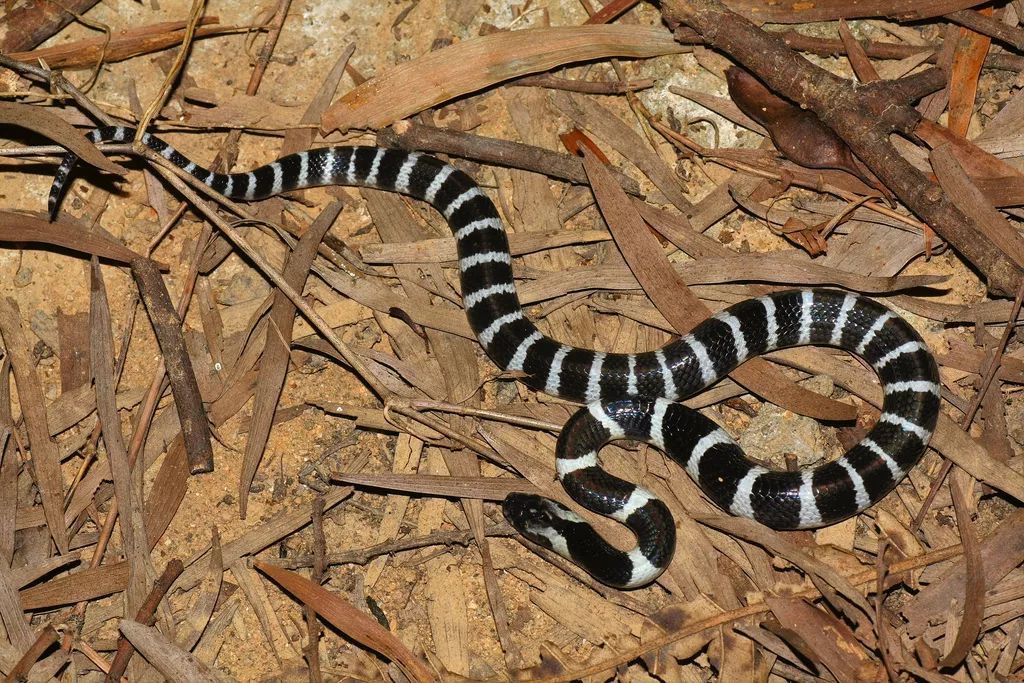
There are some amphibians and reptiles with peculiar appearances and varied habits that are often labeled"exotic pets."But I really dislike the term "exotic pets." On one hand, it serves as a gimmick that attracts a group of people who do not understand the animals themselves and buy and keep them merely out of a desire for novelty. They buy animals unsuitable for keeping on a whim for the sake of novelty, ending at best in the animal's death and at worst in buying a protected species and getting "knocked on the door" by the authorities. Not long ago, there was even a tragedy in which a hobbyist bought a highly venomous many-banded krait as a pet and unfortunately lost his life.
The highly venomous many-banded krait. If you want to keep snakes as pets, you need to be especially careful. Image: Kevin / Flickr
On the other hand, it wrongly treats traditional pets as "orthodox" and "correct." In reality, traditional pets also include a large number of species that are unsuitable for keeping or even illegal to keep, such as wild birds like the hwamei and the Mongolian lark, and most parrots. Pets should not be divided into "exotic pets" and "non-exotic pets," but rather into"suitable for keeping"and"not to be kept."Most importantly, even animals that are suitable for keeping should be kept with theright mindset and methods.Below are several reptiles and amphibians that are very suitable for individuals to keep. They possess several traits that a "good pet" should have:
Below are several reptiles and amphibians that are very suitable for individuals to keep. They possess several traits that a "good pet" should have:
Mature commercial captive breeding
The pet trade does not harm the ecosystem
Safe for humans
Able to grow, stay healthy and reproduce under individual keeping conditions
Does not violate local laws
1
Leopard gecko
Leopard gecko(Eublepharis macularius) can be considered the most widely kept reptile or amphibian pet. For an introduction to the leopard gecko, see here>
Leopard geckos at a reptile show in New York State. Note that these are temporary containers for display; for keeping, at least 3 times more space is needed. Image: Shenshan Chongyin
Leopard geckos do not need much space: with substrate, a hide, a water bowl and a food bowl, their most basic needs can be met. When room temperature is low, a heating pad is needed.
Leopard geckoslike to eat insects, so enough live food must be prepared. They love mealworms, crickets and feeder cockroaches. If you are unwilling to raise insects at home, then the leopard gecko and other insectivorous pets are probably not suitable for you. Although there are so-called artificial diets, many individuals do not accept artificial food.
In addition, vitamins and calcium powder are also essential for keeping most reptiles and amphibians. Leopard geckos will lick calcium powder and vitamins to supplement their nutrition themselves, so placing a small dish containing calcium powder and vitamins in the enclosure is enough.
The body color of juvenile leopard geckos differs from that of adults, which adds another layer of enjoyment to keeping leopard geckos. Image: Shenshan Chongyin
Fine sand can be used as substrate to set up the enclosure, but some leopard geckos may accidentally ingest sand, causing digestive tract blockage and death. By comparison, kitchen paper is more economical and easier to use, and is also very easy to clean and replace. Usingthe rough reverse side of ceramic tilesas substrate also works well, and can even help the gecko wear down its claws.
Leopard geckos need to shed their skin as they grow, and smooth shedding is very important to a gecko's health. Poor shedding not only causes skin problems, but can also cause localized muscle necrosis because old skin obstructs blood circulation. Shedding requires a certain level of air humidity. If the indoor air is dry, you can prepare a smallshedding box: cut a hole in the lid as an entrance, and put wet coconut soil or a wet towel inside. This is the simplest and most effective"little cave."If the gecko has trouble shedding, you can also give it a warm water bath, then slowly help remove the softened old skin with your hands. This also applies to other lizards and snakes.
A leopard gecko in the middle of shedding; a normal shedding leopard gecko will pull off its old clothes while eating them, leaving no trace at all afterward, which can be considered very eco-friendly and hassle-free. Image: Shenshan Chongyin
Besides leopard geckos, the fruit puree-eatingcrested gecko, the chunkierAfrican fat-tailed gecko, and the priceyknob-tailed geckoand others are also good pets with their own distinctive features.
The crested gecko, the shell encouragement officer Little Dragon Girl. Image: Xiaomi
2
Bearded dragon
Although leopard geckos can be called the most beginner-level lizards, they are nocturnal and inactive during the day, and their small size makes them unsuitable for much interaction. The much largerbearded dragon(Pogona vitticeps) is more willing to let people put it on their laps and pet it -- being over half a meter long, they are more confident and less afraid of people.
An adult bearded dragon, always wearing an expression of mysterious confidence. Image: Frank C. Müller, Baden-Baden / wikipedia
Keeping a bearded dragon requires more effort. As they age, they need to eat more plant-based food, so besides insects, vegetables must also be prepared. Of course, vitamins and calcium powder are also indispensable. Bearded dragons are diurnal animals, so a reptile-specific UVB basking lamp must be prepared as equipment for sunbathing. Adult bearded dragons also need larger space; only with sufficient height can these big guys who love climbing up and down and sunbathing be satisfied. To meet the bearded dragon'ssunbathingneeds, a basking spot must be prepared for them; a large piece of driftwood or a rock is a good choice, and the rough surface of these objects can also let the bearded dragon wear down its claws.
A little dragon enjoying a sun(lamp) bath. Image: Shenshan Chongyin
After many years of captive breeding, bearded dragons have much more vivid body colors than their wild relatives, and their tempers are also very good. If you fully meet their needs, you can have amajestic on the outside, zen on the insidestrange companion.
Although their color mutations are not as numerous as those of leopard geckos, bearded dragons also have quite a few attractive morphs. Image: Shenshan Chongyin
3
Blue-tongued skink
Can you imagine a lizard that eats the same food as you? The blue-tongued skink is just such an interesting lizard; theirfoodienature is probably unmatched among lizards. They like insects and snails, these gifts from nature, but they also completely do not mind eating vegetables, fruit, eggs, chicken, animal organs and so on given by their keeper. Quite a few professionals even directly usecat food or dog foodas their staple food, and they still eat it with great relish.
The blue tongue of a blue-tongued skink. Image: Doug Beckers / wikipedia
Because of their omnivorous diet, if the food is nutritionally balanced, a UV lamp is not essential for blue-tongued skinks. But they also very much enjoy sunbathing, and a basking lamp will let them live more comfortably. Their preference for substrate is also quite special among lizards: reptile coconut soil is of course good, but wood shavings used for keeping small mammals are also very suitable -- except for conifer wood shavings; the resin of pines and cypresses will harm them. In addition, asskilled diggers, they also like thick substrate.
Blue-tongued skinks are similar in size to bearded dragons and also need larger keeping space, but the short-legged blue-tongue is not good at climbing and does not have high requirements for the height of the space.
Different species of blue-tongued skinks have different environmental needs. What I am introducing is the keeping method forAustralian blue-tongues(the most common being the northern blue-tongue, Tiliqua scincoides intermedia). Non-Australian species have higher humidity requirements and cannot use wood shavings. Other regions have far weaker wildlife protection than Australia, and most non-Australian blue-tongued skink species on the market (such as Indonesia's T. gigas) are wild individuals or the offspring of wild pregnant females; very few are captive-bred, making them far less eco-friendly than Australian blue-tongues.
A typical northern blue-tongued skink. The similar eastern blue-tongue belongs to the same species but a different subspecies, with a distinct black band behind the eye, and is seen less often on the market than the northern blue-tongue. Image: Shenshan Chongyin
After many years of accumulated breeding, Australian blue-tongues have various body color mutations, and their temperaments are also exceptionally docile. Wanting to see their famous tongue-flicking threat display from a blue-tongue accustomed to humans is very difficult.
Although blue-tongues are easy to keep, breeding them is considerably harder than leopard geckos and bearded dragons.Hell-leveldifficulty in sex identification, strong seasonality of reproduction and a pregnancy period lasting up to a year make captive-bred blue-tongued skinks far fewer on the market than the previous two, and much more expensive.
4
Corn snake
Corn snake(Pantherophis guttatus) is a non-venomous snake native to the United States. They are gentle in temperament and harmless to humans, and in the wild they can even help farmers catch mice. After domestication, corn snakes also have a large number of different morphs.
Corn snakes of different morphs, image: pxhere.com
Compared with lizards, keeping snakes is much less troublesome. Although they have been demonized as the "embodiment of evil," snakes are in fact out-and-outlazybonesandenergy conservationists: curling up into a ball every day tosleep the happy otaku sleepis their daily routine. Snakes also hunt far less frequently than other animals; feeding once every one or two weeks, cleaning up droppings in between, adding water to the water bowl, and adjusting the temperature properly is about all the fun of being a snake keeper. Things like interacting with their owner, which waste energy, are of course of no interest to snakes either. Good-tempered ones like corn snakes do not mind being taken out and petted by a bored keeper. But note that snakes are relatively fragile and sensitive just after eating and before shedding, so do not disturb them at those times.
Corn snakes are not suitable for everyone, mainly because they do not like to move. In English there is a term, pet rock,"pet stone,"which originally referred to a kind of stone for people to collect and play with, and is also used to describe pets like corn snakes that stay motionless all day like a rock. Another reason is that they eat mice, and keeping a few bags of frozen mice in the fridgeis not something everyone will find"so delicious."But for keepers who like snakes, the corn snake is undoubtedly a good choice -- beautiful, diverse, docile and not picky, it can grow up healthily on thawed mice alone.
Milk snakes look brightly colored like venomous snakes, but are actually non-venomous; this is mimicry of the highly venomous coral snake. Image: Mike Pingleton / wikipedia
Besides corn snakes, some species ofking snakesandmilk snakesare also widely kept. Like corn snakes, they are docile, beautiful and non-venomous. It is worth mentioning that the bright body colors of milk snakes are mimicry of the highly venomous coral snake. In the wild, never think that just because a snake looks like a milk snake you can touch it.
5
Ornate horned frog
The pacman frog, also known as thePac-Manfrog, the ornate horned frog (Ceratophrys ornata), is an out-and-outbig foodie.Their body shape is surprisingly similar to Pac-Man: on a round, chubby body is a huge mouth that takes up one third of the body, and four little short legs are submerged beneath the obese body, as if declaring to the world,"a frog lives just to eat."They usually do not move much either, and like corn snakes can also be considered a pet rock.
The big mouth of an ornate horned frog. Image: Max / wikimedia
As a sedentary ambush predator, the ornate horned frog is not suitable for keepers who like lively pets. But if you accept thislazy sonsetup, the ornate horned frog will still bring you a pretty good experience. Ornate horned frogs will swallow any small animal they can swallow -- insects, earthworms, fish, mice, and even other ornate horned frogs. Therefore, ornate horned frogs absolutely must not be kept together. Their gluttony easily stirs up the keeper's urge to feed them, but you must be careful not to overfeed, otherwise it easily leads to digestive problems.
Ornate horned frogs need their skin kept moist at all times, but they cannot be kept directly in water. The best keeping method is wet coconut soil paired with a water bowl, which not only lets the horned frog take a soak from time to time, but also lets it bury itself in the soil like in the wild with only its eyes showing, waiting for passing prey. Some keepers who do not like soil use a setup of shallow water plus biofilter sponge. Whichever method is used, the water and substrate must be changed frequently. These big eaters eat a lot and poop a lot, but are quite particular about water quality, and a moment of carelessness can lead to big problems.
An albino ornate horned frog. Image: Grosscha / wikipedia
The horned frog comes in various body colors, but its personality is quiteclueless. They are driven by a strong appetite at all times, and will decisively pounce on even a human finger, mistaking it for a juicy worm. Although being bitten by one is not a big deal, unless you enjoy that sensation, it is better to be careful.
One more tip: although the horned frog is super incredibly cute when young, it will undergo a dramatic transformation as it grows, becoming asuper fat homebody, so before keeping a horned frog, it is best to search online for photos of adults, especially of the morph you want to keep, to see whether you can still love it after it grows up.
Fat homebody.jpg. Image: Adrian Pingstone / wikipedia
After reading the whole article, you may feel that keeping animals is really too much trouble, but only after accepting all the troubles of animals, fully understanding all kinds of information, knowing exactly how much you need to give for a pet, and understanding the possible negative effects that may come with a pet, are you qualified to enjoy the fun they bring, and only then will the door to keeping pets truly open to you.
This article is a special contribution to Species Calendar, from Species Calendar author @Deep Mountain Insect Song.