It looks just like a chestnut, but it is more nutritious than a chestnut, and in the deep mountains and old forests it sells for 40 yuan per jin.
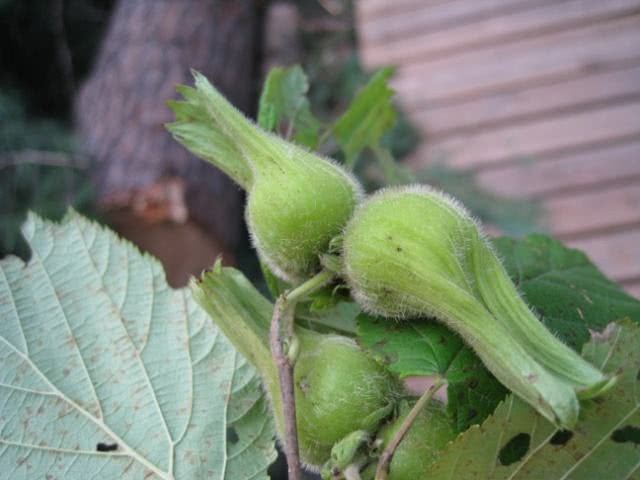
In the deep mountains and old forests of the Changbai Mountains there is a kind of fruit that looks like a mini chestnut, is known as the king of nuts, and is ranked alongside walnuts, almonds and cashews as one of the world's four great dried fruits. That is the Manchurian hazelnut, which local mountain farmers also call the "mountain chestnut", and even internationally it is a very precious dried fruit. Small as it is, the nutrients it contains are even higher than those of walnuts. In ancient times it was eaten as a dried fruit, and people at the time liked to roast it and serve it together with sunflower seeds, peanuts and the like to entertain distinguished guests. Nowadays hazelnuts are not only eaten on their own as a dried fruit, but are also used to decorate cakes and chocolates, and can additionally be used as medicine; eating more of them can have health-promoting effects.
Manchurian hazelnuts are generally wild, and their shape is more pointed than that of chestnuts, being conical and round, with a thin, crisp shell and a little bit of fuzz. There is also a kind of flat hazelnut that is easy to mistake for it; its shell is thick, its surface is smooth and hairless, and its taste is far inferior to that of the Manchurian hazelnut. The kernel of the Manchurian hazelnut is very plump and has a delicate fragrance; because it contains a relatively large amount of oil, after being roasted it has an oily aroma, and its texture is soft and smooth, leaving a lingering fragrance in the mouth, and it tastes better than chestnuts.
In China it is found only in the three northeastern provinces and the deep mountains and old forests of the north; abroad it is also found in places such as Korea, Japan and the Soviet Union. It likes to grow in the deep mountains and old forests of the temperate and warm temperate zones, so it prefers shade; if you are looking for hazelnut trees, go mostly to the woods and thickets on the shady side of the mountain.
In China, the best is the Manchurian hazelnut of the Lesser Khingan Mountains, with a price of no less than 40 yuan per jin, and generally you cannot even buy purely wild ones. Manchurian hazelnuts are rich in nutrients, with a large amount of protein and fat, and are also rich in a variety of vitamins and carotene and so on. Their amino acid content ranks first among all nuts, so the title "king of nuts" is not for nothing, and their nutritional value is even higher than that of chestnuts.
Because hazelnuts contain more than 60 percent oil and are easy to digest and absorb, they are a very good therapeutic food for people who are weak, frail and prone to hunger. In addition, hazelnuts can also stimulate the appetite, because their aroma can make a person's appetite surge.
Nuts are most suitable for people who use their brains a lot, and they are very good for eyesight. In the records of traditional Chinese medicine they are neutral in nature and sweet in taste, and eating a lot of them is not harmful. Besides the advantages above, the fiber they contain can also aid digestion and treat constipation; although they are high in oil, they can lower cholesterol. After eating a lot of meat, eating more hazelnuts helps eliminate the saturated fatty acids from the meat. Secondly, they are also good news for people with the "three highs", and their high vitamin E content can also beautify and nourish the skin; eating more makes the skin look more delicate and can also delay aging.
Because hazelnuts are very famous and are a nut loved by people all over the world, every year in August and September there is a grand scene of hazelnut harvesting. When people harvest, they pick the flower buds along with them, or use machines to shake the fruit off the trees, or use machines to suck it up, or pick it by hand. In addition, because their water content is low, they are relatively easy to store; ordinarily they are put in gunny sacks, kept some distance off the ground, then ventilated to dissipate heat and dried in the sun for storage.