The 3 most acknowledged hardest-to-keep flowers - if you can keep one alive, you're a master. Do you have any at home?
Some flowers are easy to grow, like pothos and spider plants, which are generally recognized as easy to care for. There are also some difficult flowers, though opinions on difficult flowers vary greatly among flower lovers - some find them easy, some find them very hard, and there are a few that the vast majority of flower lovers find difficult, such as Rieger begonia, azaleas, phalaenopsis, and so on. Many flower lovers just can't keep them alive, and their hearts are broken. Let's take a look!
“
"Hardest to grow"
- Rieger Begonia -
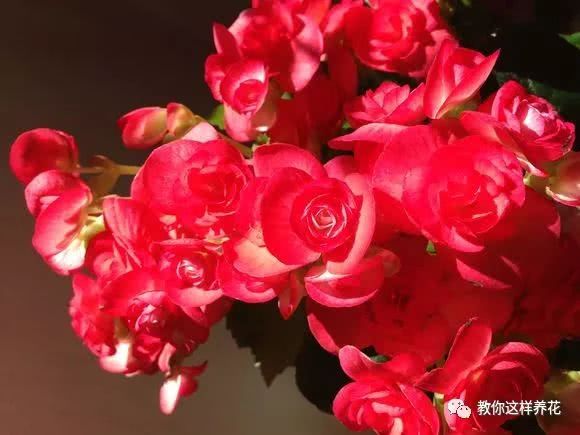
Rieger begonia is also called rose begonia. The flowers are very beautiful, and the colors are quite varied and vivid. The flower shape is excellent, with layer upon layer of petals that look especially lovely. However, Rieger begonia is not easy to grow - too much or too little water can easily cause problems, especially in summer. Many flower lovers often run into problems like root rot. Some say it's even more delicate than Lin Daiyu.
If you pay attention to 3 points with Rieger begonia, it won't be so difficult.
First, the soil mix for Rieger begonia. Rieger begonia needs loose, breathable potting soil. Generally, use peat moss, add some perlite and a small amount of organic fertilizer, and mix them together. Never use potting soil that easily compacts and doesn't breathe, otherwise root rot is very likely.
Second, Rieger begonia is rather delicate and should be kept indoors in a spot with diffused light. It can't withstand wind, sun, or rain, and shouldn't be placed in a drafty spot. Move it as little as possible, as this affects the plant's stability and flowering.
Third, watering Rieger begonia. You must pay special attention when watering Rieger begonia. Generally, wait until the soil is slightly dry before watering. You can insert your finger about 1 knuckle deep into the potting soil - if it's already dry, you can water. Alternatively, you can wait until the top of the flower is slightly wilting; at that point it's already in a state of water deficiency, so you can also water. When watering, use the soaking method - that is, fill a tray or basin with water and let it absorb water through the bottom drainage holes. This way, the plant's roots and stems are less likely to have residual water, and root rot is less likely.
Using the soaking method makes it much easier for Rieger begonia to get through summer
- Azalea -
Azaleas are lush with flowers and leaves, and are gorgeously varied, but azaleas are not easy to grow. As the saying goes, flowers in the first year, yellow in the second year, and leaves all gone in the third year! There's truth to this. Azaleas like humid environments, and for some northern flower lovers they're even harder to grow - leaves often dry up, and there's heavy leaf drop. So how exactly should azaleas be grown?
When caring for azaleas, there are 3 points below that need special attention.
They should be kept in a semi-shaded, well-ventilated spot, as they fear direct strong light. Azaleas are shade-loving flowers, so generally keep them in a semi-shaded spot. In summer, pay attention to shading - direct strong light can easily cause yellowing and withering of branches and leaves, stunted growth, and death of the whole plant. Keep them in a well-ventilated place to reduce many pests and diseases.
They should be kept in a humid environment, as they fear dryness and can't tolerate waterlogging. When watering, you can water when the soil looks dry and stop when moist - the ideal state is moist but not wet, with no standing water, otherwise root rot is easy. In autumn and winter, you can keep it appropriately on the dry side, which helps azaleas get through winter.
Choose acidic soil, as they fear saline-alkaline soil and prefer light fertilizer over heavy fertilizer. Azaleas are a typical southern flower that loves acidic environments, so choose acidic soil rich in humus, generally based on leaf mold or peat soil. Normally, you can regularly water with a 0.2% ferrous sulfate solution, which helps leaf growth and reduces yellowing. When fertilizing, pay attention to applying light fertilizer frequently - you can top-dress about every 15 days, mainly with phosphorus and potassium fertilizer. Be careful not to apply heavy or raw fertilizer.
Through grafting, you can also achieve multiple colors on one plant, which is very beautiful.
Azaleas have strong sprouting ability and tolerate pruning, and their roots and trunks are uniquely shaped - made into bonsai, they're especially beautiful.
(Azalea Bar, Yi Song Yuan)
- Phalaenopsis -
Many flower lovers say phalaenopsis is also rather hard to grow. They see how beautiful phalaenopsis blooms are, buy one, and not long after taking it home the flowers fade and the phalaenopsis dies from root rot or leaf rot. Phalaenopsis flowers resemble butterflies, like flower butterflies dancing among the flowers, with flower shapes and colors full of variation and extremely beautiful flower posture. They're deeply favored by flower enthusiasts and have the reputation of the queen of orchids. Phalaenopsis is a southern flower, and for many northern flower lovers it's also quite difficult to care for, so phalaenopsis can be said to be a rather delicate but astonishingly beautiful flower.
After the flowers fade, phalaenopsis becomes much less ornamental, and in winter the leaves are very prone to cold damage. Many flower lovers just throw them away, which is why after the New Year you can often see phalaenopsis in trash cans. This is truly a pity - in fact, if cared for well, phalaenopsis can bloom every year.
In the care of phalaenopsis, the medium is very different from other flowers. The growing medium for phalaenopsis is materials like sphagnum moss and bark. Phalaenopsis is an epiphytic orchid, attaching to rocks or tree trunks with aerial roots and absorbing water and nutrients from the air. Therefore, a loose and breathable medium is best. For general care, use sphagnum moss as the main medium, and you can mix in some bark and clay pebbles. Remember, you must not use garden soil, otherwise you'll kill one plant after another. Use better-quality sphagnum moss - lower-quality sphagnum moss generally rots in about a year, and after it rots you must replace it promptly, otherwise it causes root rot.
Phalaenopsis is especially intolerant of cold, so special attention is needed in winter. Below 10°C, phalaenopsis may suffer cold damage, so be especially careful - overwintering in a place above 15°C is safer. Above 35°C in summer, it goes into semi-dormancy, so keep it in a ventilated, cool place. Temperatures too low or too high are both bad for phalaenopsis growth.
When watering phalaenopsis, wait until the sphagnum moss is dry before watering. You can feel the moisture content of the sphagnum moss with your finger - if it's still fairly moist, don't water. Don't let the sphagnum moss stay moist all the time, otherwise root rot is easy. Sometimes when phalaenopsis is short of water it wilts a bit, and after watering it doesn't stand up promptly - don't keep watering. You can increase air humidity by misting the leaves to help the phalaenopsis recover.
These flowers are not easy to grow
If you can grow even one well, you're a master
If you also can't grow them well
See whether any of the points above weren't done well!
Show this to flower lovers who need it!