Don't water newly potted succulents, so the leaves won't lose their color
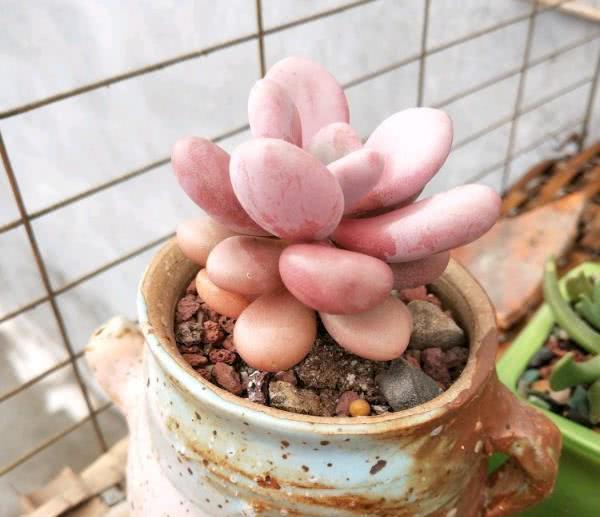
Many gardening enthusiasts say that after potting up a newly bought succulent, the leaves lose their color. In fact, as long as the method is correct, you can make sure your succulent doesn't lose its condition during the establishment period. The biggest problem causing newly bought succulents to lose condition is lack of water. Whether you buy a succulent online or from a flower market, if you just touch its leaves they will be fairly soft, especially the old leaves at the bottom. This is because they don't water the succulents, and without watering the succulents can keep their good condition. So the beautiful succulent you buy is actually in a very thirsty state. Especially after it has gone through root trimming and been potted up, if you don't give it water as soon as possible, it will consume extra nutrients in order to grow roots. This double consumption is the most likely to make the succulent wilt, and during the establishment period a ring of wilted leaves at the bottom is a normal sign of consumption.
For a succulent that needs repotting or has just been bought back, first use sterilized scissors to cut off the thinner roots and any rotten roots. Then put it on a cool, ventilated windowsill to air-dry. If you cut off a lot of roots, air-dry it longer; if you cut off only a little, air-drying for one day is enough. For a small newly bought succulent, cut off some leaves; you can't leave too many, otherwise it won't survive easily. If you are repotting a succulent you already had, just cut off some leaves. After cutting, it also needs to air-dry for one to two days. This step can be done together with root trimming.
During the establishment period, remember never to water. The succulent as a whole may soften, but as it gradually establishes and its life activities recover, the leaves will become firm and upright. One more small detail: if the upper part of the succulent is already firm and upright and the old leaves at the bottom start to be consumed, that also means it has established. Note here: don't water frequently just because you see the lower leaves are soft. This is where many succulent growers run into problems. Because during the establishment period you are basically keeping it in a water-controlled state, the succulent will consume the nutrients of the lower leaves, and this is a sign of establishment.
After the succulent has established, for succulents grown on a balcony, you must take the opportunity to give them more sun. The reason is that most native succulents grow in dry, sunny environments. Of course, more sun does not mean baking in the sun. Especially in midsummer, succulents fear scorching sun the most. In summer you should set up a shade cloth for your succulents, or move them somewhere with less intense sunlight, to avoid direct scorching sun. And good ventilation helps the soil dry out, and dryness is the environment succulents like; ventilation and dryness can also reduce the chance of bacteria harming the plants.
Whether they are succulents from deserts or high mountain regions, their stems and leaves store a lot of water, so the amount of water you give must not be too much. Also, when a succulent is extremely short of water, it will consume the water in its own leaves to supply the nutrients it needs, and at this point the lower leaves will gradually dry out; in addition, when short of water, stone plants (Aizoaceae) and some Crassulaceae plants will develop wrinkles in their leaves; other succulents will have soft leaves when short of water. These are all watering signals they give you.
Sometimes wrinkled, softened leaves don't necessarily mean lack of water either, so you need to judge based on your usual watering schedule and the recent weather conditions. Generally speaking, if it is a case of lack of water, water it that evening and the leaves will plump up the next day. But if there is no change for several days in a row after watering, then you need to pay attention. This situation usually means the plant's roots haven't grown out, or the original roots have already rotted. At this point you can pull the succulent out of the soil, clean up the roots from scratch, and repot it in somewhat drier soil.
This is a gathering place for succulent enthusiasts, sharing succulent care tips. You are welcome to follow and exchange ideas.