One of the oldest fruits was once a tribute offering, and it must be cooked before eating; only old farmers have tasted it
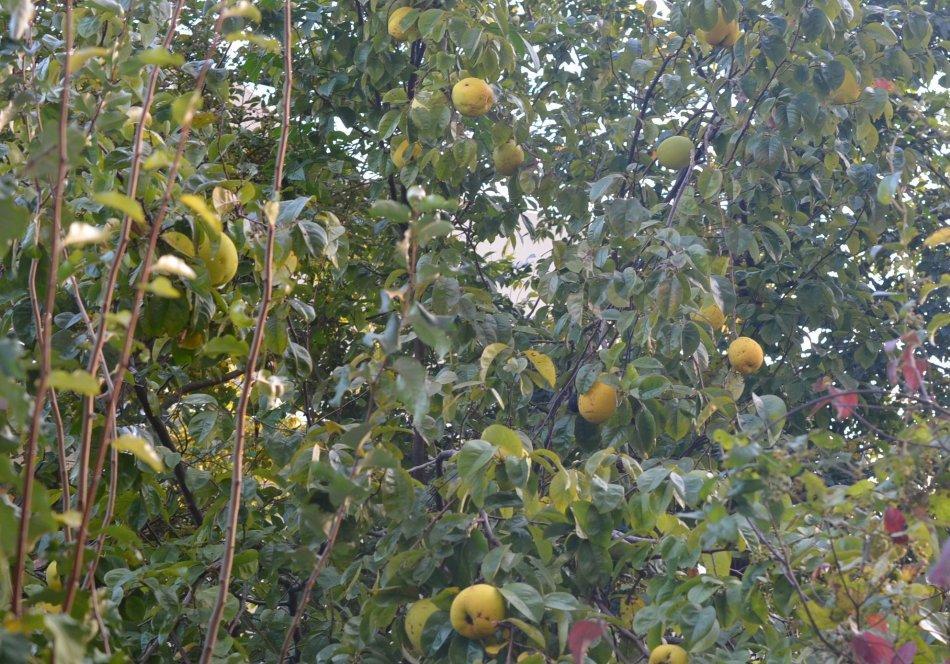
Once again the year has reached August and September, and this is when a scenery unique to the year begins to appear: fruits covering the hillsides weigh down the branches, their fragrance drifts freely, and it is utterly wonderful. At this time, the quince is exactly the right thing to taste fresh. Quince is the old Beijing name for it; it actually carries a sweet-and-sour meaning. Its real name is mugua (wood pear), and it is one of the ancient tree species of our Xinjiang. It differs from ordinary pears: its taste is not very sweet, and it has a somewhat sour and astringent mouthfeel, far inferior to ordinary pears, yet it was a tribute item during the feudal society period of our country. Ordinary people never ate it, nor had they even seen mugua.
Mugua is a small tree in the Rosaceae family. It blooms from April to May each year and fruits from August to September. The fruit resembles a pear, is yellow, and has a rich fragrance. It is mainly distributed in our Xinjiang, Jiangsu, Northeast China and other places; in addition, it is also one of the ancient tree species of Europe, Central Asia and other places, and for this reason mugua has become one of the oldest fruits in the world. Today it is used as a grafting rootstock for many kinds of fruit trees, mainly to graft Rosaceae fruit trees such as the European pear. It likes sunlight and can also tolerate semi-shade, has extremely strong adaptability, is cold-resistant, is generally not picky and can survive anywhere, and requires good soil drainage. The fruit can not only be eaten as a fruit, but can also be used in medicine.
The fruit of mugua can be used in medicine, and there is a fairly long history for reference. For medicinal preparation it needs to be dried in the shade; its nature is sweet, sour, and warm. It can dispel dampness and relieve summer heat, and activate the meridians. In ancient palaces it was often eaten as a health-preserving dessert, and it has a very good effect on vomiting, diarrhea, poor appetite and so on. There are also those who use mugua bark in medicine; it can be harvested throughout the year, and it uniquely has the effect of drying dampness and astringing sores. For medicinal use, take fresh mugua bark, then pound it and apply it to the sore, and it has a certain effect.
In addition, because mugua's taste is unique, its fragrance extraordinary, fresh and pleasant, many people abroad put mugua in cupboards and use it as a purely natural air purifier. Eaten raw as a fruit, mugua has an extremely poor mouthfeel and is all residue, yet it is an excellent fruit for making soups and broths. So it is always cooked before eating; add a little sugar water and honey, and it has a distinctive flavor. Its nature is mild, so pregnant women, children, people with weak constitutions, people in sub-health and others can all eat it.
Now in many places this ancient fruit can no longer be seen, and only some old farmers from the past have tasted it. Friends, have you ever eaten mugua?