Potted orchids grown with shells: leaves glossy and blooming profusely
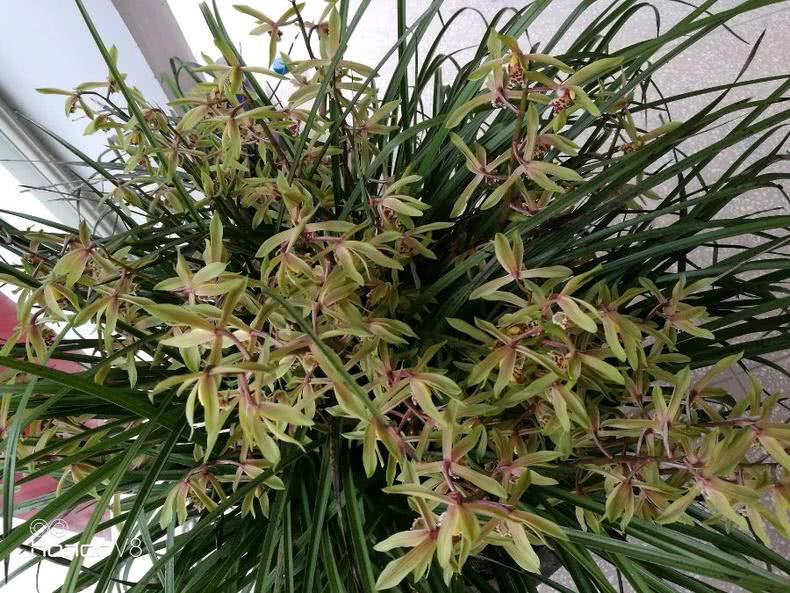
Add some shells to your potted orchids, and the effect is anything but ordinary! Fellow flower lovers all know that the fragrance of orchids is very special and sweet, but orchids are also rather delicate and hard to keep alive, so many flower lovers worry that the orchids they grow won't bloom, and without blooms they won't be able to smell their fragrance. In fact, as long as flower lovers make clever use of a few tricks, they can get them to bloom and fill the room with a delicate fragrance.
When it comes to "clever tricks", they are certainly not ordinary methods. A few days ago, a flower lover said that mixing sunflower seed shells, walnut shells and nutrient soil together works well for growing orchids. Those who like it can take a look.
Note: it is best to use raw sunflower seed shells; the roasted ones have a lot of salt added. Second, walnut shells need to be crushed, and mixing them with nutrient soil or putting them at the bottom of the flower pot works well.
Chestnut shells, walnuts, peanuts, sunflower seed shells crushed, rotted tree bark and so on mixed together also give decent growth, and putting a few small broken bricks on top doesn't affect the look and also improves air permeability, better than using sphagnum moss! Besides growing orchids with "shells", how else can they be grown? Let's take a look together!
Willow branches as a flower pot liner
Willow branches have a certain root-promoting effect, which is very good. Many people like to collect branches and put them at the bottom of the flower pot. They not only help retain water but also repel insects and promote roots. If you like this, you can keep some and take them home when you see them.
However, willows are generally only found in parks, and I don't suggest you go and get them, as it has a bad influence. If you can't use willow, you can use aspirin, which can be bought at pharmacies; after dissolving it, using it to grow orchids still gives a decent effect. When it comes to soil for orchids, the point is air permeability. Why do orchids mostly use tree bark? That's just how gardening is. A few days ago I found that a nutrient soil used for roses also works well for growing orchids. It's just quite expensive, but the effect is very good.
It uses a mix of imported peat and tree bark, supplemented with controlled-release fertilizer and water-retaining materials, so it can be called a top-grade nutrient soil for growing roses and orchids. It's very suitable for beginners, though the price is a bit high!
Sugarcane water fermentation
This is nothing special in the south. Friends in the north can directly dissolve 1 jin of white sugar, then add a cup of old yogurt or 2 jin of rice-washing water. Put it in a bottle and ferment for 7 days, and remember to release the gas or it will explode; I've tried it myself.
If you want to use good fermented sugarcane water, you can choose a ready-made nutrient solution. Dilute it 500 times and water the orchids once every 5 days, which can promote root dilution. The roots grow plump and white, there are many tillers, the leaves are lush green, and blooming comes naturally.
Watering and fertilizing at the same time
Orchids have stricter water requirements than other green plants, because when short of water the orchid roots will be in a dehydrated state, which directly affects growth. But when there is too much water, it reduces the oxygen content and causes root rot.
Besides growing them in a good substrate as mentioned above, for watering we can water the soil once every 3 days, and for the leaves we can spray once every 2 days. This may give a better effect. Adding a little good nutrient solution when watering doubles the effect.
Alright, if you like these little tricks, you can give them a try. Those who like eating walnuts together with sunflower seeds shouldn't miss out, as these are great things for growing flowers!