Hydroponic Cacti Actually Grow Better Than in Soil, Don't Miss Out
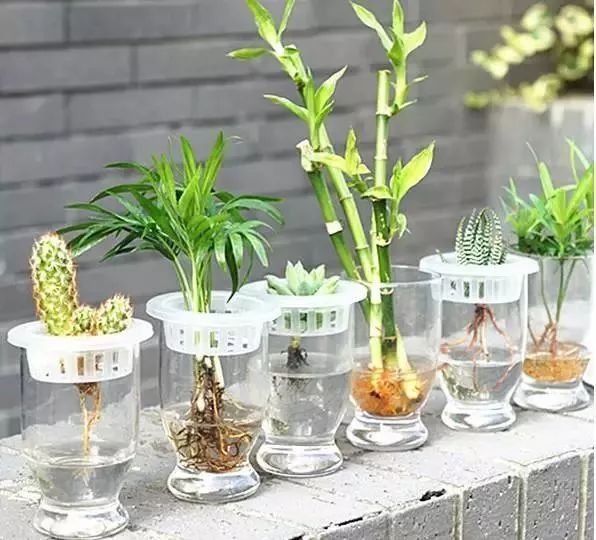
Recently, I've received many questions from flower lovers about hydroponic (water-grown) flowers, such as how to grow pennywort? How to hydroponically grow Guzmania? ... Now, let me share a few super easy-to-grow and beautiful hydroponic plants. Don't be afraid of messing them up - just wash the roots and change the water... they're easy to grow well.
1. Hydroponic Aloe
Choose a healthy, intact aloe, wash and disinfect the roots,
the roots just need to slightly touch the water surface, and the leaves must not touch the water
(you can also add some substrate in the bottle to secure the root system). After planting, you can place the hydroponic aloe in a cool, ventilated place to prevent sunburn.Note:
To help the roots grow quickly, you can use black cloth to cover the lower half of the vase.
Pay attention to changing the water regularly, once every 2-3 days, promptly remove rotten roots, clean the container, and make sure there is no odor in the water. After new roots grow, you can switch to a foliage plant nutrient solution for long-term cultivation.
2. Hydroponic Spider Plant
Cut off small spider plant plantlets with aerial roots from the stolons of the mother plant and insert them into water for hydroponic growing; after a few days, you will see the plant grow new tender white roots.
Note:
Hydroponic spider plants should be placed in a spot with good light, which is good for rooting. In the first few days, change the water every day; after rooting, just change it when the water gets dirty.
3. Hydroponic Pothos
When hydroponically growing pothos, you can cut off branches with aerial roots, which can root faster.
Pothos likes a humid environment; frequently spraying the leaves can make them more vivid and beautiful.
4. Hydroponic Lucky Bamboo
Before hydroponically growing lucky bamboo, cut off the leaves at the base and make a slanted cut at the root part so it can absorb water better. Tap water is best stored for a day before use. Add water to the vase until it reaches 1/3 of the vase; too much water will affect root respiration.
Note:
Before lucky bamboo roots, change the water frequently, generally a complete change every 3~4 days
. During this period, do not casually move the lucky bamboo in the water, and do not fertilize. After rooting, change half the water every 10 days or just top it up.
5. Hydroponic Peace Lily
Remove the peace lily plant from its pot, clean off the old soil from the roots, wash with clean water, and cut off aged and rotten roots. You can choose a narrow-mouthed bottle and use stones to secure the roots, ensuring 1/3 of the roots are in the water.
Note:
Hydroponic peace lilies should
be placed in a bright place without direct sunlight for care.
Change the water frequently, rinse off the mucus on the roots, cut off old roots and rotten roots, and clean the inner wall of the water bottle. In daily care, spray the leaves with clean water to keep them moist; it is best to spray foliar fertilizer once a week.
6. Hydroponic Hyacinth
After buying hyacinth bulbs, first rinse them clean under slow-running water, then peel off the purple outer skin until the white part is exposed. Then clean the roots, sterilize and disinfect, and place in a cool place to dry naturally; after a day they can be planted. Generally, the bulb should be 2~5 mm from the water surface; a container with a hydroponic basket is best.
Note:
Newly planted hyacinths must have their roots shaded from light. During the hydroponic process, never fill the water to the top
。
After two months of care, place the hyacinth in a wide-mouthed glass bottle and add a small amount of charcoal to help disinfect and prevent rot. The water temperature for hydroponic hyacinths should be similar to room temperature, not too cold or too hot.
7. Hydroponic Cactus
Remove a robustly growing cactus (ball) from its pot and wash the roots, then place it in a planting basket or a heavy, stable glass flower vessel to prevent it from falling over.
Note:
The cactus body should not touch the water surface, and when changing the water, do not drip water onto the cactus, to prevent water accumulation and rot. Choose the water-changing frequency according to the water quality, and frequently clean the container walls to prevent moss from growing.
8. Hydroponic Guzmania
Guzmania leaves easily attract dust, so they need to be wiped frequently. For hydroponics, you need to use maifan stone or another substrate to secure the roots. Note: each time you change the water for Guzmania, do not splash it onto the flowers.
9. Hydroponic Pennywort
Pennywort hydroponics can also be combined with soil cultivation. Spread soil at the bottom of a ceramic pot, then add an appropriate amount of clean water; this way, the rich nutrients in the soil will better help the plant grow.
When the clean water in the pot decreases, just replenish it in time.
Source: Yanghua Dama (ID: yanghuadm)