Figs and fig wasps: a love-hate relationship in nature
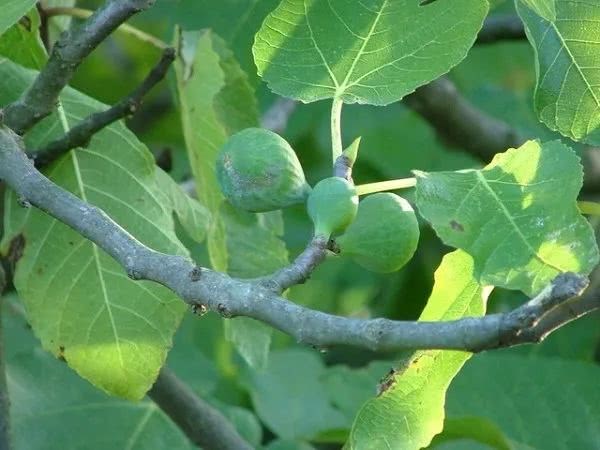
When people in northern China think of Ficus plants, they may picture the fig tree with its slender branches and oddly shaped leavesfig tree; people in the south may think of a massive banyan with dense shade and trailing aerial roots. Regardless of size, their "fruits" all share a highly consistent and distinctive shape.
The delicious fruit is hidden inside
The inflorescence of Ficus plants is called a syconium, and it grows into a round "jar" shape,wrapping the true flowers inside. We cannot see the flowers, hence the name "fig" (literally "flowerless fruit"). The true fruits of Ficus are very small, belonging to the achene type, hidden inside the enlarged syconium.
The most famous Ficus fruit is the fig, and the syconia of some other fig trees are also edible. When I was studying in Hong Kong, China, I once saw many small birds eating fig tree "fruits" (more precisely, syconia), possibly those of the Chinese banyan (Ficus microcarpa). I also tried eating one, and it was actually not tasty at all; the syconium was very small, filled with many withered flowers,and tasted like eating grass。
Trypophobia warning ahead!!!
A cross-section of a fig fruit, showing the achenes inside. Image: Kyle_the_hacker / wikipedia
The fruit of Ficus auriculata is said to grow up to 10 cm in diameter, and it is also known as big pomegranate, honey loquat, and polo fruit. Ah, it sounds delicious.
The fruit of Ficus auriculata. Image: Koppchen / wikipedia
Another one worth mentioning to food lovers is Ficus pumila (creeping fig). Its syconium is not tasty, but its achenes are rich in pectin and can be made into jelly-like desserts. In Taiwanese desserts,aiyu jellyis made from a variety of Ficus pumila (Ficus pumila var. awkeotsang).
The syconium and internal achenes of Ficus pumila. Image: Zheng Yuqing / anntw.com
You die for me, I live for you
The relationship between plants and pollinating insectsappears intimately connected on the surface, but in realityhides competition. Fig trees (such as figs and Ficus pumila) and fig wasps have reached an extreme degree in this regard.
Within the superfamily Chalcidoidea, there are several families, such as Agaonidae, which are calledfig wasps。
because of their special relationship with Ficus plants. Ficus plants are highly dependent on fig wasps for pollination. The syconia of Ficus can be divided into two types: one containing female flowers that can produce seeds, and one containing male flowers and sterile female flowers, called gall [yǐng] flowers.Gall flowers also have ovaries, but not for producing fruit; instead, they provide a growing environment for fig wasp larvae.Fig wasp larvae feed on the nutrients in the ovary, growing and maturing inside the gall flower. Female and male wasps generally complete mating inside the fruit. By this time, the male flowers have also matured, and pollen is scattered onto the female wasps.
The winged female wasp crawls out of its home, flies outside to search for other syconia, and enters through a small opening at the top. If it enters a syconium with gall flowers, it lays eggs on the gall flowers, and the fig wasp generation can continue.
A wasp with the scientific name Ceratosolen capensis crawling out of a gall flower. Image: figweb
If the syconium containsonly female flowers with fruit-producing potential, the female wasp has nowhere to lay eggs, and itcan onlybe trapped inside and die. The opening of the fig is blocked by layer upon layer of tissue, making it very difficult to crawl out again. It is the fig wasp that sacrifices its life that allows the fig to continue. The pollen on the female wasp's body falls onto these female flowers, and the female flowers then bear fruit; afterward, the syconium swells, attracting animals to feed and disperse the seeds.
A fig wasp entering a syconium. Image: naturalezacuriosa.com
By the way, many commercially grown figs are parthenocarpic and do not need pollination; their syconia will still swell. So the figs you eat may not necessarily have the contribution of fig wasps.
There are also some non-pollinating fig wasps that drill directly through the "wall" of the syconium from the outside and lay eggs inside. After hatching, they either eat the ovaries of gall flowers or eat the larvae of other fig wasps.
The non-pollinating Apocrypta guineensis, using its ovipositor to pierce the "wall" and lay eggs. Image: JMK / wikipedia
The survival of fig wasps depends on the sacrifice of the fig tree's female flowers; the reproduction of the fig tree is inevitably built upon the lives of female fig wasps. Both must rely on each other to survive, but the survival of either means the death of the other. This relationship can hardly be called friendship or cooperation; perhaps it could be calleda pairing of yandere and yandere?
This article is authorized for reprint from Species Calendar author @Red Queen.
If you like her, you can also follow
Mantis Shrimp's Squirrel Nest
id: gh_6422b69589c2
Strange species and interesting knowledge
Calendar Girl's avatar today
Moraceae Jackfruit