Tips for growing crown of thorns: lush branches and leaves with continuous blooms all year round
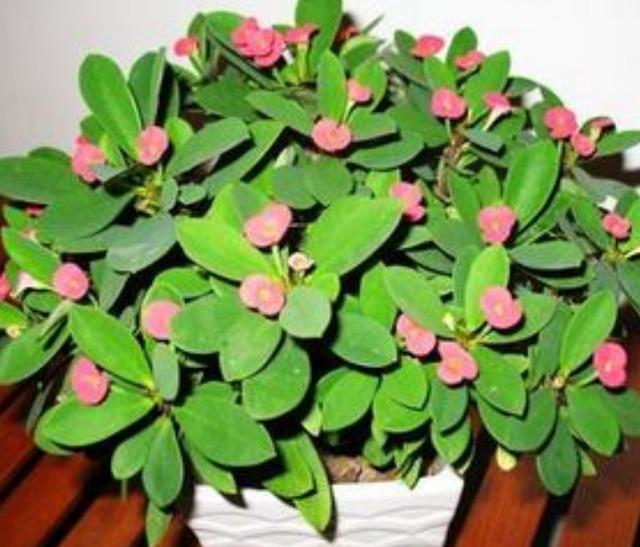
Crown of thorns, also known as Euphorbia milii. When it blooms, small red flowers hang all over the branches, "a touch of red among a sea of green," making it very endearing. Crown of thorns is a very tough and hardy flower, yet some growers find their crown of thorns has lush branches and leaves but simply will not bloom! Personally, I think there are only these three main reasons: 1. Not enough temperature; 2. Insufficient light; 3. Improper fertilizing. Meet these three conditions, and crown of thorns can bloom all year round!
Crown of thorns loves sunlight very much, and unlike some other plants that need shading in summer, crown of thorns, just like jasmine, can be given plenty of light all year round! At temperatures above 15°C, the more sufficient the light, the more flowers it produces. The two pots of crown of thorns I grow on my balcony get a few hours of slanting light every afternoon, and even at a high summer temperature of 38°C, they still bloom vigorously.
Crown of thorns is not demanding about soil either; loose and breathable soil is fine. A mix of pine needle soil or leaf mold with garden soil and river sand can meet its growing needs. Crown of thorns likes water; in summer when temperatures are high, be sure to provide a sufficient water supply, and do not wait until the potting soil is completely dry before watering, because summer evaporation is high, so water again once the potting soil is slightly moist. In winter when temperatures are low, be sure to wait until the potting soil is completely dry before watering, and choose to water at noon on a sunny day, warming the water to near room temperature to prevent the roots from suddenly getting cold and suffering frost damage.
If you want crown of thorns to bloom more, you also need to provide a sufficient supply of fertilizer. In early spring when crown of thorns has just sprouted, apply more nitrogen fertilizer to promote the growth of branches and leaves. Once the temperature reaches above 15°C, crown of thorns can begin flower bud differentiation; at this point, be sure to reduce nitrogen fertilizer intake and apply more fertilizer based mainly on phosphorus and potassium. Two to three times a month is enough; you can spray the leaves with a 1:1000 potassium dihydrogen phosphate solution, or directly drench the roots of the plant.
When the winter temperature drops below 10°C, crown of thorns will enter dormancy due to unsuitable temperature, showing dry leaves and a wilted plant, as if it had died. Some growers think their crown of thorns has frozen to death and throw it away, but in fact when the temperature rises again in spring, it will wake up and grow branches and leaves anew!
It should be noted that crown of thorns belongs to the Euphorbiaceae family, and the sap in its stems is mildly toxic. After pruning the plant, a white sap will flow out; this white sap can trap small flying insects, and if there are wounds on your hands, it will have an irritating effect on them. This is also an instinctive self-protection response of crown of thorns, so be sure to wash your hands promptly after pruning. For growers who have children at home, place crown of thorns out of children's reach to prevent accidents.