When a pothos grows this thing, it is good news, so do not rush to cut it off
Stepping into August, you will see that the colors of August are like sunlight shining on the happiness of life, rolling across the fields, brushing the tender green seedlings, rising between heaven and earth, reflecting the pure white clouds, layered in busy figures, caressing the joy of cultivation, giving off this fresh and natural beauty.
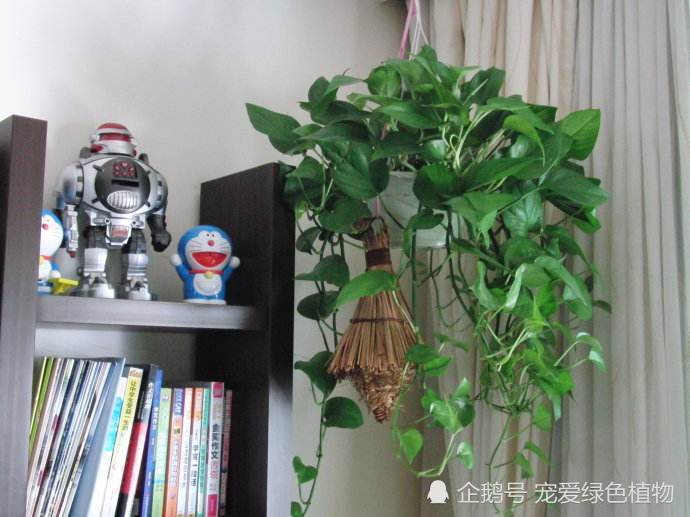
We all say that August is a season for enjoying flowers. Although pothos cannot bloom with bright, vivid flowers, its ornamental value is quite good. It can not only purify the air and absorb formaldehyde, but also serve as a foliage plant, making it one of the top choices among potted plants. At the same time, August is also a period of rapid growth for pothos.
I wonder if friends have ever encountered this phenomenon while caring for pothos: many bubbles grow on the stems of the pothos. Some friends do not know what these bubbles are about and worry whether something is wrong with the pothos, and whether they need to be cut off.
Actually, at the very beginning, the editor also had these questions, not knowing what those bubbles were, and all kinds of worries followed one after another. Later, I discovered that those bubbles were the aerial roots growing from the pothos.
When a pothos grows "aerial roots," it is good news, so do not rush to cut "them" off!
In particular, pothos on a moss pole and water-cultured pothos are the most prone to growing aerial roots. These aerial roots grown by the pothos bring us good news, indicating that our pothos is about to fill its pot, because aerial roots absorb moisture from the air. As long as we do not cut them off, over time, the more aerial roots grow, the more vigorous the pothos will become!
If we do not know the correct method for cutting off pothos bubbles, and if the method for cutting off the bubbles is wrong and the ventilation conditions of the pothos growing environment are too poor, then the cut openings can easily become infected, and in the most serious cases, this can directly cause the pothos to rot!
Since August is a period of rapid growth for pothos, with fast growth, relatively large leaves and leaf surfaces, and high water consumption, the pothos should be watered sufficiently so that the potting soil does not become too dry. At the same time, spray water frequently on the branches, leaves, and surrounding area to create a humid environment, and apply a fertilizer combining nitrogen, phosphorus, and potassium once every half month.