Orchid leaves turning black and withering from the base: pinpoint three causes to grow it well
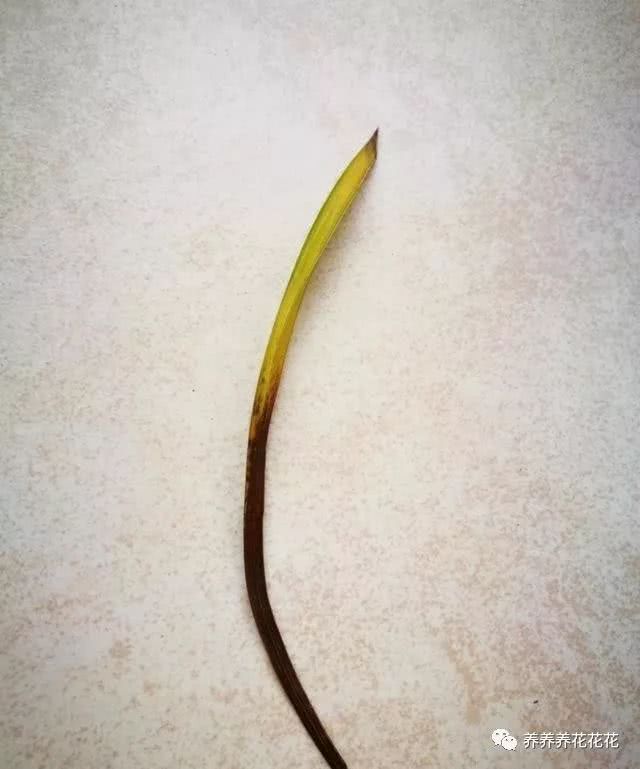
When orchid leaves turn black and wither from the base, there are usually three situations. First, natural degeneration. Second, leaf blight. Third, stem rot.
First, natural degeneration. In the orchids we grow, the leaves on each pseudobulb have their own lifespan. Some say three years, others say five years. This may vary with the orchid's innate factors, the different growing conditions of the north and south regions, and different external influences. Normally, for orchids of the same variety, those growing in warmer regions may have leaves that live about three years per plant, while those growing in cooler regions may have leaves that live about five years per plant. So orchid leaves, like people, will show degeneration once they reach a certain age. Under suitable growing conditions, they may last a bit longer; if the growing conditions are unsuitable, the lifespan of each leaf will be greatly reduced. This is why old orchid growths often develop yellowing, withered, degenerating leaves.
Second, leaf blight. In daily care, no matter how carefully we manage them, bacterial and fungal infections are hard to avoid. Orchid leaf blight is also a common fungal disease in orchid plants. It mainly occurs when pathogens infect the plant's leaves; the leaves gradually yellow and wither from the tip, and when the whole leaf has yellowed to a certain degree, it drops off automatically at the leaf node. Some orchid varieties do not have a distinct leaf node, so no abscission layer forms and the leaf does not drop off on its own. In plants infected by the leaf blight pathogen, the pseudobulbs below usually do not rot. As long as these pseudobulbs retain enough moisture, the bulbs are fresh green and plump. Later, when repotting or dividing, they can be cut off and planted separately, and can be grown into new plants.
Third, stem rot. Stem rot is often caused by poor human management. For example: excessive or too frequent watering, frequent misting of the leaves, extremely poor ventilation, improper use of chemicals and fertilizers, and sometimes even watering at the wrong time can cause stem rot. Stem rot often appears first on the pseudobulbs, then gradually spreads to the leaves and roots. When we notice the plant's leaves yellowing and shrinking, its underground pseudobulbs are already black and water-soaked, though sometimes the roots are indeed intact. Once this happens, the pseudobulbs of this plant, and even the pseudobulbs of several plants, will turn black and rot, and it is basically beyond saving. Therefore, in daily care, you must get the supply of water, fertilizer and ventilation just right, do good preventive work, and never be careless. Once symptoms appear, it is irreversible.
When orchid leaves turn black and wither from the base, there are three causes, and only by handling it this way can you grow it well. Be sure to remember these three points.
If you love growing flowers, followWeChat official account: (hcqzj521)More flower-growing knowledge is waiting for you