Succulents need to be repotted promptly when these two situations occur
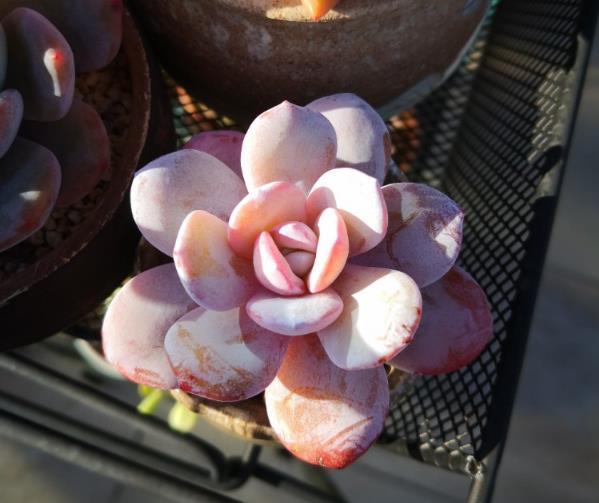
If a succulent does not grow at all during its growing season - most succulents grow fairly quickly in spring and autumn, growing a lot in one or two months - but if you find your succulent has not grown for a long time, this means there is a problem with the root system, and we need to repot the succulent promptly and trim the roots; after it settles into the new pot, the succulent will resume growing. If it is a Haworthia or a peony-type succulent, slow growth is normal. If it is a Sedum type and has stopped growing, it is advisable to repot and check the roots - the root system has most likely developed problems, and you can choose spring or autumn to trim the roots and let them regrow.
The second situation is soil compaction. When we care for succulents, we often see the soil surface form something like a layer of skin - this is what we call soil compaction. Why does soil compaction occur? It is because the soil surface lacks some organic matter, and after watering and drying it hardens; sudden compaction is not good for succulent growth. Also, when we water the succulents and find that the water will not seep down or seeps very slowly, with water pooling on top of the soil, this means the soil has already compacted, and we need to repot the succulent immediately; over the long term the roots cannot absorb water and are prone to drying out. Generally speaking, when the proportion of peat soil in the mix is relatively large, the soil compacts faster; we can appropriately increase the proportion of gritty soil, which also makes drainage and aeration easier and benefits succulent growth.
Normally when we water succulents we use tap water, but tap water contains chlorine and bleaching powder. If tap water is used for a long time, it easily causes the soil to compact or even become saline-alkaline, so when watering we must treat the tap water in the following ways: the first is to draw the tap water and leave it in the sun for a day; the second is to draw the tap water and let it sit for a day before use. Both methods work and can remove the chlorine from the tap water.
When planting succulents, mix some perlite, coarse sand, coconut coir, etc. into the soil, but not too much - prepare it at a 1:1 volume ratio. This way the chance of soil compaction will be much smaller. If your soil has already compacted, you can add some coarse sand or perlite granules to the soil, then loosen the soil, and I believe your soil will no longer compact easily. When a plant has just been potted, the root system is inevitably damaged, so acclimating the seedling is really about acclimating the roots. When the roots have not fully recovered and cannot normally absorb nutrients and water, the plant will rely on consuming the nutrients stored in the outer old leaves to maintain normal physiological functions and the growth of new tissue.
Therefore the state it shows is that the stems and leaves are limp, and the outer old leaves gradually shrivel and fall off. At this point you do not need to worry at all that the plant has some health problem. Once the root system recovers, the old leaves will stop shriveling and dropping, and then the plant's growing point will begin to show activity and start growing. However, old leaves dropping is something that happens to healthy plants too - it is just that plants whose roots have not recovered will show old leaves dropping very quickly. At this time the old leaves are sacrificing themselves for the greater good.
When repotting succulents, you should wash the roots of the plant. Make sure to basically rinse off all the soil carried on the root system. This is because it very likely contains a large number of insect eggs and bacteria. Be gentle when washing - damaging roots is unavoidable, but damage as few roots as possible. You can hold the roots in a basin of water and shake them back and forth. It is advisable not to turn on the faucet and rinse with a very strong stream of water, as this will break off a large number of roots. Shake and soak repeatedly this way a few times, until you can see the white main roots. Generally speaking, when the proportion of peat soil in the mix is relatively large, the soil compacts faster; we can appropriately increase the proportion of gritty soil, which also makes drainage and aeration easier and benefits succulent growth.
This is a gathering place for succulent lovers, sharing succulent care tips - welcome to follow and connect.