When growing orchids, head into the mountains; under the trees there are two free treasures that pair perfectly for orchid care
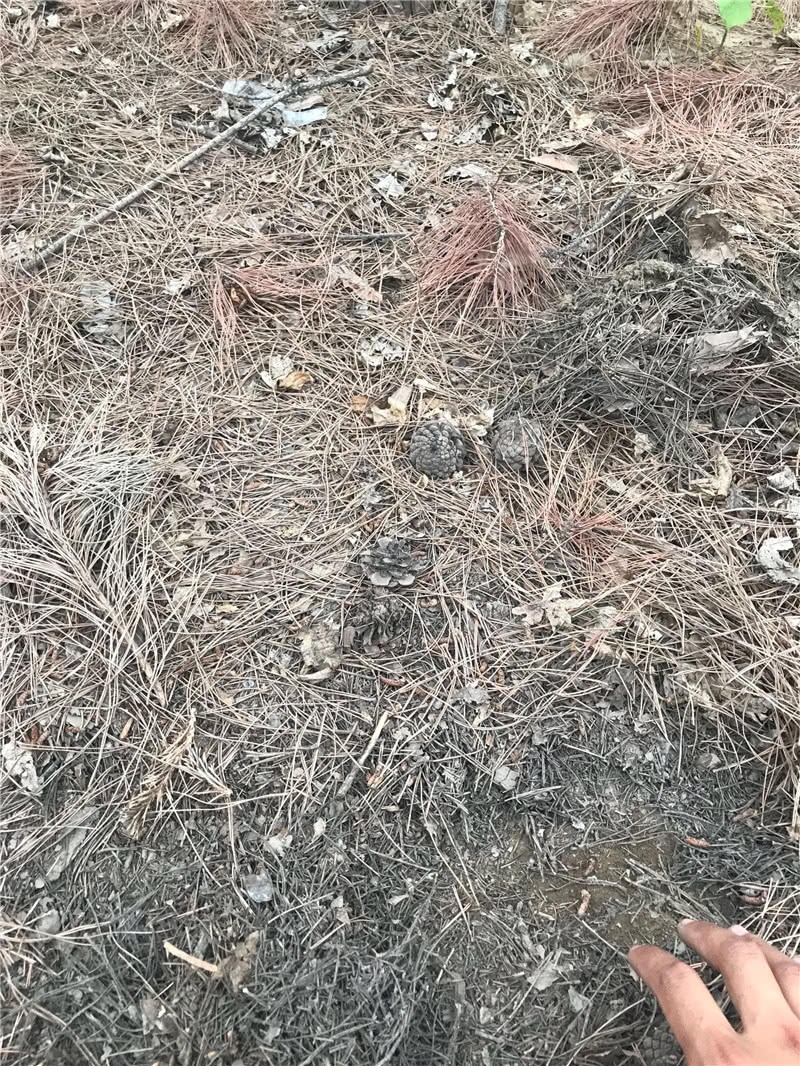
When it comes to growing orchids, going out to find your own soil and growing medium is nothing unusual anymore. Many orchid owners just love doing it, not to save a little money, but to experience the fun of it and while away the boredom and long days of the hot season. Today let's take a look at the "treasures" found by this orchid grower named "Cry Bravely, Laugh Hard."
1. The "two treasures" for orchid care
Originally, his plan was to go look for tree bark, but in the end he didn't find bark; instead he saw what's in the picture above: soil under a pine tree, with pine needles and pine cones, some of which had fallen into the soil and much of which had decomposed under the action of microorganisms. This stuff is also one of the "treasures" for growing orchids. Mixed into fine soil, it prevents compaction and also nourishes the roots. Hurry up and bag some.
Of course, in the end he got what he wanted and found tree bark, and it was already decomposed bark. This is good stuff. We all know that mixing bark into orchid soil increases aeration, ensures drainage, and lets orchid roots do "aerobic respiration," which is excellent for root health. It can also be used as a drainage layer at the bottom of the pot and spread on the pot surface.
2. First step of processing: sterilize and kill pests
Both of these things are good stuff, but when orchid owners imitate this, they'd better first learn how to process them. Only when used well do they have the best effect. First, after bringing both things home, you need to do two steps: one, scald them in boiling water; two, spread them out in the sun and expose them for one or two days.
3. Second step of processing: how to use bark?
After doing this step, our bark had better be composted once more. Soak the bark in water; when it turns black it's ready to use. Only when it's fully composted is it safe to use. Some orchid growers make their own fertilizer for orchids and use it when it's not fully composted, which easily burns the roots. For regular fertilizing, I suggest using fully compostedHuadongde orchid organic nutrient solution. This is relatively safe, and used together with bark the effect is also very good.
4. Third step of processing: how to use pine needle soil?
What about our pine needle soil? Don't use it directly either. You'd best first mix it with some other soil, then put it into a plastic bag or a large bucket to compost, add a little carbendazim, add a little insecticide, then mix in a bit of fruit peel and fish waste to make an everything-mixed soil, and after composting for half a year it's ready to use.
After this soil is fully composted, when potting, mix one quarter of this fine soil into the orchid pot, then add bark medium and granular medium. Fine soil is excellent for root health; using all coarse granules actually gives a less impressive effect. Secondly, fine soil can nurture the orchid's fragrance. If there's no fine soil in the potting mix, the flowers won't be as fragrant. This is also the experience of veteran orchid growers.
Orchid owners, when you're growing orchids, if you have the time and the mood, you can also try going out to gather some growing medium yourself, and use this method to compost soil and growing medium, and feel the fun in it. But this little gardener must remind you: pay attention to safety.