These flowers thrive on neglect - give it a try if you don't believe it
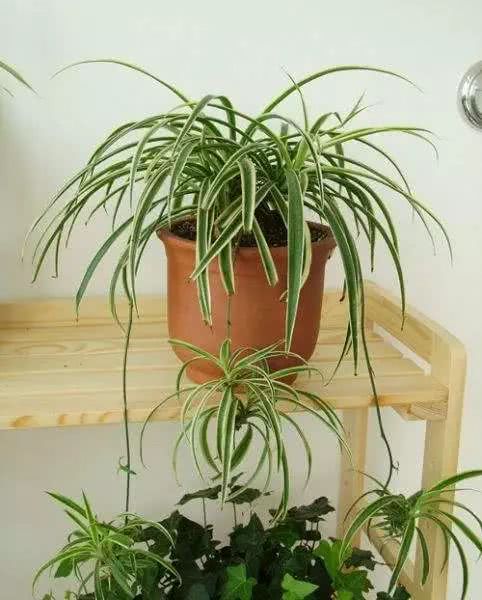
Growing flowers is sometimes like raising children: the more you pamper them, the more delicate and disease-prone they become; the more you let them be, the tougher and more resistant they get. Some flowers cannot be spoiled too much - only after enduring wind, frost, rain and dew can they grow strong roots and lush leaves. This is what the old saying means: "Tough love grows strong seedlings." So which flowers are suited to tough love and will burst into a full pot without any care?
I. Spider Plant
The spider plant (Chlorophytum comosum) can be said to be a flower that every household grows. Although it is easy to keep and hard to kill, problems like yellow leaves, dry tips, brittle leaves and root rot keep cropping up. In fact, if you want a spider plant to fill its pot with lush green growth, you need to practice rough, extensive care.
1. Place it near a balcony to receive plenty of light
Many families growing spider plants worry about the sun scorching them and keep them in dark places the whole time - this is a big misconception. Although spider plants tolerate shade, they still need light. If conditions allow, gardeners can even just toss them outdoors and let them face wind and rain; they may even grow better than indoor ones without any watering.
2. It won't die of dryness even if you don't water it for ten days to half a month
Spider plants fear waterlogging, not drought. Some gardeners worry about them drying out and water them every day, only for the excess water to rot the roots and kill them. When watering spider plants, never be too diligent. Huahua is usually busy with work and waters the spider plants at home once every 10 days to half a month, and they are still very lush. In any case, spider plants won't die of dryness - what you should fear is spoiling them so much that you water them to death.
3. If growth is poor, give it a buzz cut - the more you cut, the more vigorous it grows
Spider plants kept at home often develop yellow leaves, dry tips and leaves that break easily. When this happens, Huahua suggests taking a big pair of scissors and snipping off everything more than 3cm above the soil surface, then giving it one thorough watering, leaving it on a sunny south-facing balcony without any further care. New shoots will appear in 2-3 days, and in less than a month it will fill the pot.
4. Snap off a stem, bury it in soil and it lives - no requirements for soil
Propagating spider plants is even easier. Just snap off any stem and put it in water or bury it in soil and it will root. It truly has no requirements for soil - dig up some dirt from the roadside, plant it, and it will grow just the same. If conditions allow, mixing a bit of sand into the soil is even better.
II. Moss Rose
The moss rose (Portulaca grandiflora) was grown in every household when I was a child, and growing it really gives you a sense of accomplishment, because it is just so easy to keep alive - it fills its pot without any care, and it grows super fast.
1. It won't die of drought - what it fears is drowning
Basically, moss roses in rural areas are left completely unattended, living off the sky. Sometimes even 1-2 months without rain won't kill them, but if you pamper them too much and water constantly, the roots will rot. The best approach is to wait until the leaves start to wilt bit by bit, then pour a big ladle of water over them - within 2-3 hours the leaves will perk up and become firm and vigorous again.
2. Give it plenty of sun, sun, sun
Moss roses love light very, very much. The more light and the more intense it is, the more flowers they produce and the more vivid the blooms. So it is best to put them outdoors, or on a windowsill with good light, and just let them bask. No fertilizer needed - sunlight is the best fertilizer.
3. Easy to root from cuttings, and it self-seeds even without care
Moss roses root easily from cuttings - just snap off a stem and stick it in the soil. Two weeks later you not only have another pot, but the stem you snapped from will also grow new side branches, making the plant fuller and fuller.
Actually, moss roses don't even need cuttings - they can reproduce by self-seeding. After the flowers bloom and the seeds mature, they fall into the potting soil by themselves, and the next year a lush pot grows again.
III. Heartleaf Ice Plant
The heartleaf ice plant (Aptenia cordifolia) is just like the moss rose - ridiculously easy to keep alive. Stick a few stems in this year, and next year it will grow into a waterfall.
1. Loves light yet tolerates shade - best kept on a balcony or windowsill
The heartleaf ice plant has strong adaptability. Placed on a sunny balcony or windowsill it grows vigorously; placed in a shaded living room or bedroom it also survives. But it is best to hang it on a balcony or in front of a window - without any care it will grow into a big beautiful waterfall in a year!
2. Water it when the leaves look a bit wilted
The heartleaf ice plant likes moisture. Normally, when you see the leaves wilt, water it thoroughly. Generally, outdoors with good ventilation, water once every 1-2 days; indoors with poor ventilation, water once every 3-5 days.
3. Stems stuck in soil will live
Propagating the heartleaf ice plant is also simple - no rooting powder, no plastic wrap needed! Just cut off a stem and stick it in the soil, and it will root in less than a week, with a 99% success rate.
IV. String of Pearls
String of Pearls (Senecio rowleyanus) is also a good child - as long as there is water and soil, it will live.
1. As long as there is enough moisture, it grows like crazy
String of Pearls likes water more than other succulents. In spring and autumn, water once every 3-4 days; in summer and autumn, water once every 7-10 days. But it won't die of dryness even without water for a month - at most the beads shrivel a little. At that point, just give it one thorough watering, and the next day it will be plump and round again.
2. Best kept in a spot with indirect light and good ventilation
String of Pearls does not need light as intense as other succulents - just a bit of light is fine. A bright windowsill or living room will do. Just don't let it have zero light, and it also needs good ventilation, otherwise the roots rot easily.
3. Toss a stem in a pot and it lives
Propagating String of Pearls is no trouble - just pick off a stem, lay it flat on the soil, sprinkle a thin layer of soil over it, and water thoroughly. After that, whenever the soil looks dry, mist or water it.
V. Aloe
Many gardeners have seen for themselves how easy aloe (Aloe vera) is to keep. It has no great demands for light or water - left outdoors for half a year without care, it grows as big as a washbasin. Its vitality is just too strong.
1. Put it in the sun and let it bask
Aloe likes light. If you want it to grow fast, toss it outdoors in spring, summer and autumn and let it bask, bask, bask - basking makes it healthier. In winter when temperatures are low, move it indoors to a spot with good light to bask.
2. Drought-tolerant - fine without water for 1-2 months
Aloe's drought tolerance is outstanding - what you should fear is not being able to control your pampering and constantly watering it. Studies show that most aloes are killed by watering. So please practice tough love and give it less water - once or twice a month is enough. When you do water, water thoroughly until it runs out the bottom of the pot.
3. Fast reproduction by division
Aloe easily produces pups - basically, one pot kept well at home can produce at least 5 pots. When transplanting the pups, try to keep the roots intact; even if you are a bit careless and the roots break, it doesn't matter - it survives easily anyway.