Detailed Guide to Pomegranate Bonsai Making Methods and Care Techniques
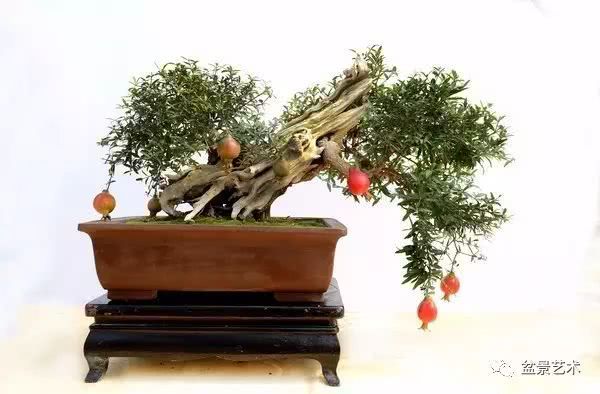
Pomegranate flowers are large and brightly colored, with a long blooming period, flowering from around the wheat harvest all the way into October, and the pomegranate fruit is brilliantly colored. Because it offers both ornamental flowers and edible fruit, it is deeply loved by people, and bonsai made from pomegranate are especially favored.
(1) Selection of varieties and flower pots.If the main purpose is flower viewing, choose double-petaled varieties with large flowers and brilliant colors, such as the large-flowered pomegranate or the peony pomegranate; if the main purpose is fruit viewing, choose red varieties with beautiful fruit shape, such as Taishan Red Pomegranate, or decide according to personal preference or need. For flower pots, clay tile pots are preferable, because they drain well and breathe well, which benefits pomegranate growth; their drawback is that they are not very attractive and break easily, while plastic pots, glazed porcelain pots and the like are attractive in appearance and come in many patterns, but have poorer breathability and drainage, so choose according to the situation. The size of the pot should be determined by the size of the seedling.
(2) Preparation of growing soil.The soil for potted pomegranate should be loose and airy, retain fertilizer and hold water, and be rich in nutrients. It can be made by mixing 3 parts garden topsoil, 3 parts leaf mold, 2 parts barnyard manure and 2 parts fine sand evenly, or by mixing horse manure, garden soil and fine sand in a 1/3 ratio each to make growing soil, piling it up and covering it tightly with plastic film, sterilizing at high temperature for 15--20 days, then sifting and putting it into pots.
(3) Potting and planting.Before budding in spring, cover the drainage hole of the flower pot with a tile, then add soil, filling about 2/3 of the pot, and pile the soil into a mound shape. Choose a seedling with an intact root system, many fibrous roots and a good tree shape, spread its root system and place it in the pot, continue adding soil, and as you add soil, gently lift the seedling upward so that the roots contact the soil closely. The pot soil must not be too full; keep the root crown level with the soil surface, firm the soil, and water thoroughly; after the water seeps down, cover the surface with dry soil to preserve moisture, place it in a shaded spot, and generally do not water before sprouting so as to favor warming and rooting.
(4) Bonsai shaping and production techniques.Bonsai are mainly divided into two major categories, trunk bonsai and landscape bonsai, according to differences in material selection and processing methods. For example, Zaozhuang Yicheng pomegranate bonsai is mainly trunk bonsai; it uses the pomegranate tree as the main body, and sometimes also uses rocks and stones as accompaniment to create elegant and unusual pomegranate bonsai, mainly for viewing the various postures of the pomegranate tree and the features of its trunk, flowers, fruit, branches and leaves. Through artistic processing such as carving, tying and pulling, twisting shoots, pruning, pinching, bud removal, bark peeling, wounding and bending, and through careful cultivation, long-term control of growth and development creates a pomegranate bonsai with the force of a mountain forest in a tiny space and an ancient, weathered appearance.
(5) Management techniques
1. Branch and leaf management.When new shoots grow to 10--15cm, pinch them to control growth and promote flowering; adventitious buds sprouting on the trunk, main branches and root crown affect shaping and ventilation and should be removed promptly. To dwarf the tree, during the vigorous growth period of new shoots, spray 2--3 times with a 200-fold 15% paclobutrazol solution, which helps control growth and promote flowering and can also achieve the effect of shrinking a dragon into an inch.
2. Fertilization.Pomegranate likes fertilizer; apply sufficient base fertilizer when planting, and during each phenological period of the growing season, apply topdressing many times to supplement the nutrients needed for plant growth. In spring, mainly use nitrogen fertilizer; in autumn, mainly use phosphorus and potassium fertilizer, or use fully decomposed liquid made from bean cake, chicken and duck manure, etc., for irrigation, and during the growing season carry out 3--5 foliar fertilizer sprays with a concentration of 0.3%--0.5% potassium dihydrogen phosphate solution to supplement soil fertilization.
3. Watering.The pomegranate tree is a drought-tolerant tree species; with too much water the tree tends to grow leggy, so generally do not water unless dry, and when watering, water thoroughly; if it is not fertilizing after rain, then be sure to water after fertilizing. During the flowering and fruit-setting periods, maintain appropriate drought to prevent flower and fruit drop.
4. Flower and fruit management.Pomegranate likes a sunny and warm environment; it needs at least 4 hours of light per day to bloom, and throughout the entire growth and development period, the flower pot must be placed in a sunny, well-ventilated place. During flower bud differentiation, keep the pot soil appropriately dry, which favors flower bud formation. During the flowering period, try to avoid spraying chemicals; to increase the fruit-setting rate, spray a 0.3% borax solution during the flowering period, or use artificial supplementary pollination. The method is to pick fully opened bell-shaped flowers before 10 a.m. each day during the flowering period, aim them at the stigma of tubular flowers and tap lightly once; each bell-shaped flower can pollinate 15--20 tubular flowers, and the fruit-setting rate can increase by more than 50%. Other cultivation management and pest and disease control can refer to field management.