Dried purslane buried in a flower pot is a universal fertilizer for growing flowers; any flower will thrive.
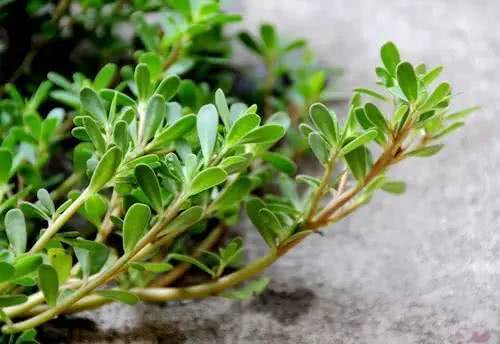
Purslane, I believe everyone from a rural home knows it! I still remember playing outdoors as a child and often seeing this wild vegetable by small rivers and in fields; back then I only knew it could be eaten, and it was easy to remember by its looks. I couldn't remember other wild vegetables, but purslane I never mistook.
Purslane is also called mashengcai, machicai, mazhacai and changmingcai; I remember in my hometown it is called mafengcai. Speaking of it now, it can be potted as a foliage plant, since its leaves are quite emerald green. It is only an annual herb, but its uses go far beyond "eating" - many flower growers have repeatedly verified that it is also good for growing flowers!
Why is purslane said to be usable for growing flowers? Some even call it a "universal fertilizer" for flowers, able to keep any flower alive. In the end, it is the substances it contains that do the work. Purslane is rich in calcium, phosphorus, iron and vitamin E, carotene, vitamin B, vitamin C and other nutrients, many of which are trace elements needed by plants and flowers.
After being dried in the sun, purslane is a genuine Chinese medicinal herb. I have shared before that ordinary Chinese medicine residue can be used to grow flowers, let alone such a nutritious purslane!
After being dried in the sun, purslane can be placed directly at the bottom of a flower pot, or mixed directly in when making nutrient soil. The specific steps are: first collect some fresh purslane in the wild, then wash it clean and put it in the yard or on the balcony, and sun it for a few days until it dries. If you want its effect to be greater, you can crush it a little after drying.
Now many flower growers no longer buy nutrient soil; most choose to make it themselves. Mixing nutrient soil yourself has many advantages: you control the nutritional value yourself, and it is very loose and fertile. Most people use several materials to make nutrient soil: leaf mold, ordinary garden soil, gravel, pine needles, and some barnyard manure, etc.
Soil mixed with the above materials is generally quite loose and fertile, especially after adding leaf mold, when the whole potting soil becomes slightly acidic soil rich in a large amount of humus, which is very beneficial to the growth of flowers and plants. At this point, if dried purslane is added as well, the fertilizer effect can be said to be even more sufficient.
Over time, the various trace elements in the dried purslane will be absorbed by the flower's root system and act directly on the stems, leaves and flowers, so naturally they will grow more and more vigorously.
Besides being placed at the bottom of a flower pot, dried purslane can also be soaked in water for a day, and then the liquid from the soak can be used directly to water flowers, which can also have some value. That is all for the tips on using purslane to grow flowers; flower growers must give it a try!
In fact, no matter which little trick for growing flowers it is, you must raise them "with care"; only then can you keep discovering care techniques and grow flowers well.
Thank you for reading! Remember to like and share~