These 6 flowers are hard to kill even if you try; they survive no matter how you care for them
When many gardening beginners first start growing flowers, they may see some pretty flowers and just buy them and take them home to grow. This is very unwise, because there are thousands upon thousands of types of flowers in the world, and their living environments and habits are certainly vastly different. Some flowers are very difficult to grow; without certain conditions and professional skills, it is very hard to keep these difficult flowers alive, so the situation of killing flowers often occurs. If you are a friend who is just starting to grow flowers and do not know what flowers to grow, then the following flowers are very suitable for you. Below I will introduce some very hardy flowers, which are perfect for beginner flower lovers who still do not know how to grow flowers, so you no longer have to worry about killing your flowers.
1. Hydrangea
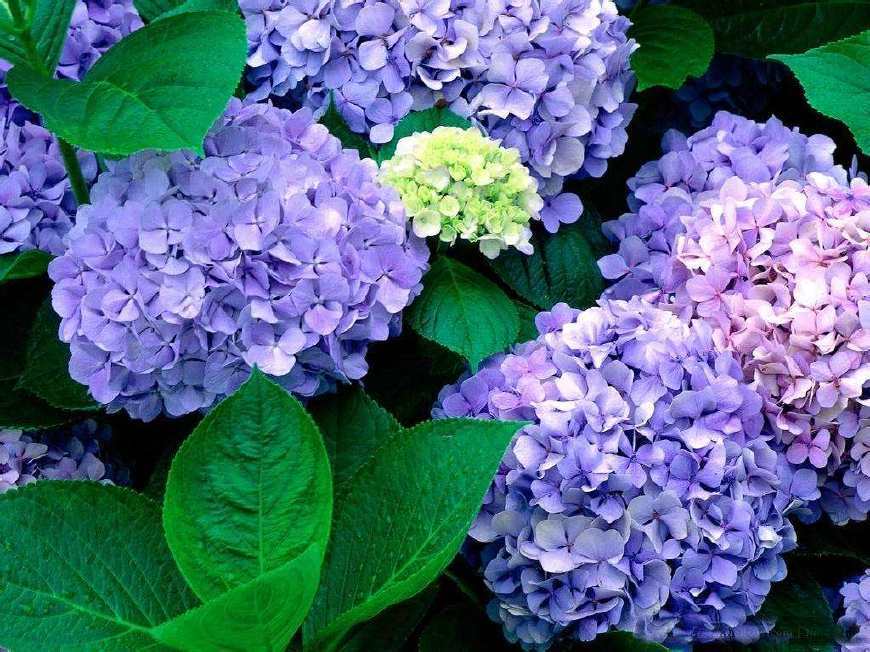
Hydrangea is relatively suited to growing in a semi-shaded environment and does not like harsh sun or excessively dark conditions. During the growing period, keep the potting soil watered thoroughly once it dries out. When hydrangea blooms, it looks just like a ball, with very high ornamental value and fresh, bright flower colors.
The flower color of hydrangea changes with the acidity and alkalinity of the soil. If the soil is acidic, the flowers will be blue or cyan; if the soil is alkaline, the flowers will be red. Isn't that quite unusual!
2. Basil
Basil is native to tropical Asia and is very sensitive to cold, growing best in hot and dry environments. It has a strong, pungent, fragrant scent. Most common types have sparse fine hairs all over the plant. The same species, varieties, or cultivars differ slightly in botanical characteristics. It is an upright annual herb 20-80 cm tall, smooth or essentially smooth, and some are perennial plants. Some can be lightly pruned into beautiful bonsai and grown in pots for ornamental display.
Basil is an aromatic plant used both as medicine and food, with a taste similar to fennel. The whole plant is small and compact, with emerald-green leaves, bright flowers, and fragrance all around. It is also a kitchen spice, very delicious, and a very easy-to-grow herb that can keep growing all year round. It is as easy to grow as mint, and care is very simple. When you see the soil is dry, water it promptly. It can grow very well without much light; receiving a bit of scattered sunlight every day is enough.
3. Rosemary
Rosemary is also a herb plant very suitable for beginners to care for, and it is very suitable for pot cultivation. Its growth rate is relatively slow, and its demand for water is not great, so it cannot be watered frequently. Rosemary's branches grow vertically upward. Cut a section of branch and soak it in water, and it will quickly take root and sprout.
Rosemary likes a warm climate, but in the flatlands of Taiwan, China it grows slowly during the high-temperature period. Temperatures in winter without cold waves are more suitable for its growth. In terms of water supply, since rosemary leaves themselves are leathery, they are relatively drought-tolerant, so soil rich in sand that drains well is more conducive to its growth and development.
4. Asparagus fern
Asparagus fern likes warm, humid, semi-shaded, and airy environments. It cannot tolerate severe cold in winter or drought, and cannot be watered too much or its roots will rot. In summer, direct sunlight should be avoided. It is best cultivated in loose, fertile, well-drained sandy loam rich in humus. It is advisable to keep room temperature between 12-18°C; when it exceeds 20°C, ventilate to dissipate heat. The optimal growth temperature is 15-25°C, and the overwintering temperature is 5°C. It grows in mountain wilds and is also cultivated in courtyards.
Asparagus fern has light, airy leaves full of a scholarly atmosphere, and it is very suitable to place on an office desk or in a study, with a uniquely elegant charm. Asparagus fern does not demand much light and cannot tolerate harsh sun. Water it by letting the soil dry before watering and watering thoroughly. If you notice signs of decline in the asparagus fern, you can cut off all the old branches, water it thoroughly, and place it in a cool, shaded spot; after a period of time it will recover its vitality.
5. Ball cactus
Ball cactus, commonly known as grass ball and also called Chōseimaru, is native to South America and generally grows in hot, dry, fertile land and in rain-scarce desert areas. It likes arid environments. The ball cactus is very drought-tolerant and has very strong vitality, and is deeply loved by everyone. The main growing season of the ball cactus is summer, which is also its peak flowering period.
The ball cactus is a desert plant and needs very little water. Even if it is not watered for a month, it will not die, making it a good choice for friends just starting to grow flowers. The ball cactus has a relatively good ability to purify air and can also absorb dust, so it is called a natural air purifier.
6. Snake plant
Snake plant is highly adaptable. It likes warmth and humidity, is drought-tolerant, and likes light while also tolerating shade. It is not strict about soil, and sandy loam with good drainage is better. Its optimal growth temperature is 20-30°C, and its overwintering temperature is 10°C.
Snake plant has strong vitality and is not strict about light and water requirements, so it can be managed quite extensively. Placed at home, besides being ornamental, it can also purify the air. At night it can also absorb carbon dioxide, so it can also be kept in the bedroom.
Snake plant is not strict about soil and can be managed relatively extensively. It likes loose sandy soil and humus soil, and is tolerant of drought and poor, thin soil. For pot cultivation, use 3 parts fertile garden soil, 1 part coal cinder, and add a small amount of soybean cake crumbs or poultry manure as base fertilizer. It grows very robustly, and even when the pot is full it does not inhibit its growth. Generally repot once every two years, in spring.
What other relatively easy-to-grow plants and flowers are there?
Feel free to leave a comment!