Is calla lily suitable for growing at home? Master the care techniques and it will still bloom
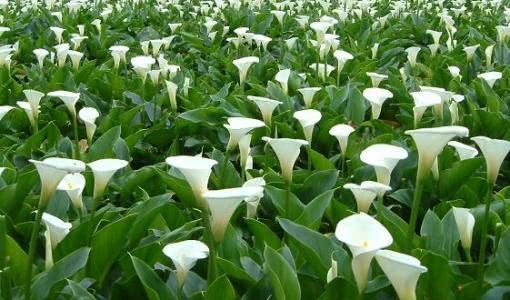
Calla lily is often also called flower taro by people. With its pure white spathes and verdant leaves, plus its graceful, upright plant form, it is warmly sought after by many flower enthusiasts. Besides having good ornamental value, it is also often used as an important material for cut flowers, and plays a very good decorative role in vases, bouquets and flower baskets. So for the calla lily, whose flowers are toxic, what aspects need attention in home cultivation?
I. Planting of calla lily
Calla lily propagation is mainly divided into seed propagation and bulb division propagation. For home pot cultivation, using seed propagation is more convenient. Prepare an appropriate amount of calla lily seeds. Before sowing, it is best to soak them in water at a temperature of around 20 degrees for 24-48 hours, which helps break seed dormancy and facilitates rooting and sprouting. After sowing, there is no need to water immediately. Wait about a week, and after the plant sprouts, water appropriately. At this time, the pot still cannot be placed in sunlight for growth.
After about 20 days, the plant can grow several true leaves, and only then can the calla lily enter normal management. It should be noted that before the plant sprouts, the environmental temperature needs to remain within a stable range. A temperature of 18-24 degrees is most suitable. If the temperature difference between day and night is too large, it is very likely to cause the seeds to fail to sprout normally.
II. Care of calla lily
1. Light
During its growth process, the calla lily must have a large amount of light to ensure its normal growth. If it grows in a dark environment for a long time or receives insufficient light, the plant's leaves are very likely to become withered and yellow, and at the same time the formation speed of flower buds becomes slow, the flowering period becomes delayed, or it may even fail to bloom normally. Especially in winter, it is best to place the pot in a sunny spot to receive direct full sunlight. If in summer when light is stronger, the pot can be placed in a shaded spot for growth. The afternoon sun in summer is relatively intense, so a certain amount of shading can also be provided.
2. Soil
The choice of container for potted calla lily is rather particular. Generally, a flower pot or porcelain vessel with a depth between 35-50 cm should be used, and it should not be too shallow. The soil is best a sandy soil with relatively high fertility and good drainage. Absolutely avoid using soil with too much stickiness, otherwise it may cause the plant to fail to develop normally. Usually, leaf mold soil is the main component, mixed with an appropriate amount of sand soil or garden soil.
3. Watering
The calla lily needs a relatively large amount of water throughout its entire growth process, and the potting soil should be kept moist as much as possible. Each time you water, it is best to spray in a rotating manner along the edge of the potting soil, and it is not suitable to pour water in the same position, as this easily causes water accumulation in the pot, and the plant is prone to root rot, causing the rhizome to rot. In addition, after May each year, the amount of watering the plant needs should be reduced somewhat, because the arrival of summer causes the calla lily to enter a certain dormant state. If watered too much, its leaves will slowly turn yellow. At this time, simply place the pot in a cool place for growth.
4. Fertilizing
The calla lily not only has a relatively high demand for water, but also the same for nutrients. During the seedling stage and the stage before the flowering period, the plant needs a large amount of nutrients, so it needs topdressing once every 7-10 days. The fertilizer is mainly organic fertilizer, and adding decomposed cake fertilizer is also acceptable. Once the plant enters its flowering period, fertilizing should be stopped, because fertilizing at this time easily causes the leaves to become overly large, leading to excess nutrients. After winter passes, carry out normal management again.