The pot of roses is so beautiful it's unbearable, like lanterns hanging all over the branches
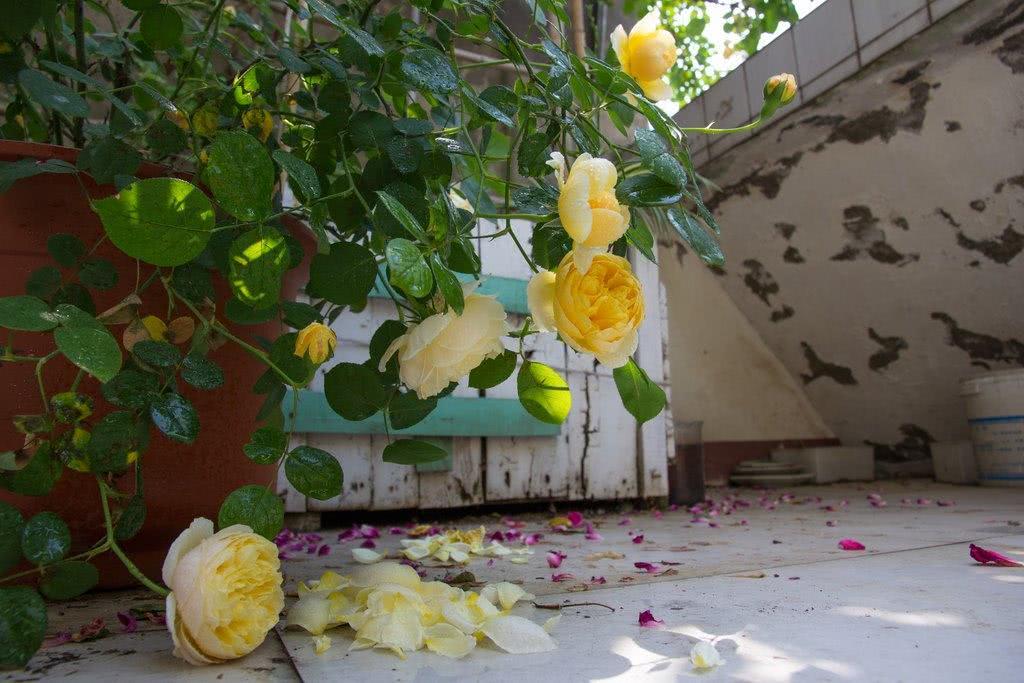
This year the roses bloomed spectacularly. Although the pot is large, I couldn't add base fertilizer in winter, but after thinking up some methods, this year's blooms still performed quite well. Below I'll explain how I grow them.
Rose planting starts with the medium. For convenience, you can buy a pre-mixed rose substrate. If mixing your own, generally choose one that is breathable, water-retaining and fertilizer-retaining. A general ratio of coarse coconut coir, fine coconut coir and peat at 1:1:1, plus a casual addition of perlite, vermiculite or similar, is all fine
Choosing the pot: a 15-gallon pot, about 50 cm in diameter. Anyway, as long as it's big enough and the roots can grow freely, it will definitely grow well
For fertilizing, you can generally add chicken manure as base fertilizer, and usually use water-soluble fertilizer as top dressing. Things like organic nutrient solution - I use it to help it grow branches and leaves, to grow taller and bigger faster, so it can bloom more
Just pay more attention normally and don't let it lack water. If the sun is too strong, you can provide appropriate shade. But it must be placed outdoors in a ventilated spot.
In addition, when the roses are about to bloom, I generally apply monopotassium phosphate, as this promotes blooming in roses, and makes the flowers more vivid and larger with a longer blooming period.
For example, the single-flower blooming period of Pink Dragon is about 22 days or so, and the whole plant can maintain 1 month from start to finish (when there are many flowers). The peak blooming period is two to three weeks.
Also, when the weather is dry, pay attention to misting to increase humidity; keeping humidity at around 75% is fine. Rose flowers like water, but they are also afraid of waterlogging, so when watering, do not let water accumulate. Water accumulation easily causes root rot, leading to yellow leaves, leaf drop, flowers that don't open fully, and it also easily causes bud drop.
When fertilizer is sufficient, rose flowers tend to grow wildly, and the flower stalks that have already bloomed also consume a relatively large amount of nutrients
So normally pay attention to pruning. First, cut away overly dense branches and leaves to maintain good ventilation and air exchange, which is beneficial for sprouting new branches, beneficial for flower bud formation, and beneficial for nutrient distribution. At the same time, cut away the stalks that have already bloomed.