The cornfield has plenty of space, so what can you raise there that makes money without affecting the corn's growth?
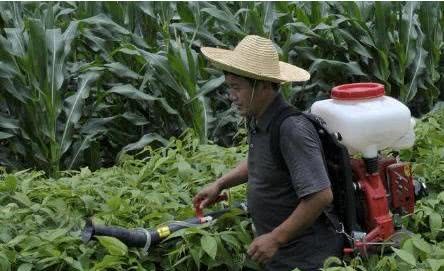
The word "raise" is well chosen. Raising things in cornfields is an idea that was realized long ago thanks to the wisdom of working people in our country, for example the most famous "mulberry dike fish pond" ecological agriculture, in which mulberry leaves feed silkworms, silkworm droppings feed fish, fish droppings fertilize the pond, and pond mud fertilizes the mulberries. This achieves a double harvest of fish and silkworms. If I guess correctly, the point is also what to raise in a cornfield to get the greatest use value from it, achieving a double harvest of corn plus other crops or animals.
The first recommendation is of course raising chickens. Raising chickens can remove pests and weeds from the cornfield and turn them into fertilizer for the chickens, and small batches of chicken manure, without fermentation, cause negligible harm to the corn, while over time accumulating and producing a certain fertilizing effect on the corn. The two are mutually beneficial. Let us do the math: about 200 chickens can be free-ranged per mu, producing 500 kg of chicken manure per year. During the raising process, you only need to invest in fencing, drinking water for the chickens and part of the feed. Compared with raising chickens or growing corn alone, it saves the cost of spraying pesticides and weeding, part of the feed cost and the corn fertilizer cost. The corn produced is environmentally friendly and healthy, and the chickens raised have plump, tasty meat. It truly kills several birds with one stone.
The second recommendation is the recently popular intercropping of lingzhi mushrooms. Under the shade of the corn leaves, lingzhi mushrooms grow with a high degree of lignification and good luster, and most importantly, the labor and cost of shade equipment can be reduced. The spawn preparation for the lingzhi mushroom logs must be completed in early April to early March, so that after the corn sprouts it can provide shade for the young mushroom strains. If the operating technique is up to standard and management is meticulous, the income from the cornfield will increase greatly. There are many other crops that can be intercropped in cornfields, such as shiitake mushrooms, peanuts, soybeans and chili peppers. For specific methods, you can follow Science Promoting Agriculture, where what to intercrop with corn is explained in detail in this Q&A.
The third recommendation is also currently popular: raising white geese in cornfields. According to reported statistics, geese feed on corn leaves, and the feed cost can be reduced by one tenth. Raising about fifty geese per mu can bring in five hundred to six hundred yuan. Anyone who can do light physical labor can raise them. The key point is also this: raising geese does not have to worry about them being stolen, because geese are the best guard poultry. They quack at strangers and rush forward in a single bound, and with one bite from their rear they can take off a chunk of flesh. With such lethality, poultry thieves would give them a wide berth. Walking them on a leash along the field paths is quite a sight.
Investing in raising livestock or poultry in cornfields requires a relatively large input of costs. Entrepreneurship carries risks, and investment requires caution. It is recommended to master solid skills before choosing to invest.
This is Science Promoting Agriculture. You are welcome to add a follow and let us grow our knowledge together.