How Many Aquascaping Types Are There? A Complete Guide to Common Aquascaping Categories
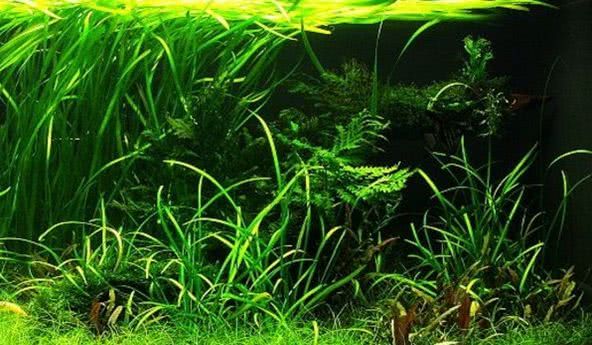
From a professional perspective, aquatic plant aquascaping is divided into several aquascaping schools based on different styles and artistic conceptions:
1. Continental-style aquatic plant aquascaping: Continental-style aquatic plant aquascaping has not formed its own style. For various reasons, especially because most people in the aquarium industry have a relatively low level of general knowledge, it has not formed a globally popular and recognized aquascaping style. Based on north-south differences, it can be divided into the southern style (represented by Guangdong) and the northern style (represented by Beijing). The southern style is known for its delicacy, especially the careful arrangement of foreground plants, like the composition of landscape paintings; the northern style is mainly rugged, with large aquatic plants occupying a fairly important position in the aquarium, much like traditional line sketches.
2. Japanese-style aquatic plant aquascaping: Influenced by Japanese living habits and artistic appreciation, and deeply shaped by traditional culture, it emphasizes delicate aquascaping concepts and strict matching of aquatic plant leaf shapes in aquatic plant aquascaping. No matter from which angle it is viewed, it shows a clear, refined and elegant charm.
3. Taiwan, China-style aquatic plant aquascaping: Taiwan, China can neither break free from the baptism of five thousand years of mainland culture nor avoid the influence of European and American schools, so it is uniquely advantaged in the development of aquarium technology. In aquatic plant aquascaping, it draws on the strengths of many schools and selects a large number of varieties that are relatively difficult to cultivate. While displaying a perfect landscape, it also demonstrates a very deep foundation in aquatic plant cultivation techniques. The aquatic plant aquascaping style of Taiwan, China is very hard to market in northern mainland China. On the one hand, it has relatively high technical requirements; on the other hand, this is reflected in the aquascaping style and the maintenance of aquatic plants.
4. Dutch-style aquatic plant aquascaping: It emphasizes aesthetics and brings the most beautiful proportional relationship in nature, the golden ratio method (that is, the 0.618 proportion method), into the aquarium as an aesthetic perspective and technique. Under the basic principle of the "golden ratio proportion method," aquatic plants of different varieties are cleverly planted, strictly maintained and reasonably matched, making this method of aquatic plant aquascaping more vividly three-dimensional. The "golden ratio proportion method" has even become one of the scoring criteria in international aquatic plant aquascaping competitions, and it is also one of the most advanced techniques representing international aquatic plant aquascaping schools.
In Dutch-style aquascaping aquariums, Cryptocoryne plants are generally used as foreground plants. Cryptocoryne leaves vary in size, and their color matching is also a science. For example, Cryptocoryne beckettii, Cryptocoryne nurii and Cryptocoryne wendtii 'Tropica' are light brown, while Cryptocoryne pontederiifolia, Cryptocoryne wendtii and Cryptocoryne crispatula are light green. These Cryptocoryne plants are mostly used on the sides and in the background section. In addition, acrylic boards and other materials can be used at the bottom of the aquarium to create steps, and then different aquatic plants can be planted in zones.
5. German-style aquatic plant aquascaping: Germans are rational and advocate science, and the power of high technology and the charm of nature can also be reflected in aquarium aquascaping. With the support of high-tech aquarium equipment, it can display the nearly natural growth conditions of aquatic plants, and the open display format makes it more convenient to appreciate the growth changes of various aquatic plants from three different spatial angles: underwater bottom, water surface and underwater. The landscape concept may seem rugged and messy, but after careful appreciation, one will find that the aquascaping structure shows a unique natural beauty.
6. Southeast Asian-style aquatic plant aquascaping. In Southeast Asian-style aquatic plant aquascaping with Cryptocoryne as the main feature, the tropical fish stocked among them are small Southeast Asian lantern fish such as Cyprinidae and Characidae that inhabit the middle layer of the water. Of course, other tropical fish can also be kept in Southeast Asian-style aquatic plant aquascaping, but the primary choice is still the unique types. When they appear in the center of the tank among clumps of various Cryptocoryne plants, the true natural atmosphere emerges, fully revealing the natural and distinctive aquatic charm of the different Southeast Asian countries.
Friends, if you have any additions or corrections, remember to leave a comment in the comment section~
There is also a surprise here