This flower is very pleasing to look at, and a single bloom can last 3 months. Do you have one at home?
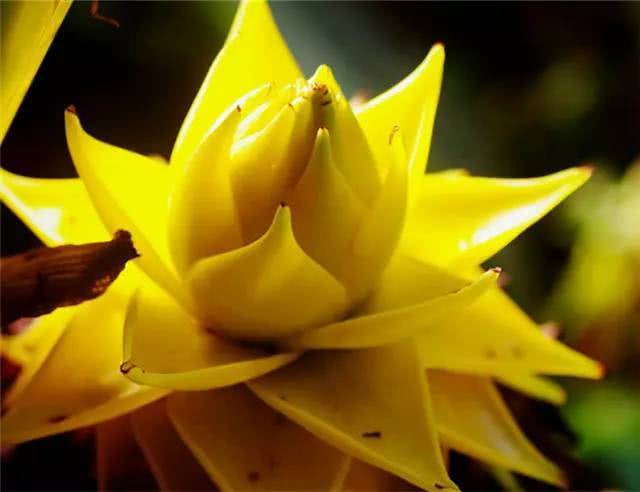
The happiest thing about growing flowers is, of course, when they bloom. A single bloom can keep a flower lover happy for days. However, most flowers and plants do not keep a single bloom for long; most fade within a few days. So when the flowers fade, don't you feel quite a bit of regret? There is a type of flower and plant whose bracts are leathery, stay fresh for a very long time, and do not fade for a long time, and a single bloom lasts a very long time. If you love to admire flowers, bring one home!
“
Blooms for half a year
”
Musella lasiocarpa
Musella lasiocarpa was designated by Buddhist temples as one of the "Five Trees and Six Flowers." Legend has it that when the Buddha was born, a golden lotus would spring from the ground beneath his feet with every step he took, and that is Musella lasiocarpa. There is a Dai legend that when the Buddha preached and reached a wonderful point, "heavenly flowers rained down and golden lotuses sprang from the earth." This is the flower referred to.
Musella lasiocarpa has a relatively long ornamental flowering period, reaching about 250 days. Six bracts form one whorl, terminal or axillary, glittering golden, shaped like petals, gradually opening layer by layer from bottom to top, just like a blooming lotus. The flowers are fragrant, tender, and delicate, yellow and green intermingled, hidden inside the bracts. It flowers before it leafs; in early spring when it blooms, it suddenly surges out from underground and quietly blossoms, astonishing people, which is why it is called "golden lotus springing from the earth."
Most flowers win by beauty, fragrance, or color, but Musella lasiocarpa overwhelms the crowd with its oddity. Not only is its flower crown huge and strangely beautiful, it has something even more striking: when it grows vigorously, it can also produce numerous small flowers in the leaf axils of the pseudostem, forming the wondrous sight of "stars surrounding the moon."
Musella lasiocarpa likes light and warmth; at low temperatures below 0°C, the aboveground parts will freeze. It likes fertile, loose soil. It is easy to transplant. It mostly grows on mountain slopes or is planted in courtyards. During the growing season, watering should alternate between dry and wet, and apply dilute cake fertilizer water about 1-2 times per month.
In spring, autumn, and winter, place it in a sunny spot for cultivation. In summer and early autumn, the sunlight is intense around noon, so take care to provide appropriate shade. In winter, keep the room temperature above 6°C and control watering. Because Musella lasiocarpa grows quickly, it needs to be repotted once every spring.
Musella lasiocarpa has the longest single-flower period of any flower. Generally, in the south, it is grown more in Yunnan, Taiwan, China, and other places; in the north, it must be brought indoors in winter. The flowers of Musella lasiocarpa can be used as medicine and have an astringent and hemostatic effect. Many flower lovers in Yunnan grow it to make soup...
King Protea
King Protea has been very popular in flower markets in recent years; its large blooms are very eye-catching. King Protea, also known as the Protea cynaroides flower, is the national flower of the Republic of South Africa. King Protea has huge flowers, a peculiar flower shape, magnificent colors, and noble elegance, and is known as the "king of flowers." The long-lasting King Protea is hailed as the most opulent and gorgeous fresh flower in the world, representing vigorous and tenacious vitality and symbolizing victory, completeness, and good fortune.
Even when King Protea dies or dries up, it still maintains its "royal" dignity. Its vivid color and complete flower shape mean it shows no sign of being a withered, ruined bloom. It is said to fade without wilting and dry without shriveling.
King Protea likes a warm, slightly dry, and sunny environment. It is not cold-tolerant, prefers well-drained conditions, and dislikes waterlogging. It requires loose, well-drained acidic soil. In winter, the temperature generally should not be lower than 7°C; some varieties can tolerate a brief low temperature of 0°C. The soil for seedlings needs good drainage. During the growing period, summer requires a cool, dry climate, with appropriate shading during strong sun. The suitable growing temperature is 27°C. In winter, it needs a warm, sunny environment with slightly higher air humidity.
King Protea flower tea is made by brewing the dried flowers. It helps promote digestion, relax the nerves, induce sweating and urination, and lower blood pressure, and is beneficial for alleviating colds and fever, soothing rhinitis and sore throat, and preventing arteriosclerosis. Use 10 pieces when brewing, and add honey to taste when drinking. Drinking King Protea flower tea can improve insomnia and is suitable for drinking before bed.
Torch Ginger
Torch Ginger is also called porcelain rose and Philippine wax flower. Its color does not change for a month after blooming. The newly opened flower of Torch Ginger is shaped like a torch, full of vitality and dynamism; the fully bloomed flower is dignified and bright, with a full form.
Torch Ginger likes a high-temperature, high-humidity environment. The suitable growing temperature is 25-30°C; growth stalls below 15°C, and the overwintering temperature generally should not be lower than 5°C. Torch Ginger is robust by nature, relatively easy to cultivate, and tolerant of rough management. It is not strict about substrate choice; generally loose loam soil is suitable for its growth. However, for it to grow well, slightly acidic, humus-rich sandy soil is best. Torch Ginger likes a sunny environment; with ample sunlight, the flower colors are more brilliant. However, its vegetative growth is not demanding about light. In a semi-shaded environment, the plant can still grow normally and become tall, but if the light is too weak, the plant becomes fragile and prone to lodging.
Isn't the color gorgeous? It would simply make other flowers pale by comparison.
Anthurium
The flowers above may appear less often, but actually there is another flower in our daily lives, and that is Anthurium, whose single bloom also lasts a long time; generally, blooming for more than a month is no problem.
Anthurium is also called flamingo flower. It has a unique appearance: its leaves are emerald green and about to drip, its fiery red spathe inflorescence sits atop them, and its yellow spadix is set within that patch of fiery red. It lives up to its name, as beautiful as a flower candle. The pairing of red and green in Anthurium is eye-catching, and the fiery red color has a festive feel. So for weddings and opening ceremonies, people like to buy some to decorate with, implying that life will be prosperous and career will flourish. The flower language of Anthurium is great prospects, passion, and hot blood. Such a good meaning undoubtedly adds even more to people's love for it.
Anthurium likes a warm, humid, and well-drained semi-shaded environment. It fears drought and strong direct sun, and during the growing season it must be shaded by 60-70%. If the light is too strong, the leaves are easily scorched and withered, and the leaf color becomes dull and loses its luster; if the light is too dark for a long time, the plant grows weakly and is not easy to bloom. The suitable daytime growing temperature is 26.1-32°C. In winter, if the indoor temperature is below 14°C, heating is needed.
Phalaenopsis
Many orchids have very long flowering periods, so the orchids you see in flower markets are always blooming beautifully. Among orchids, Phalaenopsis is the most famous. Phalaenopsis is a perennial evergreen epiphytic herbaceous flower of the genus Phalaenopsis in the orchid family. Because its flowers resemble butterflies and have butterfly-like beauty, it is named Phalaenopsis. Phalaenopsis has many varieties, with rich variation in flower shape and color, and very beautiful flower posture, and is deeply loved by people.
Phalaenopsis has thick white aerial roots exposed around the leaves, which, besides absorbing nutrients from the air, also carry out growth and photosynthesis. In the New Spring season, the Phalaenopsis plant sends out long flower stalks from the leaf axils and blooms flowers shaped like dancing butterflies, deeply favored by flower enthusiasts and known as the "queen of orchids."
Phalaenopsis likes a high-temperature, high-humidity, ventilated, semi-shaded environment, and dislikes waterlogging and stuffiness. The overwintering temperature should not be lower than 15°C. Because Phalaenopsis originates from tropical rainforest regions, it is by nature fond of warmth and afraid of cold. The suitable growing temperature is 18-30°C; in winter, growth stops below 15°C, and below 10°C it is prone to death.
The single-flower period of Paphiopedilum is the same as that of Phalaenopsis and can reach 2 months. Moreover, Paphiopedilum flowers are very beautiful, with gorgeous patterns and elegant colors, looking distinctive, and Paphiopedilum has a different kind of charm.
Guzmania
Guzmania is a type of ornamental bromeliad. Its flowers open at the top or middle of the plant, with luxuriant flowers and leaves and bright red flowers. The leaves are broad and strap-shaped, showing dark green. Precisely because this bromeliad plant has red flowers all over its top, the idiom "good fortune arrives" is borrowed to name it, indicating good luck.
Guzmania likes a warm and humid environment. The suitable growing temperature is 21-28°C, and the maximum temperature must not exceed 35°C. Below 10°C, it easily causes slowed plant growth, and the leaves or bracts turning red, turning white, and losing color. Air humidity should be high, generally 75-85% is best; below 50%, the plant's growth shows phenomena such as leaf shrinkage and curling.
It should be well ventilated. When watering, use clean water that has been left to sit for 2-3 days, and pour it into the plant's "cup" shape, not directly into the potting substrate. Even if the substrate in the pot is somewhat dry, if there is water in the leaf cup, the plant will still grow well. But if only the potting soil is very humid and there is no water in the leaf cup, the plant will lack vitality, and adverse reactions such as leaves easily turning yellow will appear.
If you like flowers, then buy a pot for your home
As long as the care conditions are not too extreme
You can enjoy the flowers for several months!
If you love growing flowers, give it a try!
Show it to flower lovers who need it~