Hibiscus care has its methods: with enough nutrients, the whole pot blooms with big red flowers
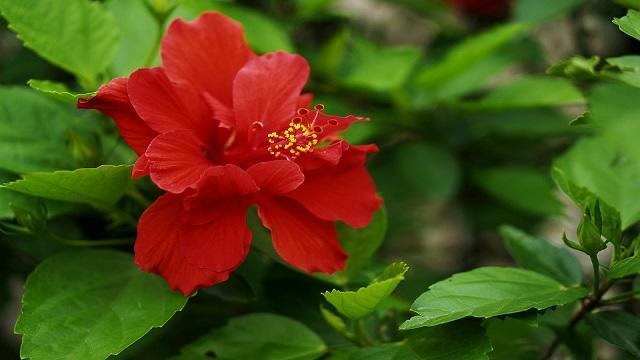
When repotting hibiscus, prune it by the way; the more it grows, the more beautiful its shape!
To grow hibiscus, provide it with fertile, loose, acidic soil. The temperature must be suitable; in winter it needs to be above five degrees. Water should not be too dry or too wet. Light needs to be sufficient. Fertilizer needs to be applied during the growing period. It is best to repot once a year in April. When repotting, you can prune appropriately. There are also some pests, such as aphids, that must be controlled promptly.
1. Growing environment
(1) Soil: The most basic requirements are fertility and looseness. In addition, according to the plant's own characteristics, it also has requirements for pH, preferably slightly acidic.
(2) Temperature: The plant likes warmth, around fifteen degrees. In winter especially, it needs protection from the cold, with the temperature above five degrees.
(3) Water: It is relatively sensitive; neither too dry nor too wet will do. Watering according to the soil condition is best.
(4) Light: It is a sun-loving tree species, so it needs a lot of light; provide sufficient light.
(5) Fertilizer: It is mainly needed during the growing period, about once every week to ten days. Starting in late autumn, fertilization should gradually be reduced.
2. Repotting and pruning
To promote healthy growth of the plant, regular repotting is also needed. Once a year is best, chosen in early spring, that is, around April. Changing the soil is the first step; the choice of soil has already been mentioned above. Then there is pruning. First, prune away the overly dense and dried-out roots. In addition, to ensure the plant's beautiful shape, you can also prune the branches, leaving two or three buds at the base of each branch. Also, when repotting, use a base fertilizer, preferably including phosphate fertilizer.
3. Pest control
The plant is easily threatened by some pests, such as aphids, red spider mites, and so on. Spray the medicine onto the leaves once a week; about two or three times is enough to control them successfully.