How to grow orchids so they bloom nonstop? 3 measures to protect the flowers
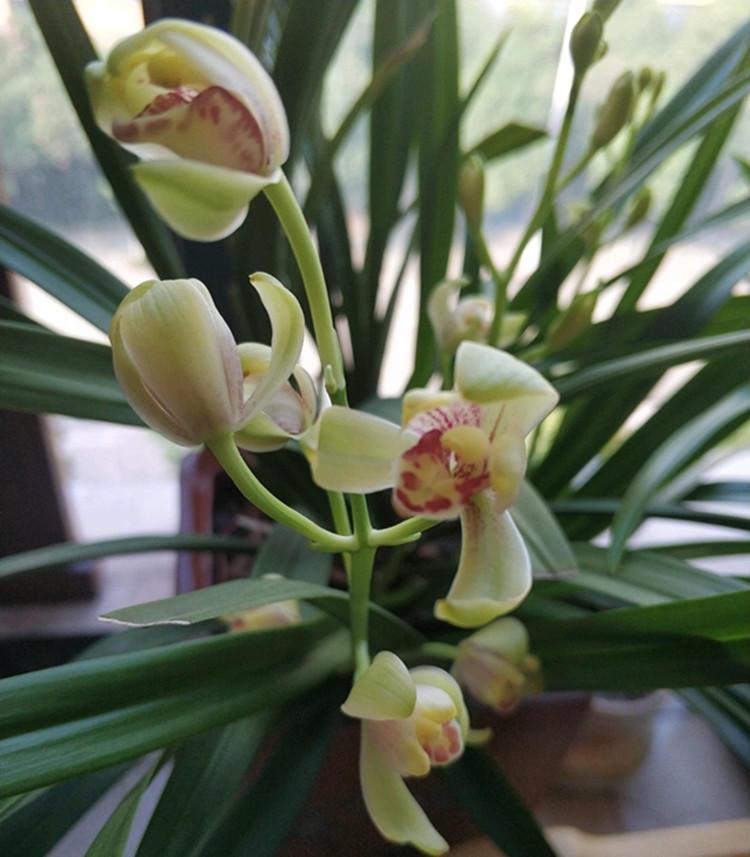
As the saying goes, growing orchids takes a hundred days, but enjoying the flowers lasts only a moment. On the journey of growing orchids, flower lovers have poured in their effort, sweat, and deep affection for orchids. From the emergence of flower buds and their development to blooming, the process can take as long as half a year for some, and finally seeing the orchid bloom, aren't you especially excited? But besides being excited, we also need to protect the blooming orchid, so that it can keep blooming nonstop.
So, what can we do to protect the orchids? Here are 3 measures:
1. Thin the flowers appropriately
If an orchid has too many flower buds, it consumes excessive nutrients from the mother plant, which hinders the formation and robust growth of leaf buds. You should remove some of the weaker flower buds early, keeping 3-5 flower buds per pot. To protect and develop rare and precious varieties, you can also remove all the flower buds. If the pot is for exhibition or display, you can keep more.
In addition, after thinning the flowers, to meet the orchid's needs for growth and blooming, you need to replenish nutrients for the orchid. Flower lovers are advised to use an organic liquid fertilizer specially formulated for orchids, diluted 500 times and watered into the roots, once a week, to promote the orchid's growth and blooming.
2. Protect the perfection of the flowers
For the flower buds you keep, you should strengthen the prevention and control of pests and diseases, so that the flower buds and the flowers and flower stems they grow into later are not bitten by pests and rodents; control the moisture of the potting soil well to avoid waterlogging that rots the flower buds.
In winter, shield the early-emerging flower stems of the orchid so they do not freeze. During the period from flower bud elongation to blooming, ensure moderate light so that the flower color is bright, full, and glossy. If the light is too weak, the flower color will be pale and lack luster.
3. Remove the flowers in time
If orchid flowers remain open too long, they consume nutrients, which hinders the emergence of buds and the growth of leaves and the flowering of the next year. Flower lovers should remove most of the flower stems within a week after the flowers open, keeping only 1~2 per pot. When removing a flower stem, steady the leaf base with one hand, and with the other hand press the flower stem to one side, and it can be broken off from the base and pulled away. Or use scissors.
In addition, the flowers kept in the pot should all be removed as soon as they begin to wither, so they do not get fertilized and set seed. If you want to carry out cross-breeding, you must carry out artificial pollination at the right time and manage the mother plant carefully, so that its fruit is full and the seeds mature.