Hydrangeas need plenty of water in August; only then will they bloom more
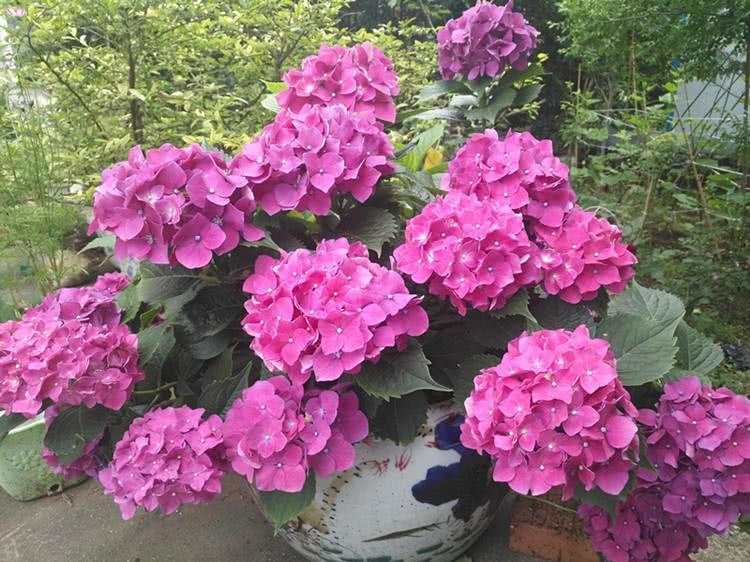
August is the hottest month of the year. Unlike July, August also has relatively little rain. The most important thing this month is to make sure the hydrangea does not lack water, that is, do not let it get "thirsty," so that it can bloom even more.
Generally speaking, the common knowledge for growing flowers is to water in the morning and evening, not at noon, but hydrangeas are plants that are especially prone to lacking water. When the potting soil has dried out completely, you must water even at high noon. Also, August sometimes has heavy rain, but hydrangeas placed under trees may not get enough rain because the tree shade blocks it. Check the potting soil after the rain, and if it has not been soaked through, water it.
There are also times when the leaves are scorched by the sun and droop limply, but the potting soil is not necessarily dry. At such times, move the flowerpot to a shady place, and the leaves will recover their vitality. If left unattended, the leaves may develop scorched edges or fall off. Below are the key management points for caring for 3 hydrangea varieties in August:
1. Garden hydrangea
In August, garden hydrangeas should preferably be placed in semi-shade such as under trees, or given appropriate shade. The weather is hot and the sunlight is intense, so check frequently, and water as soon as you find it lacking water. This month the garden hydrangea grows many new leaves and needs more water; watering once a day cannot even guarantee it will not dry out completely. To prevent the new leaves from withering due to lack of water, you can insert a self-watering water bottle into the pot. After heavy rain, also check whether pots placed under trees have been soaked through.
During the flowering period and the high-temperature period, flower growers should not apply concentrated fertilizer or unfermented fertilizer to hydrangeas. It is generally recommended to use organic liquid fertilizer, diluted 500-800 times, once every half month, poured at the roots. This can supplement the hydrangea's nutrients and prepare it for autumn growth and flowering.
In the hot season, hydrangea leaves will be scorched and withered by the sun, and in severe cases they will also fall off, causing damage to the plant. If the plant is relatively severely affected, flower growers can use it for green-branch cuttings.
2. Mountain hydrangea
When caring for mountain hydrangea in August, it likewise needs to be placed in semi-shade such as under trees, or given appropriate shade. Water as soon as you find it lacking water. If the pot is small and watering once a day cannot even guarantee it will not dry out completely, you can insert a self-watering water bottle into the pot. Sometimes dense leaves block the raindrops, so that although it looks like a heavy rain, the potting soil in the flowerpots under the trees has not actually been soaked through. Therefore, you must water in time.
3. Panicle hydrangea and smooth hydrangea
Panicle hydrangeas do not need special shading. Some varieties of smooth hydrangea have slightly poorer heat tolerance and should be given shade. Water as soon as you find them lacking water. Most panicle hydrangeas are planted in the ground and usually do not need watering, but when there is continuous high temperature and little rain, they still need watering. Also, these two hydrangea varieties are heat-tolerant in summer, so their growth is ongoing all the time. What flower growers need to do is fertilize them in time to strengthen the plants' growth.