Feed roses these 5 kinds of material, and they bloom with immediate results
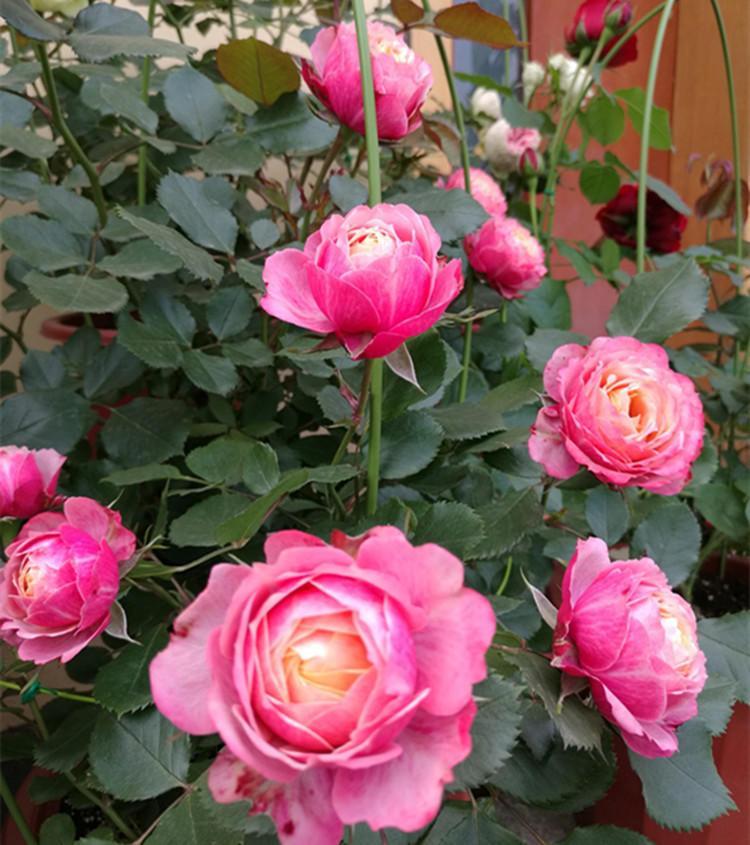
Gardeners who grow roses always want their roses to have lush leaves and abundant flowers. Most gardeners know that roses are heavy feeders, so they hope to make their roses grow better by fertilizing. But often, out of excessive love, they are too impatient, and without asking whether the fertilizer is suitable, they just keep feeding milk, egg whites, and meat-rinsing water, and the results are often disappointing.
Therefore, the issue of fertilizing roses is indeed worth discussing properly. Roses do love heavy feeding, but it is not just about heavy feeding alone; the key is to scientifically and reasonably choose the right fertilizer. For example, with the 5 kinds of material mentioned today, once roses get them, they can bloom with "immediate results."
1. Compost
Gardeners use leaves, green grass, rice straw, wheat straw, and rotted grass removed from torn-down thatched huts and other such materials, splash on pig manure water or clean water, then cover with soil, and after piling, decomposing, and sifting fine, it can be used for roses. Compost contains relatively more nitrogen, phosphorus, and potassium, and its structure is loose, so it can loosen the soil. It is an important component in making rose growing medium.
2. Barnyard manure
The manure and urine of pigs, cattle, and other livestock can be used to make growing medium and serve as a base fertilizer. It can also be left to decompose and be used as a top dressing, diluted with 20-30 times water when used. Among these, pig manure and urine contain relatively more phosphorus and potassium, and pig manure can also loosen the soil, making it very suitable for growing roses.
In addition, gardeners who want convenience and effective results can use an organic nutrient solution specially made for roses, dilute it 500 times and water the roots, once a week. Roses absorb it well, grow lush branches and leaves, and bloom abundantly.
3. Cake fertilizer
In cake fertilizers such as rapeseed cake and soybean cake, the content of nitrogen, phosphorus, and potassium is relatively high. They are often ground into powder, and after decomposition, mixed into growing medium as a base fertilizer, but the amount used should not be too much. The nitrogen and phosphorus in cake fertilizer are mostly organic matter and must be broken down into inorganic matter before the rose roots can absorb them. In addition, the organic acids produced when cake fertilizer ferments harm seedlings, so it must be fermented before use.
Cake fertilizer is also used as a top dressing: soak rapeseed cake in 10 times water to ferment, then when using, add 20-30 times water, put it into a spray bottle and dilute it; you can also use fermented sesame residue powder as a dry application, mix it with the surface layer of potting soil, and let it slowly decompose, exerting its fertilizing effect over a longer period of time.
4. Sweet potato vine bran
Actually, this is just pig feed made by drying and grinding. Gardeners should not think this is useless; it is a good fertilizer for growing roses. Sweet potato vine bran or fresh sweet potato vines can both be used to pile up growing medium with rice, called "sweet potato vine bran soil." This kind of growing medium contains more nitrogen and has a loose structure. Soaking sweet potato vine bran or fresh sweet potato vines in water makes "sweet potato vine bran water," which is a fairly good top dressing and has the effect of strengthening seedlings. Its preparation and use are the same as cake fertilizer.
Gardeners, if you cannot find the above materials, then use nutrient solution instead. The nutrient solution is fermented from sugarcane residue, and nitrogen, phosphorus, and potassium are relatively complete and balanced. Dilute it 500 times and it can be poured directly on the roots, and roses absorb it well and grow quickly.
5. Grass juice
In summer, wild grass grows lushly, and it can be soaked to make grass juice. It is a top dressing containing much nitrogen, with a wide source and economical and practical. But note that it should be cut and soaked while the grass has not yet set seed. If the grass has already set seed, the grass seeds in the soaked fertilizer liquid will be applied into the rose flowerpot, instead causing weeds to grow thickly and making them hard to clear.
Image from gardener: Chen Shunhua