Christmas cactus should grow big braids in summer
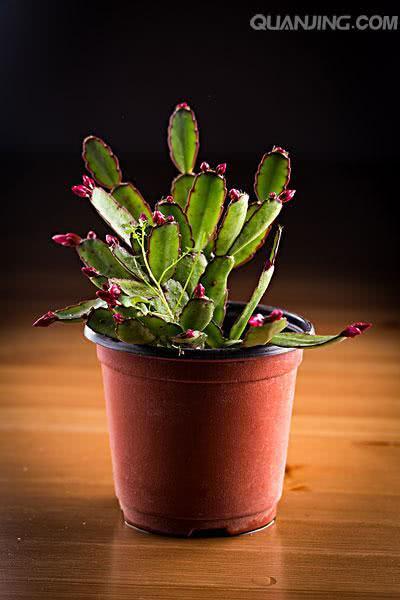
Summer is the peak growing season for the Christmas cactus, which is when it desperately grows leaves, but sometimes you will find that no buds can be seen at certain bud points.
This thing is a blind bud, and the causes of blind buds are very complex, such as light, water, pests and diseases, and so on. As long as the Christmas cactus is made uncomfortable, blind buds will appear. It is the same as with roses.
There are usually two ways to deal with these blind buds.
The first method can be described as simple and crude. Just cut them off directly with scissors, without wasting any time or space.
The second method is relatively more conservative. By adjusting water and fertilizer and light, let new bud points form again below the blind bud, pushing the blind bud upward.
Personally, I tend to prefer the second method.
The next thing to do is move the Christmas cactus to a place with sufficient light. The previous light was unfair to the Christmas cactus. Put it under the sun and let it bask well. After all, it is a succulent plant. After maintaining this for ten days to half a month, if you find that no bud points have formed, then it is mud that cannot be plastered onto a wall, and this bud point has completely gone bad, so it can only be cut off.
Let's talk about how to care for the Christmas cactus in summer.
In summer, I think two things are most important, water and fertilizer.
In terms of water management, I suggest restraining yourself a bit. After all, it is a succulent plant and does not need too much water. It is enough to always keep the soil moist, but you cannot leave it outdoors waiting for rain. You have to water it yourself and control it yourself.
You also need to pay attention to fertilizer. When potting, you can use some base fertilizer, that is, slow-release fertilizer. The fertilizer effect lasts about three months. I think it is very ok. The growth will be very good throughout the growth period and reproductive stage. After three months, the fertility is no longer sufficient. At this time, a topdressing should be done, still using slow-release fertilizer.