For a home-grown spider plant, just remember these few points and it will grow like crazy, cascading like a waterfall
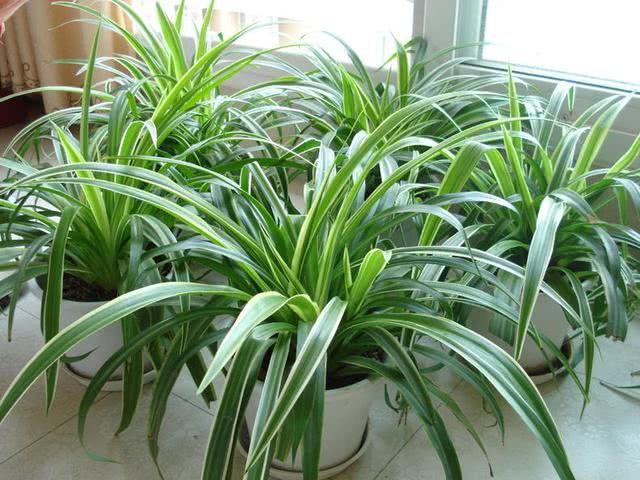
The spider plant is one of the common trailing and hanging plants in modern homes. Its stems hang down, staying green and elegant all year round. Stolons emerge from below the leaves and extend outward as flowering stems. At their tips grow small spider plantlets with aerial roots. Its slender white flowers are not only beautiful but can also absorb harmful indoor gases and help purify the air.
Spider plants like a warm, humid, semi-shaded environment. They fear strong light, tolerate drought but not cold. As for soil, spider plants are not demanding. You can use the black humus soil found in woods, mountains, and ditches and ponds. This soil is loose, fertile, well-aerated, well-draining, and slightly acidic. When potting, a ratio of 4:4:2 of humus soil, garden soil, and river sand will do. Add base fertilizer at the bottom of the pot, but be careful that the roots must not touch the base fertilizer and must be separated from it by soil.
Spider plants like to grow in a warm, humid environment and fear wetness and waterlogging. Their roots are fairly developed, and some parts become spindle-shaped, thick and fleshy with a large water-storage capacity, giving them strong drought resistance. During care, the amount of watering can be controlled according to the season and the plant's growth. Keep the potting soil slightly moist, neither too dry nor too wet. When necessary, spray water on the leaves and around the pot. In winter, reduce the amount of watering appropriately.
As for light, spider plants should avoid direct sunlight and scorching exposure in all four seasons. Place them in a semi-shaded environment; too-strong light will cause the leaf tips to turn yellow and withered. The suitable growing temperature for spider plants is above 20 degrees. It must not be lower than 5 degrees, or higher than 30 degrees.
Spider plants like fertilizer, so apply enough base fertilizer when planting and repotting. For fertilizer I choose organic fertilizer; note that the roots must not touch the base fertilizer and must be separated from it by soil. During the growth and development period of the spider plant, fertilize once a week; at other times, about once a month is enough. You can use organic fertilizer or fermented rice-washing water, soybean water, and so on. Not fertilizing for a long time can cause the spider plant's leaves to turn yellow. When fertilizing, control the amount well. In winter, do not fertilize or fertilize less.
Pruning: every year when repotting, cut off old roots, remove old soil, clear away yellow leaves, and trim the flowering stems to keep the leaves fresh. But do not remove the stems that grow between the plants and bear small spider plantlets. They add beauty and can be used for propagation.
Propagation and pests and diseases: we can use the division method, placing a water-filled container under the small spider plantlets growing on the flowering stems so the plantlets touch the water surface; once roots are induced, they can be transplanted into a pot. Besides this, you can also use cuttings: cut the leaves off the stem, then plant it, water it thoroughly, and place it in a cool, shaded spot.
For the prevention and control of spider plant pests and diseases, you should avoid too-strong light, control the frequency and amount of watering, and use fertilizer reasonably. You can also spray with diluted carbendazim wettable powder. If pests occur, just use insecticide.