Succulent care issues in early autumn are more important than the summer heat; you need to learn the methods
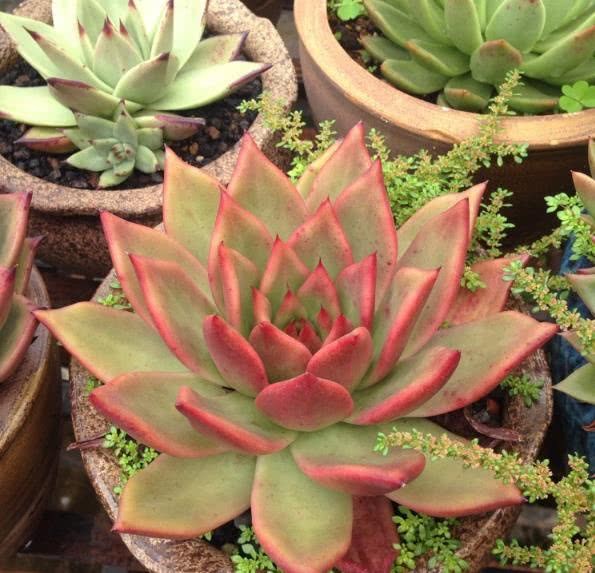
Autumn has arrived, and many leafy green plants are beginning to slowly turn yellow and wither. However, succulents enter their best golden growth cycle, and their tenacious vitality makes them grow even more beautifully in autumn. Most summer-growing types can be placed outside to receive sunlight so they can grow robustly, and only after growing up will they become a beautiful succulent. But seedlings should not receive direct sunlight in early autumn; it is best to place them in a spot with diffused light. Watering should follow the principle of watering when dry and letting dry out between waterings: both waterlogged soil and excessive drought are unfavorable for normal plant growth. If there is continuous autumn rain, stop watering and pay attention to drainage to prevent waterlogging.
In early autumn, even more attention should be paid to avoiding direct sunlight at noon, gradually extending the succulents' sun exposure time and giving them a process of gradual adaptation, so as to prevent succulents that survived the summer from dying in autumn. Autumn is also a season of high incidence of pests and diseases for succulents. I have a lot of experience with this. Several Rosima plants I previously grew all came down with sooty mold in early autumn at the same time, and in the end they died. The same goes for ivory, which is prone to root mealybugs, so pest prevention for succulents in autumn is very important! In northern regions, after October, watering should be controlled and fertilizing stopped, so that the plant's stems and leaves become firm and lay a good foundation for overwintering later. Because the climate in southern regions is relatively warm, the time for controlling water can be postponed until late October.
In the relatively cool northern regions, spring-and-autumn-growing succulents begin growing in late August, while in southern regions growth is postponed until early to mid-September, with a relatively slow initial growth rate. At this time, watering can be done appropriately, but not too much, and no fertilizing should be done, to avoid root rot caused by excessive fertilizer or water. After the plants resume growth, for succulents of the Liliaceae genera Haworthia and Gasteria, which have slightly higher requirements for air humidity, you can mist the plants in the morning and evening, or cover the plants with a transparent colorless beverage bottle with the top cut off to increase air humidity, making the leaves thick and plump and the color bright and beautiful.
A mistaken belief about succulent lighting that most people have is that they like as much direct sunlight as possible. However, this is not correct; in the wild, many small species grow beneath shrubs. In addition, the photosynthesis of succulent stems, or in my personal opinion the leaves, will be affected by direct light. Many plants will reduce the area of the stem surface exposed to direct light. This phenomenon is due to the plant's phototropism. This makes me think of transplanting plants outdoors: when transplanting, keep the same side of the plant facing the sun and give it an additional 50% larger shading area until it is fully established.
For succulents planted in mini small pots, the watering frequency must be appropriately increased. Those succulent lovers who love to water must control their hands. If you give them enough water every day, they will become lazy and unwilling to store water, so naturally they will not become plump. Another point to note is that succulents planted in mini pots are easier to shape and easier to bring into color. In other words, how large a succulent you want depends on how large a pot you grow it in. Succulents grown in thumb pots generally will not grow very large.
A circulating air environment is the most basic condition for growing succulents, and as said above, it is especially important at night. But if succulents grow in a closed greenhouse, installing a fan to create a circulating air environment is very important. This also means that most succulents cannot survive very well on a desk or windowsill. Although they are good indoor decorations, perhaps they can survive in such conditions for a long time, but for the plant this is a slow death.
This is a gathering place for succulent lovers, sharing succulent care tips. Welcome to follow and exchange ideas.