Roses blooming on a summer night balcony: is it cool refreshment or fiery passion?
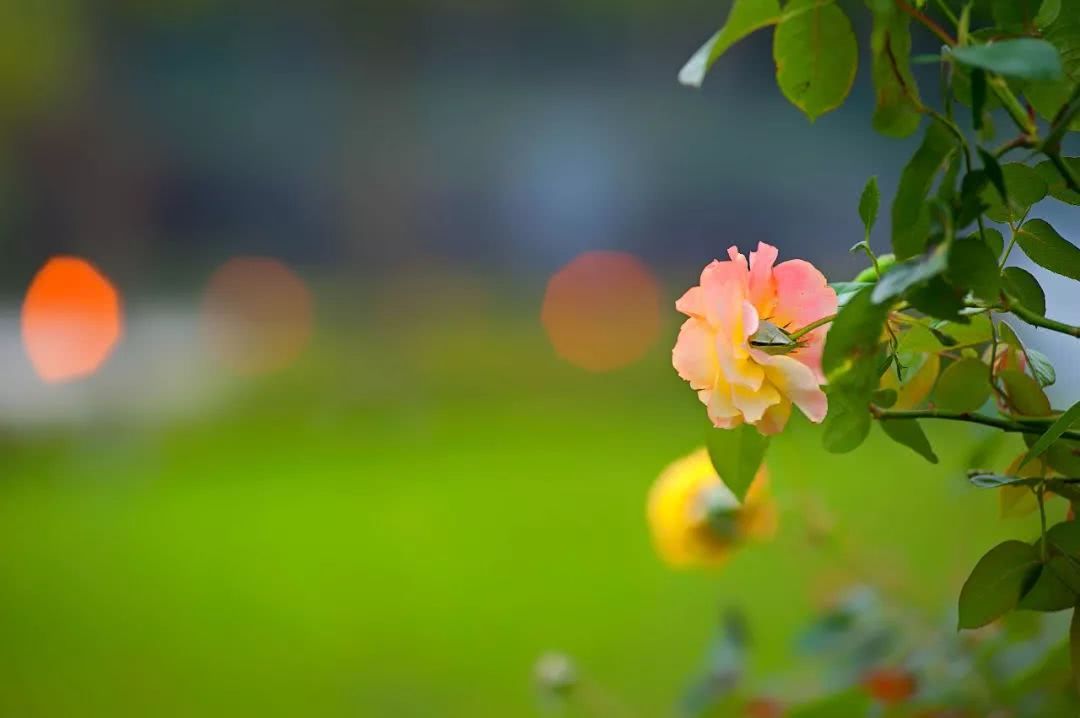
[Growing Potted Roses on the Balcony Like This] Series
Part 7
Everyday Care of Potted Roses on the Balcony
Head Gardener,the rose branches are covered in scale insects, what should I do?
Head Gardener,when I changed the soil for my roses, lots of bugs came out from the bottom of the pot...
Head Gardener,my place hits 40 degrees Celsius in summer, can the roses take it?
Head Gardener,I'm from Northeast China...
Uh, these questions all seem to come back to the everyday care of roses. In this article, let's talk comprehensively about everyday care for growing roses in home gardening.
Everyday Care of Roses
Preventing and Controlling Pests and Diseases
Black spot disease is common during the plum rain season.
After infection, spots begin to appear on the leaves and spread to the whole plant, causing the leaves to turn yellow, drop off, and weakening the plant's vigor.
You need to spray preventative treatments, place the plant somewhere under the eaves where rain cannot reach it, and space the pots apart to ensure ventilation.
If symptoms are found, promptly use a treatment containing amitraz, for 3 consecutive days, spraying 3 times each day.
If left out in the rain, the infection will spread, so spray when there is no rain to avoid spreading it as much as possible.
Red spider mites are common in midsummer
Cultivating on the balcony in midsummeralso makes red spider mites more likely, and you can use specialized treatments to control them. If you mix in a cicada-killing treatment when spraying during the plum rain season, you can effectively avoid a large-scale outbreak in midsummer.
You can also use the methods of washing and removing flower buds to drive away red spider mites. For the specific detailed methods, keep following the follow-up articles on Growing on the Balcony!
Plum Rain and Summer Heat Countermeasures
After blooming in spring comes the continuous rain and insufficient light of the plum rain season, followed by the bright sun, high temperatures and dryness, and the relentless lingering heat, so for roses, late May to early September is a consistently harsh season.
During the plum rain season, you need to move the pots under the eaves and other places where rain cannot reach, and place bricks under the bottom of the pots to prevent excess moisture.
In midsummer, you need to prevent heat damage. To prevent the potting soil from drying out too much, you can arrange bricks in a circle around the pot or raise the pot to block the heat from coming in. When watering, you can also pour water on the surrounding bricks.
Watering
During the plum rain season it is easy to forget to water, but you still need to observe carefully. If the surface of the potting soil has dried out completely, water thoroughly; if most of the leaves turn yellow, that means the whole plant is short of water.
Gardening friends must pay attention: after entering August, with the continuous high temperatures and dry weather, you need to water once in the morning and once in the evening.
In midsummer, try to choose times when the temperature is lower to water.
Fertilizing
Continue the spring method and add solid slow-release fertilizer once a month.
Head Gardener's tip: in order to grow new shoots in September and produce good autumn flowers, try to adjust to fertilizing in mid-August.
In summer too, stick to applying solid slow-release fertilizer once a month.
You can choose rose-specific fertilizer, small-granule fertilizer for use as base fertilizer and top dressing. It takes effect immediately after application, and the fertility lasts two to three months.
You can also choose rose-specific placement-type fertilizer, a tablet-type fertilizer blended with the nutrient components and trace elements roses need, which works continuously and steadily for one to two months.
Alright, manage watering and fertilizing well, control pests and diseases well, and pay attention to the effects of extreme weather changes on roses. With careful care and patient nurturing, you will surely grow roses that everyone loves at first sight!
[Growing Potted Roses on the Balcony Like This] Series
To let gardening friends who like roses and are interested in growing roses understand and master how to grow roses and how to make roses burst with blooms from a 720-degree all-around perspective, the Head Gardener is releasing the [Growing Potted Roses on the Balcony Like This] series table of contents in advance, and editing it to display at the end of the article, making it easy for everyone to choose and look up.
7. Growing roses in summer: everyday care of potted roses on the balcony
8. Growing roses in autumn and winter: potting up bare-root seedlings of upright varieties
9. Growing roses in autumn and winter: potting up long-cane seedlings of climbing varieties
10. Growing roses in autumn and winter: the branch-winding and training method for climbing varieties
11. Growing roses in autumn and winter: pruning and training mature climbing varieties
12. Growing roses in autumn and winter: roses of various branch types should be pruned like this in winter
13. Growing roses in autumn and winter: change the soil for your potted balcony roses!
14. Growing roses in autumn and winter: everyday care of potted roses on the balcony
15. Doing our best to solve for you the seven difficult questions that trouble most rose lovers in caring for roses
Do you like the [Growing Potted Roses on the Balcony Like This] series?
Follow "Growing on the Balcony" and come read along!