This wild herb was a well-known miscarriage-prevention medicine in ancient times, and it can also strengthen the spleen and stop sweating. If you come across it, dig it up and take it home.
The weather has been too hot lately, forcing people to hide indoors. Staying at home, one can't help but watch some TV dramas, and the summer palace intrigue dramas are airing again with great enthusiasm, and the viewers are enjoying them just as much. The plot revolves around a man, with jealous rivalries, and when a concubine here is favored and pregnant, all kinds of miscarriage-prevention knowledge starts being popularized. One herb that often appears is winter Atractylodes macrocephala, and it is a genuine miscarriage-prevention medicine. Using winter Atractylodes macrocephala to prevent miscarriage was already well known in ancient times. The "Treasury of Chinese Materia Medica" records that winter Atractylodes macrocephala can harmonize the middle and boost qi, warm the middle, remove dampness, strengthen the spleen and stomach, stop sweating, improve appetite, and prevent miscarriage.
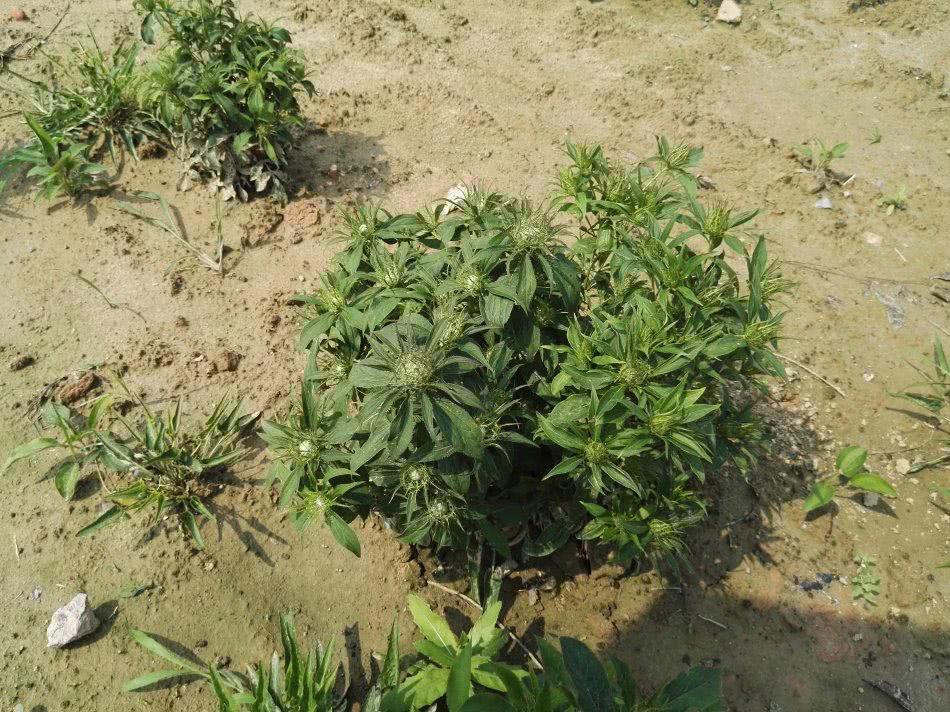
Its other names are also especially poetic: "Xizhu," "Pianzhu," "Yangfu," and "Yuzhu" are all its aliases. Looking at Atractylodes macrocephala, its use in preventing miscarriage and its own effects are so gentle, and its name sounds pleasant too, but its appearance is not smooth at all. Its true face is a thorn-covered "tough guy."
Atractylodes macrocephala belongs to the Asteraceae family, Atractylodes genus. It is a perennial herb that can grow to 60 cm, with alternate leaves and serrated edges, and purple inflorescences like feathery needle spikes. Its flowering and fruiting period is from August to October. Calling it a tough guy is really no exaggeration. Before it blooms, the green flower buds are surrounded by a layer of long needle-like bristles, as if to protect the flower, warning others with a menacing display.
Atractylodes macrocephala is distributed throughout the country and is very common. It likes high-temperature and high-humidity environments, and has no strict requirements for soil. Today's winter Atractylodes macrocephala is mostly divided into wild and cultivated types. The artificial cultivation model was introduced from Japan, but Japan has no wild winter Atractylodes macrocephala, because Japan introduced it from our country in the last century and cultivated it on its own.
Winter Atractylodes macrocephala is a traditional Chinese herbal medicine that is frequently used by people, so many storage methods have also developed. Generally, farmers wash it clean directly, then slice it, dry it in the sun, and store it.
Since ancient times, there have been many methods of processing medicine. The one that is directly sun-dried and sliced for storage is called "raw Atractylodes macrocephala." Add bran to a frying pan, heat the pan, then add dried Atractylodes macrocephala, stir-fry over gentle heat until it turns yellow, take it out, then sift out the bran and let it dry, and it is called "stir-fried Atractylodes macrocephala." The one that is directly put in the pan and stir-fried, then moistened and dried again is called "scorched Atractylodes macrocephala." Chinese herbal medicines also often use this method for stir-frying and storage. When it is to be used as medicine, it can be directly taken and decocted into soup, and it can also be made into pills or ground into powder for use.
The history of traditional Chinese medicine is long, and winter Atractylodes macrocephala is one of its shining pearls. So if you encounter this wild herb in the rural wilderness, as long as you do not damage the environment, remember to dig some up and take it home!
Dear friends, have you ever seen this wild plant Atractylodes macrocephala? You are welcome to leave a message and share!