Courtyard planting styles are diverse - which one do you prefer?
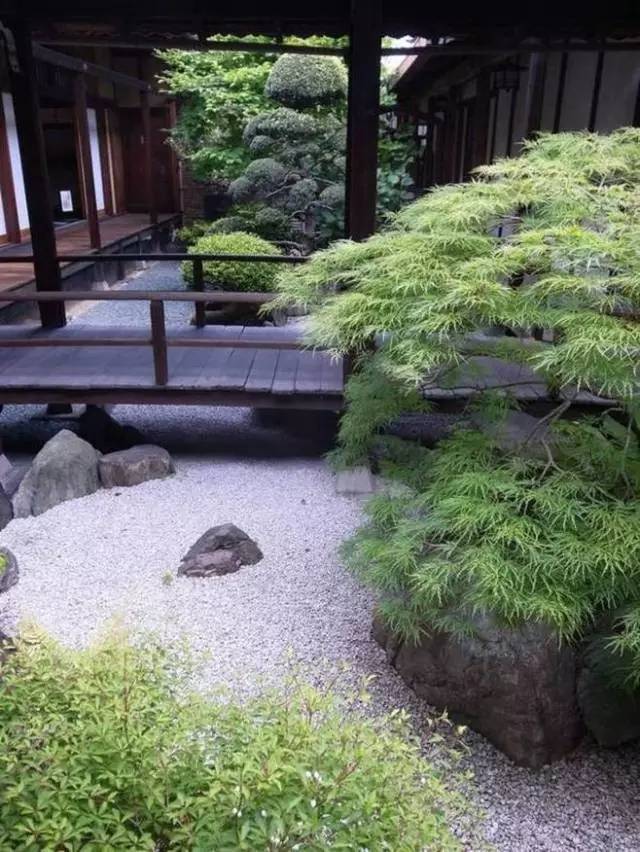
Japanese courtyards use plants sparingly, yet exquisitely; clever pruning and pairing techniques create a unique Japanese garden plant landscape. In choosing plants, Japanese courtyards place great emphasis on growing habits, morphological characteristics, and so on.
There are many kinds of trees suitable for planting in a Japanese courtyard.
Evergreen trees: Aucuba japonica, Ilex rotunda, Japanese black pine, five-needle pine, camellia sasanqua, cedar, Japanese cedar, Camellia japonica, Buddhist pine, etc.
Deciduous trees: plum tree, crape myrtle, maple, witch hazel, kousa dogwood, etc.
Ground cover: hosta, dwarf lilyturf, Farfugium japonicum, Aspidistra elatior, Pachysandra terminalis, variegated broadleaf lilyturf, etc.
Mosses: Dicranum scoparium, rain moss, Racomitrium japonicum, Campylopus, Leucobryum glaucum, etc.
A cozy life in a romantic courtyard
The British prefer natural groves and lawns, with particular emphasis on borrowed scenery and blending with the natural environment outside the garden. They pay attention to the form, color, scent, flowering period and clumping method of flowers, giving rise to the "garden" centered mainly on flower arrangement, and even specialized gardens themed on a single flower, such as "rose garden", "lily garden", "iris garden" and so on. Thus, at the mention of a European-style courtyard, one thinks of vast lawns, solitary large trees, and the beautiful scenery of flower borders in drifts.
English courtyards mostly use naturally growing flowers and trees, with many plants for all four seasons and distinct seasonal aspects:
Spring: narcissus, paperbark, winter jasmine, magnolia, redbud, crabapple, peach, purple-leaf plum, tulip, Michelia figo, Rosa xanthina, Loropetalum chinense var. rubrum, red-flowered oxalis, daisy, dandelion, iris, wisteria, jacaranda, etc.
Summer: jasmine, pomegranate, Chinese rose, hydrangea, summer azalea, Portulaca grandiflora, daylily, honeysuckle, silk tree, rose apple, oleander, hibiscus, Chinese hibiscus, Lantana camara, Hydrangea macrophylla, crape myrtle, purple loosestrife, dusty miller, marigold, French marigold, dwarf lilyturf, gladiolus, water lily, lotus, etc.
Autumn: osmanthus, cotton rose, wild chrysanthemum, Reineckea carnea, Yucca gloriosa, Bauhinia purpurea, Senna surattensis, etc.
Winter: camellia sasanqua, Camellia japonica, bougainvillea, wintersweet, etc.
Maritime charm, subtropical scenery
Mediterranean-style gardens create a subtropical garden landscape, requiring a large number of palm plants and brilliantly colored flowering shrubs, with three-dimensional greenery made of flowers, grasses, vines and trees visible on the ground, on walls and on wooden fences, and with clearly layered plant spaces.
The base tones of a Mediterranean courtyard come from the natural colors of the landscape and seascape; stone walls or painted walls form a backdrop of mud green, sea blue and rust red, evoking vivid imagery:
Palm plants: palm, Chinese fan palm, royal palm, Archontophoenix alexandrae, Rhapis excelsa, parlour palm, areca palm, fishtail palm, Phoenix canariensis, Royal palm, queen palm, Middle Eastern date palm, Canary Island date palm, etc.
Vines: wisteria, rose, Mucuna birdwoodiana, ivy, Chinese trumpet creeper, grape, etc.
Succulent perennials: cactus, Christmas cactus, jade plant, Schlumbergera, white jade cactus, etc.
Wetland and aquatic plants: gladiolus, iris, Cyperus alternifolius, softstem bulrush, water lily, etc.
Lawn and ground cover plants: dwarf lilyturf, bentgrass, buffalo grass, Kentucky bluegrass, fine-leaf zoysia, bermuda grass, Dichondra repens, etc.
If you like it, feel free to like and share
The NaturePlanet
Everything plant-related in one place