Root-borne weeds hard to remove? The right herbicide can solve it completely
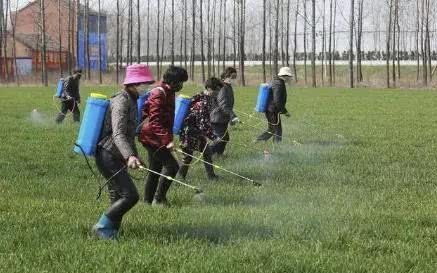
Root-borne weeds are indeed a rather tricky problem. There may be some effect right after applying herbicide, but after a period of time the weeds will come back again. This involves the choice of herbicide. Below, let's talk about the issue of herbicides.
If you want to get rid of root-borne weeds, you must first understand the types of herbicides. There are many kinds of herbicides, and there are also many herbicide brands sold on the market, so you must first figure out this issue to suit the remedy to the case. There are many ways to classify herbicides, and below is a relatively rough introduction.
1. Mode of action
Selective herbicides: as the name implies, they weed selectively, which means this type of herbicide can kill weeds without affecting crop growth. At present, most herbicides belong to the selective herbicide type. The more common ones include haloxyfop and bentazone, etc.
Non-selective herbicides: their killing power is quite strong, meaning that as long as it comes into contact with a plant, whether it is a weed or not, it will die on contact. For example, paraquat, which has already withdrawn from the scene, belongs to this type.
2. Classification by translocation ⟧9⟧Contact-kill: friends who use herbicides should have often heard of this. As long as it comes into contact, that part will die. In other words, this kind of herbicide only kills the part of the weed that comes into contact with the pesticide, and may not cause the weed to die completely. The more common one is still paraquat.
Contact-kill: friends who use herbicides have probably heard of this often; as long as the plant comes into contact with it, that part will die. In other words, this kind of herbicide only kills the parts of the weeds that come into contact with the pesticide, and may not cause the weeds to die completely. The more common one is still paraquat.
Systemic herbicides: the characteristic of systemic herbicides is that after the pesticide is applied, the weeds may not show results immediately, because the herbicide must go through an absorption process, allowing the herbicide's efficacy to slowly spread throughout all parts of the weed, so that it slowly dies. The more common type among these herbicides is glyphosate.
3. Classification by method of use
Stem and leaf treatment: that is, when this type of herbicide is used, the main method is to spray the agent on the stem and leaf parts of the weeds, and then transmit the toxin to the weed roots through the stems and leaves, thereby achieving the purpose of weed control. Haloxyfop and glyphosate both belong to this type.
Soil treatment: soil treatment generally requires spraying the herbicide onto the soil surface, or directly mixing it into the soil, transmitting the toxin from the weed roots to achieve the purpose of weed control. The more common one is acetochlor, etc.
In addition to the above three classification methods, there are other classification methods, which will not be repeated here. However, from the above classification it can be seen that systemic herbicides are more suitable for removing root-borne weeds. For example, glyphosate, MCPA, fluroxypyr, clopyralid, etc. are all suitable for removing root-borne weeds.
However, during use, attention should also be paid to making reasonable choices according to different crop types, and the concentration standard on the product instructions must be strictly followed for mixing and use. Do not change the concentration without authorization.