Orchids cannot be sold privately, do you know why?
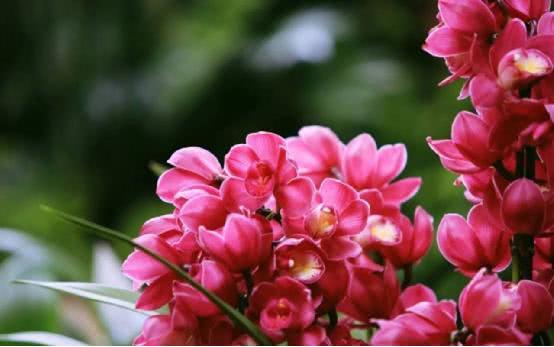
The Convention on International Trade in Endangered Species of Wild Fauna and Flora clearly records that orchids have been listed as a protected species, so what is all the fuss about? It is reported that 1,497 endangered wild orchids, including Paphiopedilum, Dendrobium, and Phalaenopsis, were packed in two large suitcases in an attempt to smuggle them out of the country. This was discovered on Thai passengers, who were then detained by police and sent to the greenhouse of the Kunming Institute of Botany, Chinese Academy of Sciences, where relevant experts carried out emergency rescue. Although the incident happened long ago, it still received considerable attention.
Gardeners need not worry, not all orchids are endangered species. Experienced gardeners know that orchid leaves decline once every year, and if new leaves cannot keep up with the decline rate of the old leaves, then the overall plumpness of the orchid will also gradually decrease! An experienced gardener shared a little method; the method is not difficult but the effect is quite astonishing.
Let's take a look at how he did it. He actually used willow branches and vitamin B12, making use of their principles to prepare and apply them. When the gardener shared the technique at the time, I was also full of doubt, but with a give-it-a-try attitude, it really did produce considerable results as he said. Let's explain them separately, so follow me and first learn about the principles.
1. As the saying goes, "A watched flower never blooms, but an untended willow grows into shade." This famous saying praises the tenacious vitality of the willow tree. This is because willow trees are rich in salicylic acid. In the field of skincare, the antioxidant effect of salicylic acid is also very effective. The salicylic acid in willow trees helps plants sprout and take root, and promotes plump leaf growth. It belongs to the organic hormones in the plant kingdom and is truly excellent.
2. Vitamin B12 also has a fairly high rescue rate. This is a liquid that is stimulating to plant roots. This kind of stimulation does not mean "bad stimulation"; rather, just like the human body keeping active regularly, which has a special promoting effect on bone growth, plant roots likewise need constant "stimulation" to develop well. It can awaken the vitality of the roots, accelerate rooting in flowers and plants, and lay the foundation for the next year's growth. Vitamin B12 is also very good for making plants robust and fresh green.
The method of use is as follows:
Take a willow branch from the current year (the earlier the branch grew, the richer the salicylic acid it contains), cut it off and remove the leaves, then cut this branch into equal small sections, with a length of about 5cm being most suitable. Also, if you have a hammer at home, you can smash the branch. Find a container and put the smashed branch and one tablet of vitamin B12 into it together. Soak for a period of time until the branches in the bottle all sink down; that is the time to take the water and water the flowers. According to the normal frequency of watering flowers, generally once every 10 days, within 2 months you can see many small side buds.