Can plants generate electricity too? After reading this, you'll believe it
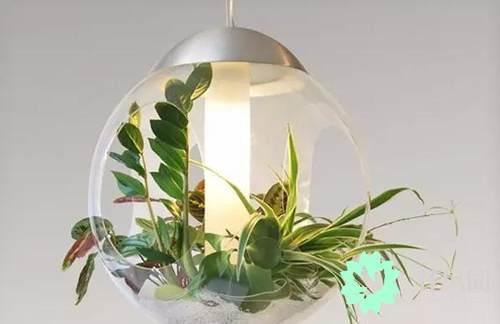
The story of a group of fanciful scientists trying to generate electricity with plants. No, not the lemon battery or apple battery you're thinking of. What we're talking about here is using plants growing in the soil to generate electricity by capturing the electrical energy produced during their metabolism.
These scientists come from the Department of Environmental Technology at Wageningen University in the Netherlands. Over nearly 10 years, they have proven to the world that plant-based electricity generation can become a landmark technology driving new ideas in energy and environmental protection. It really is true: to get rich, have fewer children and plant more trees.
What is plant-based electricity generation?
The essence of plant-based electricity generation is actually using microorganisms in the soil to generate electricity. So why is it called plant-based electricity generation? Because the main energy substances in the electricity generation process come from the organic matter produced by plant photosynthesis.
Only a very small portion of this organic matter is provided for the plant's own growth; most of the rest is secreted through the plant's root system into the soil environment. Some specific "electrogenic" microorganisms present in the soil can effectively use this organic matter, oxidize it through internal cellular metabolism, and transfer the electrons produced in this process outside the cell through the cell's respiratory chain.
If the cathode and anode of a circuit are placed in the soil, these electrons will ultimately be received by the anode and then transferred through the external circuit to the cathode. At the cathode, the electrons combine with oxygen in the air, along with hydrogen protons from the anode, to ultimately produce water. Throughout the entire process, plant photosynthesis provides the basic nutrients for the "electrogenic" microorganisms to generate electricity, while the artificial external circuit is responsible for collecting the electrical energy.
Basic schematic diagram of plant-based electricity generation
The difficulties of plant-based electricity generation
Although the principle of plant-based electricity generation is not difficult, to move it from the laboratory into real-life practical application, scientists first need to solve many scientific and technological challenges.
01
Low power output
In a plant-based electricity generation system, the rated voltage is fixed, at about 1.28V. Unlike voltage, the current is jointly constrained by multiple factors such as the internal structure of the system, the growth state of the plants and microorganisms, and the operating conditions. Different plant-based electricity generation systems may have completely different output currents. Therefore, an important prerequisite for applying plant-based electricity generation to daily life is finding a suitable plant growth system so that the electrical power reaches a certain standard.
02
High cost
Plant-based electricity generation systems require the introduction of artificial electrode materials. These electrode materials need to have good electrical conductivity while also being able to facilitate the growth and attachment of microorganisms. To ensure effective current collection, some precious metal wires are needed to connect these carbon electrodes to the external circuit. The use of these precious metals not only greatly increases the cost of the plant-based electricity generation system, but also brings environmental pollution and potential ecological harm. How to solve these problems is also what most needs attention in promoting plant-based electricity generation.
03
Difficult to collect
Scientists are working hard to tap the electricity-generating capacity of plants, yet the utilization value of this electrical energy is not very high. For example, to charge an iPhone (requiring 5W of power), calculated at the highest power output (3.2 W/sq m), we would need at least 2 sq m of anode material area. Such a large area can only be used to charge one phone, and meeting normal household electricity needs seems completely impossible.
Of course, this does not mean the significance of plant-based electricity generation should be denied. Although the power generated by plants is very small, it can generate electricity continuously 24 hours a day. By making full use of this characteristic, scientists have proposed using external capacitors to collect the current for power supply. First, the stored tiny amounts of electrical energy are accumulated, and then scaled circuit components are used to convert it into a relatively high power output. The introduction of capacitors into plant-based electricity generation systems has laid an important foundation for promoting the full-scale, large-scale practical application of plant-based electricity generation.
Plant-based electricity generation is no longer far away from us
Wageningen University has always encouraged students to engage in entrepreneurial activities, so the university funded the creation of a small startup incubator company for the plant-based electricity generation project, named Plant-e. Today the company has already developed several types of products. For example, small gadgets for teaching and creative home decor, though of course, because they are too small, they cannot provide electrical power; there are also movable power-generating modules that can be applied to green roofs or building walls. Lay a layer of plants on the roof, and it stays cool in summer and warm in winter while saving electricity; and there are large-scale, practical tubular systems that can supply power to LED streetlights along roads.
(a) Creative small electricity-generating potted plants (for teaching, furniture decoration, and other uses); (b) power-generating green roof module; (c) tubular plant-based electricity generation system. This configuration is suitable for large-scale practical applications in wetlands and natural ecosystems.
These products have already been promoted to 11 cities in the Netherlands, and Plant-e has also specially provided Wageningen University with a power supply system for the illumination of information boards on campus. The company's next plan is to enter the Chinese market and provide new construction ideas for building China's sponge cities. Perhaps very soon, we really will be able to use park green spaces to generate electricity.