How to grow Begonia maculata in pots? Understand the planting method in one article
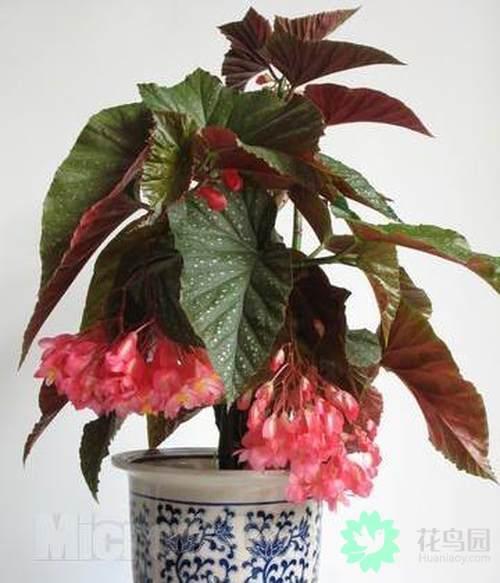
Begonia maculata has excellent ornamental value and is an outstanding potted flower for beautifying indoor home environments. Not only do its flowers bloom in clusters, but both its flowers and leaves are beautiful, and its flowering period is long. Moreover, its planting and management method is also very simple. It can be planted by first growing it in water and then moving it into a pot, and then it can be cared for according to the maintenance and management methods for begonias.
Besides being grown in the ground, Begonia maculata can also be skillfully made into potted plants using stump bonsai. The best planting time is before budding in early spring or after leaf fall in winter, and keeping the seedling's root system intact is one of the key factors for successful planting. Usually, stump material should be planted with a soil ball, and after planting, cultivation and maintenance management should be carried out. So, how do you grow potted Begonia maculata? Below, the editor will introduce the planting method of Begonia maculata.
1. Propagation
Begonia maculata is usually propagated by hardwood cuttings. Generally, in summer, cut healthy hardwood branches that have already bloomed, take a section every 3-4 nodes, and insert them into sandy soil. Of course, afterward, watering to maintain moisture and temperature control management are needed, and roots will form in about 15 days and the plant can be potted. Of course, it can also first be grown in water and then transplanted into a flower pot.
2. Soil mixing
Potted Begonia maculata requires loose and fertile soil. You can choose slightly acidic, well-drained sandy soil with a pH value between 6.5-7.5. For the growing medium, it is advisable to evenly mix leaf mold + spent mushroom substrate residue + river sand + plant ash + bone meal before use.
3. Potting
Begonia maculata should preferably be potted on a cool cloudy day, and the root system needs to be treated before potting. After dealing with rotten roots or weak roots, choose a flower pot of appropriate size for potting. When potting, first scatter some soil at the bottom, then spread the plant's root system evenly, and then slowly fill in soil. After potting, place the potted plant in a shady, humid, wind-sheltered place, and water it thoroughly once again the next day.
4. Maintenance
During maintenance, potted Begonia maculata should avoid strong light exposure and can receive some diffused light; during the growing season, it should be watered frequently but not excessively, otherwise it can easily cause root rot and death, and in summer, to maintain moisture, water should also be appropriately sprayed on the leaves and ground; in addition to applying a dilute fertilizer once a week during the growing season, fertilizer should also be applied appropriately during the bud stage, mainly phosphorus and potassium fertilizer; to maintain plant shape and produce more flowers, appropriate pruning and shortening should also be carried out. Besides cutting off spent flowers and branches that have already bloomed, diseased, damaged, and weak branches and overly long branches unfavorable to shaping should also be pruned according to the desired shape.
5. Pests and diseases
Begonia maculata is prone to pests and diseases in summer. In terms of prevention, besides strengthening ventilation and light transmission, insecticides and fungicides such as acaricides and carbendazim should also be sprayed. For the occurrence of scale insects on the plant, manual removal can be used.