It looks just like okra and nearly went extinct 50 years ago; its flowers are worth more than its fruit, selling for 500 yuan per jin
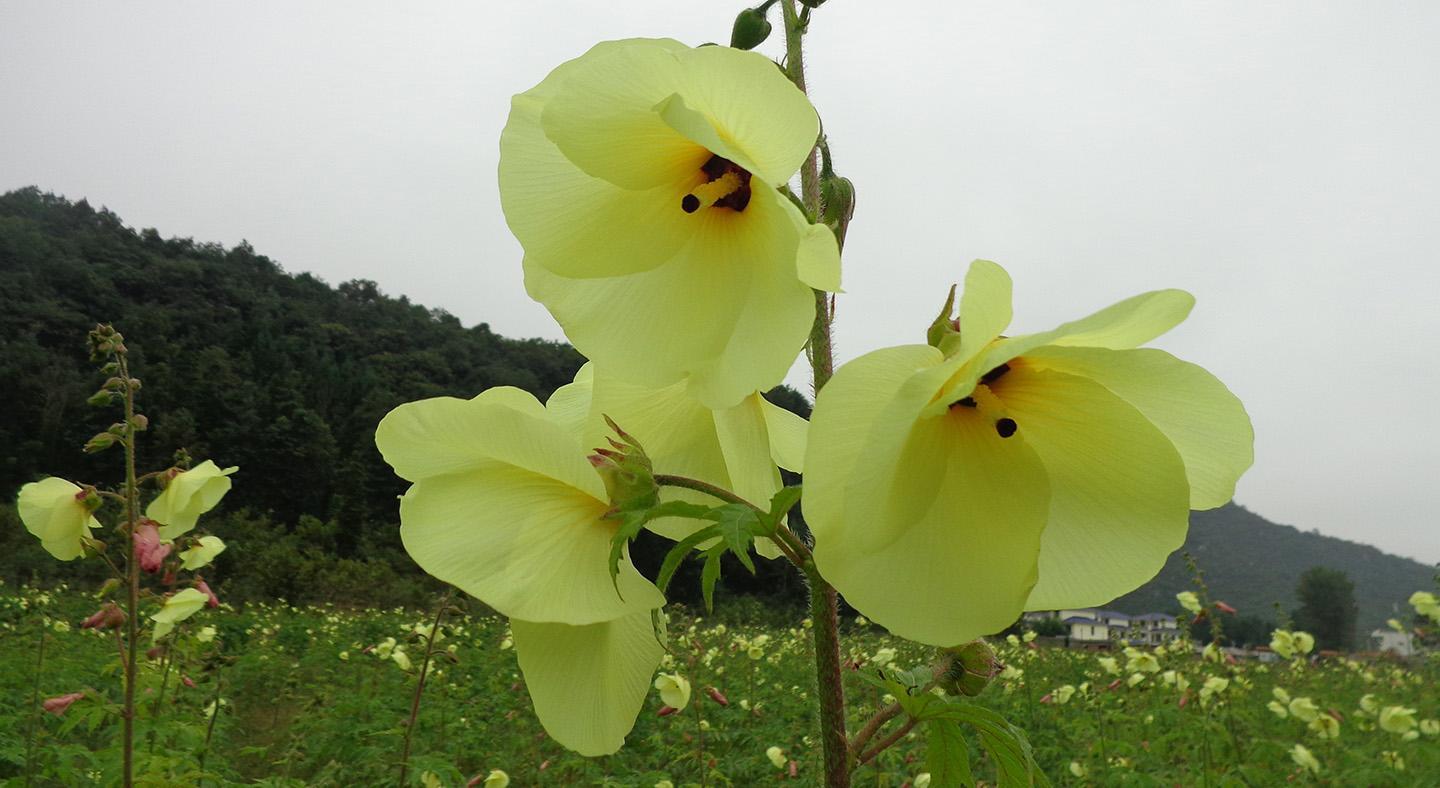
Everyone loves the hibiscus. Its flowers are brightly colored, mostly pink, endearing and enchantingly graceful, and it is often grown in courtyards.
When we praise a girl for being beautiful, we often use "a hibiscus rising out of water" to describe her, which shows just how charming it is. But did you know there is also a yellow "hibiscus"? For a time it was on the verge of extinction and rarely appeared in the public eye, though occasionally it can still be found in cracks on mountain cliffs. Because of its tenacious vitality, it is called "wild hibiscus." Though not as showy as the hibiscus, its value is even greater than that of the hibiscus.
In fact, this "wild hibiscus" is not a relative of the hibiscus at all. It is a type of mallow called golden flower mallow (Abutilon sp.), also known as vegetable hibiscus and mountain elm bark. As its name suggests, the golden flower mallow has golden-yellow petals, and overall it looks very much like okra. Its roots are extremely thick and strong, able to root deeply in the soil, which is also why it can survive in cliff crevices.
It has excellent adaptability and can be planted just about anywhere, but for various reasons it was once not numerous, and could even be called rare. Although the golden flower mallow does not look as striking as the hibiscus, it has a charm all its own, and its value goes far beyond mere ornamental appeal.
The golden flower mallow was recorded in ancient China. The famous physician and pharmacologist Li Shizhen once documented its functions in the "Compendium of Materia Medica": it can clear heat and detoxify, relieve pain and reduce inflammation. Modern scientists, after research, have also discovered its extremely high medicinal value. The golden flower mallow contains many substances our bodies need, such as protein and trace elements.
Used as medicine, it can significantly boost our immunity, improve our cardiovascular and cerebrovascular circulation, and reduce inflammation and pain, while the hyperoside it contains can also relieve coughs. In short, its medicinal value is extremely high, making it a rare and precious plant.
Besides being used as medicine, the golden flower mallow can also be eaten as a delicacy, and every part of it from top to bottom is edible. It has a fragrant aroma and a refreshing, delicious taste. The petals can be brewed as tea or cooked in soup, and many people also serve them cold-tossed or stir-fried. There are many ways to prepare it, and every one is delicious.
Because its flowers can be eaten, brewed as tea and used medicinally, they are worth even more than its fruit. However, since its flowering period is short (July to September), the flowers of the golden flower mallow are all the more valuable. In some places in southern China, dried golden flower mallow flowers can sell for around 500 yuan per jin.
Its rhizome, once crushed, can also be made into flour, called "elm bark noodles," which is distinctive and nutritious. The oil of the golden flower mallow can be used not only for cooking but also as a raw material for lubricants and cosmetics, giving it considerably high economic value.
More than 50 years ago, many people thought the golden flower mallow was nothing special and did not understand its medicinal benefits, so it was gradually forgotten, and even came close to extinction.
But with continuous research discoveries in recent years, the value of the golden flower mallow has been recognized. The era of a pearl left in the dust has finally passed, and more and more cultivation bases have been built. Farmers have begun planting golden flower mallow one after another, which has both changed its fate of extinction and brought them good returns.
This simple "wild hibiscus" actually has such precious value, truly making people see it in a new light.
Dear friends, have you ever eaten golden flower mallow? You are welcome to leave a comment and share your thoughts!