Rabbit's staff has no roots and no leaves, yet it can flower and fruit while parasitizing wormwood
Nowadays more and more people are pursuing health preservation. Running, fitness training, tai chi and yoga are all common health-preserving exercises. Besides these, people also occasionally go to Chinese herbal medicine shops to buy some health-tonic herbs for regulating qi and nourishing blood. Chinese herbal medicine is no longer only used to cure diseases and save lives; it is playing an increasingly large role in our daily lives.
For farmers, the countryside is a natural treasure land for health preservation. During busy farming seasons, working in the fields not only lets them manage the crops and earn money to support the family, but also exercises the muscles and bones and strengthens the body. In their spare time, going up the slopes to find some wild vegetables and wild fruits, or boiling some wild herbs, can also whet the appetite and satisfy cravings while nourishing the body. Many precious Chinese medicinal herbs come from the countryside. Things like cordyceps and ginseng cannot be surpassed by artificial cultivation. Take the nationally third-class protected endangered species "Lie Dang" for example. In the countryside it is now the rarest treasure.
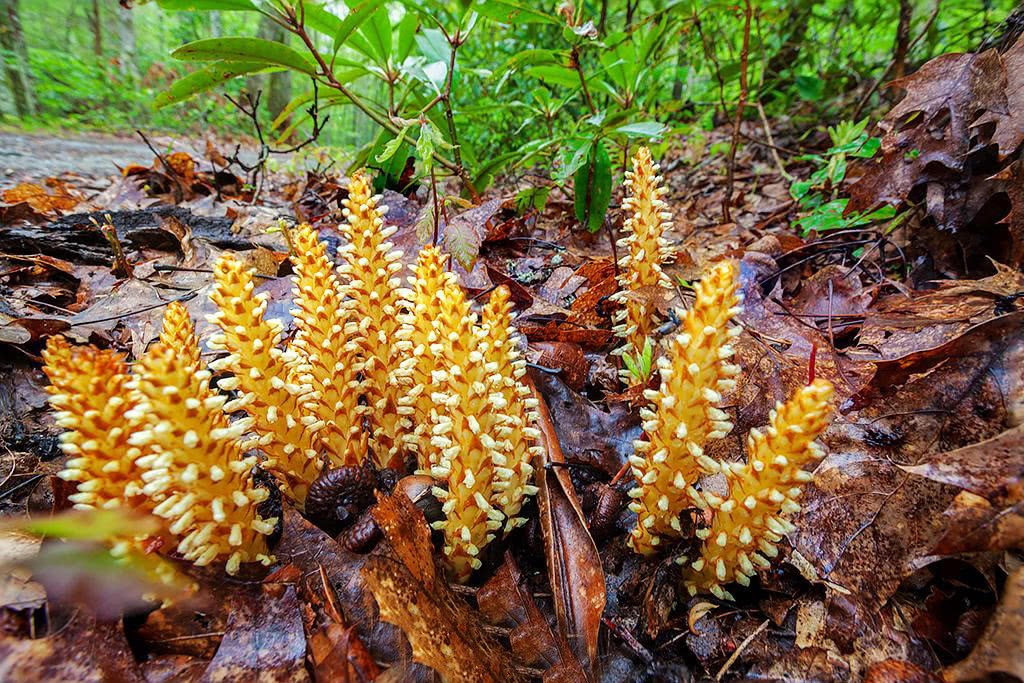
The name Lie Dang may be relatively unfamiliar to everyone. Among the older people in our village it is called "rabbit's staff" and "mountain corn", and it is a rare and precious Chinese medicinal herb. In fact, Lie Dang is the famous "Boschniakia rossica". It is a parasitic plant that parasitizes wormwood. It has no roots and no leaves, and is very peculiar.
When farmers go into the mountains to cut firewood in summer, they can see it in some sand dunes and gullies. Seen from a distance, Lie Dang looks like a corn cob growing out of the ground, so we gave it a down-to-earth name, mountain corn. However, it is smaller in size, only half the size of ordinary corn. I heard adults say that when Lie Dang first grows out it is pale yellow, and later, after it matures in June and July, it turns golden yellow. Common Lie Dang blooms small blue and light purple flowers, and some bloom white flowers.
Because the areas where Lie Dang grows are at relatively high altitude, when it blooms it does not attract too many butterflies and bees, so the probability of successful pollination is extremely low. However, it can still bear fruit. Farmers have also thought about digging it up and taking it home to plant, but Lie Dang has almost no roots, so there is simply no way to plant it. Lie Dang not only has no roots, it does not even have leaves. It is a truly peculiar plant with no leaves and no roots.
Children are greedy for food and always easily upset their stomachs. If it gets serious, they have to make repeated trips to the hospital. Once I heard an old Chinese medicine doctor here sigh and say that if mountain corn could be as easy to find as before, then stomachaches and sore legs would not require the trouble of running to the hospital. Indeed, Lie Dang can strengthen the muscles and bones. It is a rare health-preserving medicinal herb given by nature.
I have never seen Lie Dang. I heard that just a few decades ago it could still often be seen on that mountain several hundred meters high. Later, after research identified it as a precious Chinese medicinal herb, more and more people went into the mountains to pick it, and the number of Lie Dang, which was already difficult to grow, has been decreasing day by day.
Although there are many artificially cultivated Lie Dang on the market, their health-preserving effects are far inferior to wild Lie Dang. However, ever since Lie Dang was listed as a national-level protected species, very few people have picked it. Maybe in the future, going into the mountains, one might be lucky enough to come across it!
Dear friends, do you have this peculiar and precious Lie Dang where you are?