The ancient fruit that is blood-red inside and out, why is it hailed as the king of iron?
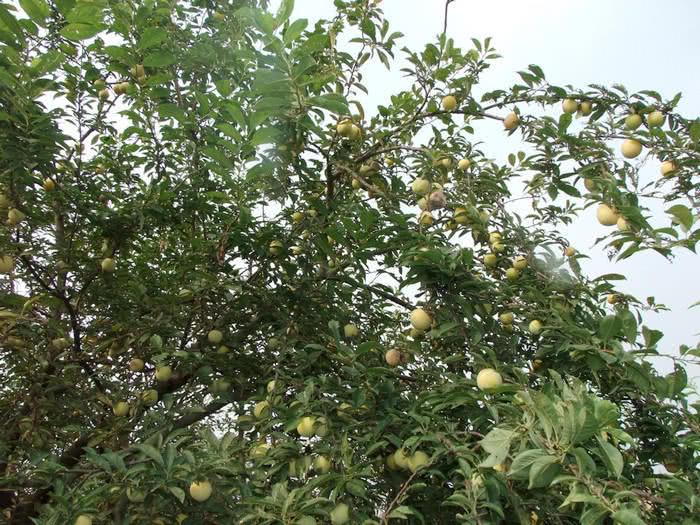
The biggest advantage of living in the countryside is none other than being able to eat the freshest vegetables and fruits every day. This is something many city dwellers cannot enjoy, a privilege only those who live in the countryside can have. Delicacies like mushrooms that race against time can only be eaten at the earliest moment by country people.
Now in August, the peaches by the front door should be ripening, and once again you can see the sight of peaches weighing down the branches. Every bite is the freshest. Outsiders who see them will surely ask, why are these peaches so red, and why is the juice inside red too? Actually, this is the "blood peach." Its characteristic is that it is slightly smaller than ordinary peaches, and it is blood-red inside and out. Even the juice that flows out is blood-red, which is why it is called the blood peach.
The blood peach is one of the oldest peach varieties, with bright color, a crisp and refreshing texture, and a sweet-and-sour taste. In the past, most grew wild and could only be eaten in the countryside. As people paid more attention to blood peaches, scientists also cultivated larger blood peaches. An ordinary one weighs half a jin, and the largest weighs about one jin, giving it relatively high economic value.
Blood peaches have a shorter storage time than ordinary peaches, so they must be eaten in time. Natural storage lasts about seven days. To sell them for a good price, timing is very important, so transport costs are also higher. The price of blood peaches is much higher than that of ordinary peaches. In China, Hunan and Guizhou produce them in abundance, as the geography and climate here are especially suitable for the growth of blood peaches.
Blood peaches have a high iron content and are the king of iron among all fruits, so they are also called "blood pearls." People often say that replenishing blood means replenishing iron, because iron is a blood-forming substance and has the effect of tonifying qi and blood. In addition, blood peaches contain a variety of vitamins and minerals. People who usually have insufficient qi and blood and a haggard complexion can eat more of them.
People with anemia can eat more blood peaches and replenish blood imperceptibly. Blood peaches also have the effects of promoting blood circulation and removing blood stasis, and promoting bowel movements, so people with constipation can also eat them. People with the "three highs" can also eat more blood peaches. As a dietary therapy, it is a very good choice.
Blood peaches are quite different from other peaches. Besides the differences in appearance and flesh, their iron content cannot be matched by ordinary peaches. The anthocyanins in blood peaches are also several times greater than those in ordinary peaches. August is exactly the time when blood peaches ripen.
Summers are hot, and nutrients are more easily lost from the body. Add to that a lack of appetite in summer and feeling tired and sluggish all day long, and the blood peaches that appear at this time seem to exist as a complement. Eat some fresh blood peaches and start work and life full of energy!