Avoid these mistakes in orchid care, and the leaves will be lush green and the plant will grow vigorously
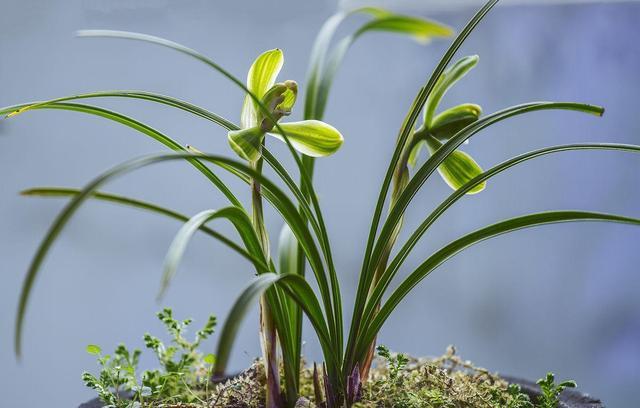
Orchids have a rather elegant posture, with slender, evergreen leaves and graceful blooms, giving people a sense of nobility and elegance, so they are deeply favored by everyone. I wonder if you have encountered withered leaf tips or yellowing leaves during cultivation, which not only affects the plant's growth but also reduces its ornamental value. In fact, as long as you do these few things well, problems like withered leaf tips will basically not occur.
Improper watering
When watering orchids, if you always fail to water thoroughly or water too much, then over time the orchid's leaves will wither. Therefore, when watering orchids, you must follow the principle of "do not water until dry, and water thoroughly when you do." Also, you must maintain a certain humidity and spray water around it more often; if the air is too dry, withered leaf tips will also appear.
Direct sunlight
Withered orchid leaf tips are basically caused by strong light exposure, because orchids are naturally fond of semi-shaded environments. If you grow them in a strong-light environment, the leaves will definitely be scorched. Another reason is that if a plant originally grown in a dark place is suddenly moved to a place with stronger light, the leaves will also wither. So when growing them, it is best to keep them in an environment with scattered light, and you must avoid direct strong light.
Over-fertilizing
Orchids themselves like fertilizer, but if you fertilize too much or apply some unrotted fertilizer, the orchid's root system will be damaged or even directly rot, which will cause the orchid's leaves to turn yellow and so on. Therefore, when fertilizing orchids, you must "apply thin fertilizer frequently," and you can apply some fertilizer specially made for orchids, or rotted organic fertilizer.
Pests and diseases
In summer, pests are especially rampant, and orchids are particularly prone to red spider mites, rust disease, and so on. After the pests are removed, orchids will also show symptoms such as withered leaf tips and yellow leaves. So when you discover signs of pests and diseases, first prune off the infected parts, then spray with carbendazim to disinfect, preventing pests and diseases from invading again.
In addition, you must ensure that the soil is slightly acidic. If the potting soil remains alkaline for a long time and you do not change the soil, the orchid's root system will not be able to breathe well, causing poor growth of the orchid.