What plants are good to keep in the bedroom? These types purify the air and beautify the room
Whether plants can be kept in the bedroom, and which plants to keep, has always been a matter of debate. Some flower enthusiasts believe that plants, like people, absorb oxygen and release carbon dioxide at night, thus competing with people for indoor oxygen and producing more carbon dioxide. In fact, some plants in nature differ from other plants: they can absorb carbon dioxide at night to purify the air, creating a unique natural oxygen bar for our homes. Come and see which plants these are!
1. Snake plant (Sansevieria). The snake plant is a foliage-focused plant that rarely blooms. The snake plant not only has extremely high ornamental value, but is also an air-purifying expert. During growth, the stomata on its leaves close during the day and open at night, releasing oxygen for humans to absorb.
The snake plant likes dryness and dislikes dampness; for soil mix, it is generally recommended to use a sandy loam with good drainage. It is very tolerant of drought and poor soil, but it should not be kept dry for long periods, otherwise the leaves will become thin, shrunken, and lose their luster. In summer, if it is exposed to strong direct sunlight, the leaves can also turn dark and whitish, and watering too frequently not only easily causes root rot but also makes the leaf markings fade or disappear.
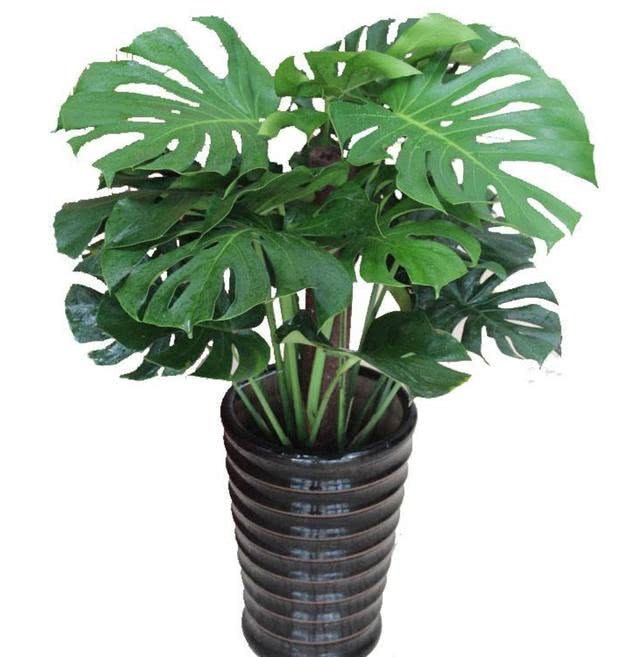
2. Monstera (Monstera deliciosa). Its leaf shape is peculiar, with holes and splits, very much like a turtle shell. Monstera leaves are emerald green all year round, the stems are relatively thick and strong, and it produces powerful aerial roots. It is extremely shade-tolerant and is a famous indoor potted foliage plant. Monstera has the effect of absorbing carbon dioxide at night, which greatly helps improve indoor air quality and increase oxygen content. It also has the advantage of preferentially absorbing harmful gases such as formaldehyde and benzene, making it very suitable for indoor growing, especially in the bedroom.
The original living environment of Monstera is beneath large trees in tropical rainforests, so it likes humidity and tolerates shade, and fears direct strong light and dry air. Monstera leaves are dark green, and it likes slightly acidic soil. For home growing, you can use a 1:2000 ferrous sulfate solution to drench the roots once a month to prevent iron-deficiency yellowing of the leaves.
3. Ivy (Hedera helix). When it comes to plants that can purify the air, ivy must be mentioned. Ivy has a strong climbing nature; its long vines hang down, and it can not only increase oxygen and reduce dust, but also has the characteristic of preferentially absorbing harmful gases such as formaldehyde and benzene, achieving the effect of purifying indoor air. In southern cities, ivy is often used as a landscape plant in green belts, showing that its role in purifying air and beautifying the environment is extraordinary.
Ivy is relatively cold-tolerant, and ordinary home rooms are generally sufficient for it to overwinter safely. It likes a warm and humid environment; insufficient water or excessive drought will cause leaf drop. When the air is dry, you can often spray water on the leaves to maintain humidity.
4. Aloe. Aloe is a green plant loved by many flower enthusiasts, especially beauty-loving women. Aloe has a good ability to absorb harmful gases in the air such as carbon dioxide and formaldehyde, and can also remove harmful microorganisms from the air, playing a major role in improving indoor quality. Among aloes, a few varieties such as Curaçao aloe (Aloe vera), Chinese aloe, and tree aloe (Aloe arborescens) also have beauty benefits.
Aloe likes light and tolerates shade, and dislikes direct sunlight and excessive shading. It has strong drought tolerance and fears waterlogging. Aloe likes a growing environment with good ventilation. Its most suitable growing temperature is 20°C~30°C, and below 0°C it will suffer cold damage.
5. Kalanchoe (Kalanchoe blossfeldiana). The kalanchoe plant is small and compact, and when it blooms the petals are dense and clustered into balls, and the flowering period can last about half a year, so it is deeply loved by flower enthusiasts. Kalanchoe belongs to the Crassulaceae family, and a common feature of this type of plant is that it closes its stomata during the day and opens them at night to absorb carbon dioxide and toxic gases from the air, while releasing oxygen for humans to absorb.
Kalanchoe likes warmth, tolerates drought, and likes a environment with ample sunlight, blooming in winter and spring. In summer, kalanchoe will enter a dormant or semi-dormant state due to unsuitable temperatures, so it should be moved promptly to a cool, ventilated place and given appropriate cooling. Kalanchoe is not cold-tolerant, and its growing room temperature is 15°C~25°C. Kalanchoe is a short-day flowering plant. In the early stage of bud formation in autumn and winter, give it 8 hours of light per day, combined with spraying potassium dihydrogen phosphate solution, and it will form buds and bloom in 3~4 weeks.